
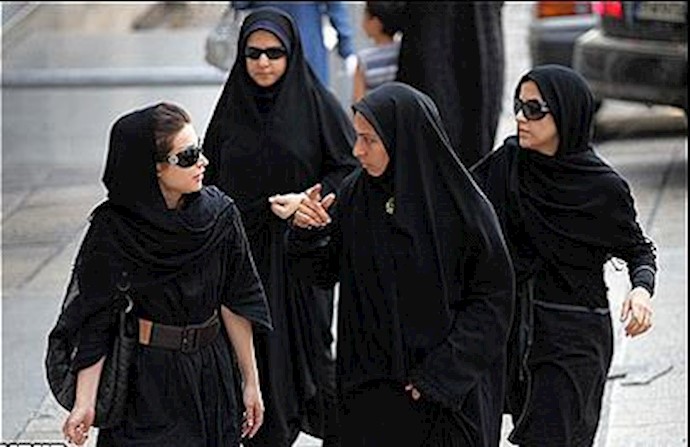
News that Iran has deployed thousands of undercover agents to enforce rules on dress has cast the spotlight on an institution that is a major feature of daily life.Gasht-e Ershad (Persian for Guidance Patrols), supported by Basij militia.
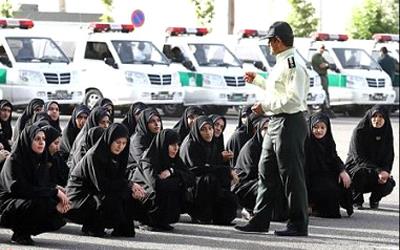
Iran has had various forms of “morality police” since the 1979 Revolution, but the Gasht-e Ershad are currently the main agency tasked enforcing Iran’s Islamic code of conduct in public.
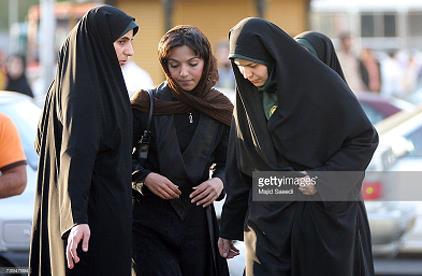
Their focus is on ensuring observance of hijab – mandatory rules requiring women to cover their hair and bodies and discouraging cosmetics.
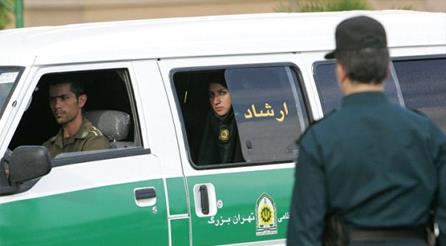
They are empowered to admonish suspects, impose fines or arrest members of the public.
According to the reports, Iranian police have established a vast network of undercover Gasht-e Ershad agents tasked with reporting on “moral violations “in the Islamic Republic’s capital. Some 7,000 agents have been deployed to Tehran’s streets to tackle sub-standard veiling by women as well as crimes such as anti-social behavior, General Hossein Sajedinia Tehran’s police chief told Mizan Online, the official news agency of the country’s judiciary. He said that the “undercover patrols will confront implicit transgressions in the city,” AFP news agency reported.
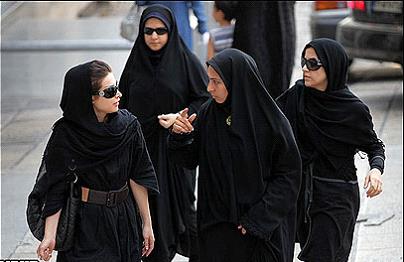
Wearing your headscarf too daringly in Iran can result in a telling off by the morality police.
The Gasht-e Ershad is thought to draw a lot of its personnel from the Basij, a hard-line suppressive paramilitary unit; it also includes many women.
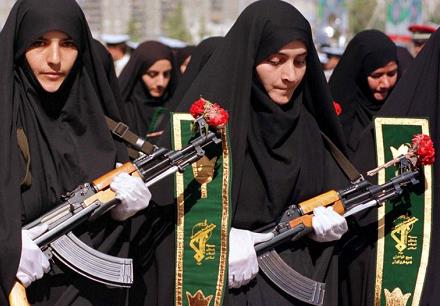
They are mainly seen as a scourge for women who try to push the boundaries of the dress code.
This includes wearing the headscarf as far back on the head as possible, or by wearing looser clothing, especially in the heat of summer, although men sporting “Western” hairstyles are also at risk.
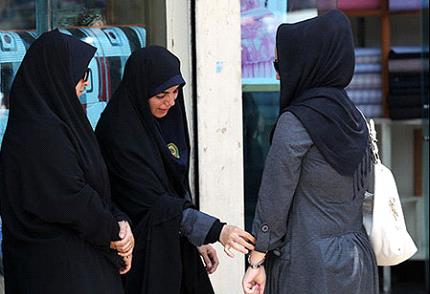
Fear of encountering them has even prompted the creation of Android app that helps people avoid Gasht-e Ershad mobile checkpoints.
Read more:
Women situation has worsened since Rouhani took over
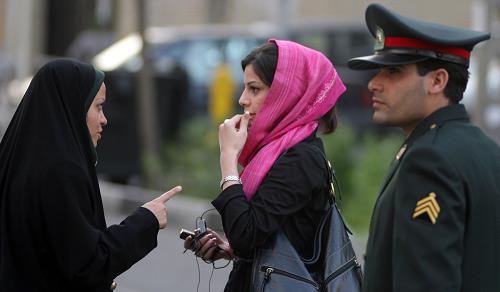
The National Council of Resistance of Iran’s Women’s Committee; They call Rouhani a moderate or a reformist. This is a total myth.
Elham Zanjani fron the Women’s Committee of the National Council of Resistance of Iran (NCRI) in an interview with Deutsche Welle radio talked about about the suppression of women in Iran.
Officials in Iran have said this week they have a network of 7,000 undercover agents who inform police about ’moral transgressions’ – like women who don’t cover their hair properly, the report by DW said on Wednesday, adding that women in Iran are also increasingly blocked from education opportunities and employment.
“They call Rouhani a moderate or a reformist. This is a total myth,” Ms. Zanjani said.
She pointed out that the mullahs’ regime is “based on misogyny; there is no way that women will have progress and equal rights.”
“Definitely, the situation of women has worsened since Rouhani took over.”
“In the document that we published, there is a report from the Iranian state-run news agency IRNA where it states that from years before – for example from 2005 going on to 2010 and then until when Rouhani took over – the situation of women’s university admission and the situation of women’s rights in education has deteriorated.”
Rouhani has had very high responsibilities within the regime from its founding days, she said. He is a very strong believer in the principle of ‘Velayat-e Faqih,’ or absolute clerical rule, she argued.
Over 60 percent of university students in Iran are women however they are forbidden from studying in at least 77 fields only on the basis of their gender, she pointed out.
Ms. Zanjani reiterated that when European Union foreign policy chief Federica Mogherini and other EU officials go to Iran and the “issue of human rights, particularly women’s rights, is not the first issue on the table, things will not improve for women in Iran.”
Suppression of women, Rouhani no different than other mullahs
Suppression of women is further institutionalized in Iran with each passing day
A human rights activist and member of the Iranian resistance has condemned Hassan Rouhani for 7,000 new morality police to patrol the streets ’suppressing women’.
Farideh Karimi, a member of the National Council of Resistance of Iran (NCRI), said Rouhani had the power to halt the measures, which have so far carried reports from Tehran of armed police stopping girls as young as 12 for failing to veil ’correctly’, despite the president claiming the government could not interfere.
Karimi said: “Suppression of women is further institutionalised in Iran with each passing day. The regime’s suppressive institutions are ever more blatantly cracking down on women. This has been a tenet of the mullahs’ regime from its outset.
“The addition of 7,000 forces dedicated to the suppression of women and further gender discrimination speaks well of the reality that Hassan Rouhani is no different from the other mullahs and the hopes for an improvement of women’s rights in Iran which some had advocated at the start of Rouhani’s tenure as President are a mirage.”
“According to the regime’s laws, Rouhani has the authority to halt the new suppressive measures against women,” Karimi added. “By refusing to do so, he is in practice endorsing them.”
As soon as the crackdown came into effect on 18 April, several posts were shared on social media of women being stopped in their cars – reportedly for playing music too loud or mal-veiling – while one 15-year-old released a harrowing account of being threatened with jail for wearing makeup.
According to the reports, Iranians both within and outside the country took to social media to condemn the squad as more state interference. One user wrote that “Big Brother is watching you!” while another suggested that “too much security can bring insecurity.”
Almost 60 percent of the country’s population of 80 million is under the age of 30.
Source: News Agencies