Iran, July 10, 2017 – The war of words and the power struggle between the two factions of the ruling theocracy in Iran over almost every issue has accelerated so much and shaken the regime in its entirety to the extent that has forced the government officials to seek a fast solution to this crisis. A witness to this argument is a one sided seize fire announced by Alireza Zakani from the hardline faction close to the Supreme Leader Ali Khamenei. Zakani, a former MP raised the sensitivities and graveness of the situation of the regime and said: “We must be vigilant today, refrain from tumult and accept even a one-sided seize fire.”
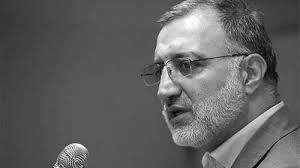
Former Iranian MP, Alireza Zakani,
A fractured support for Seize fire
His comments gained lots of support among the clerical establishment and especially the hardline faction close to the Supreme Leader, Khamenei. One such person was Ahmad Tavakkol, a former MP from Khamenei’s faction. He wrote on his Twitter account that “with so much demoralizing and shattering arguments [among the factions], one should write Zakani’s words with gold water.”
Despite this enthusiastic approach by Tavakkoli, some other officials have found it to be impossible to attain and some have foolishly and ignorantly asked, “What quarrel? there is no factional infighting.”
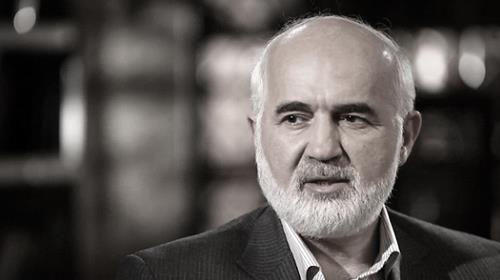
Former Iranian MP, Tavakkoli
What is more interesting is what Zakani himself said 3 days after the
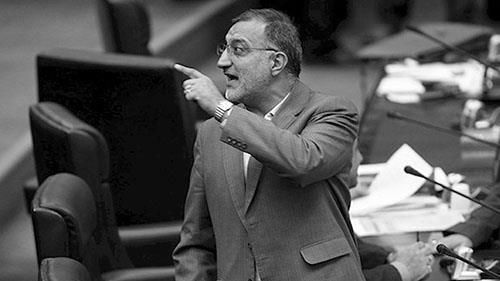
Alireza Zakani
The death of the
So the fever of
Interestingly, the unannounced seize fire that was kept going between Khamenei and the mullahs’ president, Hassan Rouhani was broken after a panegyrist from the hardline factions lashed out against the president during a Friday prayer sermon. He called Rouhani a deceitful and an American mullah, despite Rouhani’s effort to keep that seize fire drawn with the Supreme Leader going. And so, this was the end of the so-called unannounced seize fire which failed to last even one week.
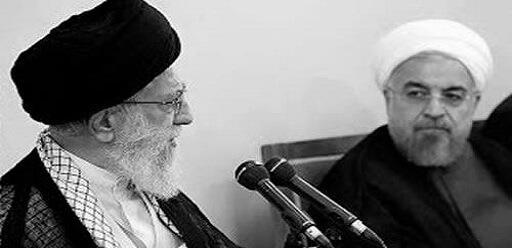
Khamenei and the mullahs’ president, Hassan Rouhani
Escalation of power struggle after the burial of the
On July 2nd Rouhani lashed out against the hardline judiciary and while he was trying to deviously show that he is apparently defending the people’s rights by using the Islam as a scapegoat said: “Islam does not allow us to put pressure on an offender more than what he is convicted of doing. We do not have the right to summon any person without enough reason for his guilt.”
He went further with his criticism of the judiciary and said some people in the judiciary are trying to break the back of exculpation. His comments prompted a quick response from Khamenei’s chief judiciary, Mullah Sadegh Larijani during a parliament session. Insisting on the independence of the judiciary, Larijani accused Rouhani of meddling in the affairs of his branch and defying the Supreme Leader and said his comments have the “color and smell of sedition.”

Khamenei’s chief judiciary, Mullah Sadegh Larijani
He added: “Unfortunately, some have attacked the Supreme Leader, the judiciary, the Guardian Council (GC), the head of the judiciary and the secretary of the GC, the Quds force and the entire IRGC and whatever bears the name of Revolution. This undoubtedly smells sedition.”
Following Larijani, Khamenei himself stepped in the arena and lashed out against Rouhani. He snatched the president’s flag of the so-called “civil rights” issue, something Rouhani was trying to use as his weapon against the hardline faction, and gave that instead to Sadegh Larijani, the head of the judiciary, making the judiciary the flag bearer of civil and social rights and legitimate freedoms. He also gave the guardianship of the oversight of the other two branches of the government to Larijani.
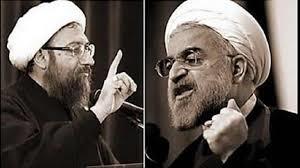
Sadegh Larijani, the head of judiciary and the mullahs’ president, Hassan Rouhani
Disarming the president
Khamenei said: “this branch of the government (meaning judiciary) must confront the opposition and enemies of public and civil rights on any ground.” But Khamenei was cautious not give too much authority to the judiciary so that would undermine the entire regime by pursuing the actual plunderers and top government rip-offs by adding: “but whenever the reputation of the system is at stake, one must favor the reputation.”
The skirmishes and power struggle between the supreme leader and the president reached a vast area including the fight over the IRGC and its role in governing the country.
Bringing the IRGC into the picture
Rouhani, previously, had lashed out against the IRGC with harsh and bitter labels as the “government in government” and “the government with guns” in oppose to his own without guns, with much more facilities and authority. Without naming the IRGC, but with so many visible signs and arrows pointing toward it, Rouhani attacked the force and its ambitions to become the top military power in the Middle East.
“Becoming the most powerful country in the region must not be the aim… We must put aside the destructive and damaging competitions. We must end the regional wars,” said Rouhani emphasizing that these crude ambitions in the current power struggle would only drive the country more toward the isolation and difficulties.
While insisting “no policy in the world can succeed except being based on a win-win situation” Rouhani actually calls the JCPOA (Joint Comprehensive Plan of Action) or otherwise know to the Iranians as the ‘challis of poison’ as the only savior for the regime and a model for other regional
Mediterranean coast as the new borders
Of course one should not forget that not long ago, Rouhani’s special advisor, Ali Younesi who until a few years ago headed the information ministry told the Iranian state-run TV that “in the past, our borders were drawn in Shalamche, Haj-Omran and the city of Mehran (all located in the western part of Iran). But now, our borders are drawn on the Mediterranean coasts.”
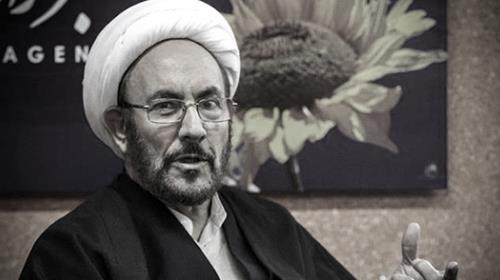
Rouhani’s special advisor, Ali Younesi who until a few years ago headed the information ministry
However, Rouhani purred gasoline on the fire of the factional infighting and provoked harsh and vast reactions amongst Media and officials of the opposite side.
The internal line of fire that passes through all crisis, large or small, is holding the grip of the Islamic Republic, from JCPOA, to the sanctions and lack of foreign investments that surfaced during the contract signed with the French Total, and to the presidential elections controversies that is still dragging on, and to human rights issue that is pounding on the regime… all have now turned into an all-out war between the two factions and has dominated every political and economic issue facing the regime.
Why is so?
This question lingers over the fact that why the inner circles of the regime, the two factions can’t cool down this power struggle, while they both acknowledge that it is dangerous for the regime in its entirety? Why can’t they at least stick to what they say they need which is a seize fire and not even a conciliation?
The answer is because first, the gap and the crack that appeared in the regime following the sham presidential elections was essentially brought upon the mullahs by the Iranian Resistance and the MEK. This crack is not just a propaganda ploy, but a harsh reality. This crack has shown itself in the deepening of the conflicts at the very top of the regime and made the wound irreparable. Whatever the mullahs try to do to reduce these conflicts, ends up as another new crisis.
Second, the pressures due to the Resistance activities and progress in the society as well as on the international level has exacerbated the crisis in the entire body of the Islamic Republic.