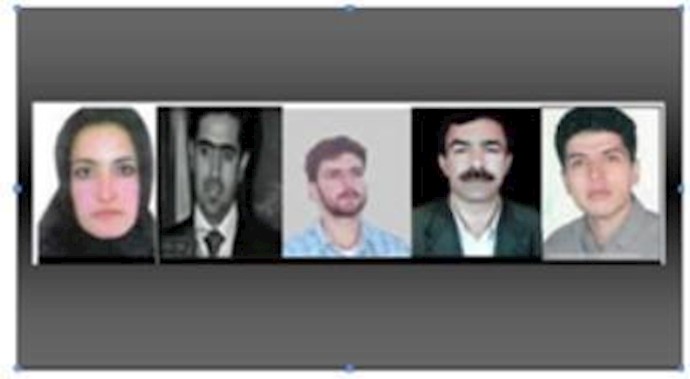
The Financial Times, Tehran, May 9 2010 – Iran on Sunday put to death five members of “anti-revolutionary” groups including one woman on charges of armed struggle against the Islamic regime.
Farzad Kamangar, Ali Heidarian, Farhad Vakili and Shirin Alamhouli, who were ethnic Kurds, as well as Mehdi Eslamian, whose brother had been executed in 2009 for a bomb explosion in the southern Iranian city of Shiraz in 2008, were hanged at Evin prison on Sunday morning.
Domestic media reported that the four Kurd activists were members of Pejak, the Party for a Free Life, which is a small, armed group in Iranian Kurdistan. Ethnic kurds constitute 10 per cent of Iran’s 70m population.
Ms Alamhouli wrote a letter to her judge over a week ago claiming that she was subjected to torture to deny her ethnicity. “I know that you used such tortures not only against me and my family but also against all the Kurd children.”
The Iranian government has always been suspicious of ethnic activitists, notably Kurds, Baluchis and Arabs, many of whom seek independence.
In recent years, Iran was second only to China in applying death sentences. The number was quadrupled since president Mahmoud Ahmadi-Nejad took office in 2005.
Amnesty International recorded that 388 people were executed in Iran in 2009, 112 of those took place in the eight weeks following the disputed presidential election last June.
It is not clear whether Sunday’s executions were intended to send a message to the Opposition and ethnic minorities in the lead up to the anniversary of the election, which led to the unprecedented unrest in the country since the 1979 Islamic revolution. The Opposition supporters plan a demonstration to mark the first anniversary of the election.
Iran is being heavily criticised by human rights and the Opposition groups as well as the Western countries for using killing, torture and long prison sentences to silence dissidents.
Former president Mohammad Khatami expressed his regret over the weekend for the “very high and unprecedented number of people who are in detention” because they criticised the government policies.
“There are protests in the society which will not be removed by denial or improper treatment,” said Mr Khatami, a reformist who served as president from 1997 to 2005, calling for the release of prisoners.