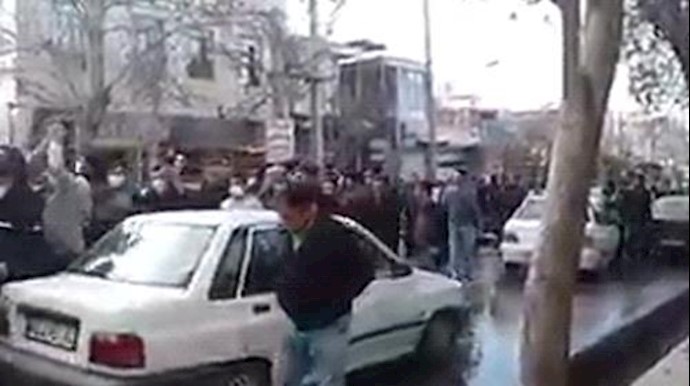
Al Jazeera, Jan. 2, 2018 – At least nine people have been killed overnight amid ongoing nationwide anti-government protests that began last week in various cities across Iran.
Iranian state television confirmed on Tuesday that six demonstrators were killed during a raid on a police station in Qahdarijan.
According to state media, the rioters were attempting to break into the station to obtain weapons.
An 11-year-old boy and a 20-year-old man were among those killed in the town of Khomeinishahr.
According to the reports, an Iranian Revolutionary Guard Corps (IRGC) soldier was shot by an assailant using a hunting rifle in Najafabad, about 350km south of the capital Tehran.
However, Al Jazeera could not independently verify whether the IRGC member was the same police officer who was reported as being shot by Iran’s semi-official Mehr news agency on Monday night.
Following six days of protests, at least 20 people have been killed, and about 450 people have been arrested with the Tehran governor’s deputy giving the following breakdown: 200 on Saturday; 150 on Sunday; and 100 on Monday.
The detention figures for other Iranian cities cannot be confirmed.
Commenting on the ongoing protests, Iran’s top authority Supreme Leader Ayatollah Ali Khamenei accused “enemies” of the state of stirring unrest in the country.
On Tuesday, Khamenei said that “enemies” of Iran have allied and used the various means they have available including “money, weapons, politics, and intelligence services” to stir unrest as nationwide anti-government rallies
Monday’s rallies
Despite threats by the IRGC to put down the demonstrations, protesters have continued taking to the streets in various parts of Iran, in what has been described as the biggest show of dissent in the country since huge rallies took place in 2009.
In Tehran, police on Monday evening used tear gas and water cannon to disperse a small protest near Engheleb Square.
“This is better than staying silent,” Milad, a young protester with eyes red from tear gas, told Al Jazeera.
Nearby, Aslan, a 52-year-old man in the area who was not demonstrating, said protesters “need a chance to show they are not happy”.
“The government should let them protest,” he told Al Jazeera.
The rallies began on December 28 in the second-largest city of Mashhad, prompted by anger over rising cost of living and the state of the economy.
“We cannot predict a time when the protests will come to an end,” said Sadegh Zibakalam, an author and academic.
“But the protests will shake the people in power who must give priority to the people’s demands and needs.”
With additional reporting by Saeed Jalili
SOURCE: AL JAZEERA NEWS