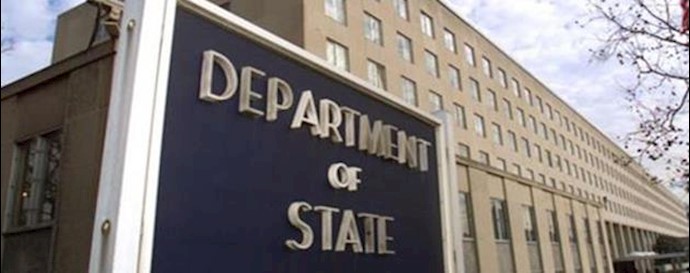
WASHINGTON — Iran continued its “terrorist-related” activity last year and also continued to provide broad military support to Bashar al-Assad of Syria, the State Department said Friday in its annual report on terrorism, the New York Times reported June 19, 2015.
The assessment suggests that neither the election of President Hassan Rouhani nor the prospect of a nuclear accord with the United States and its negotiating partners has had a moderating effect on Iran’s foreign policy in the Middle East.
“In 2014, Iran continued to provide arms, financing, training and the facilitation of primarily Iraq Shia and Afghan fighters to support the Assad regime’s brutal crackdown,” the report said.
“Iran remained unwilling to bring to justice senior Al Qaeda members it continued to hold and refused to publicly identify those senior members in its custody,” it added.
The report paints a picture of an aggressive Iranian foreign policy that has often been contrary to the interests of the United States. Even when the United States and Iran have a common foe, as they do in the Islamic State, the Iranian role in Iraq risks inflaming sectarian tensions. Some of the Shiite militias Iran has backed in Iraq, including Kataib Hezbollah, have committed human rights abuses against Sunni civilians, the report said.
Although the report covers 2014, American officials said the Iranian policies described in it had continued this year.
“We continue to be very, very concerned about I.R.G.C. activity as well as proxies that act on behalf of Iran,” said Tina S. Kaidanow, the State Department’s senior counterterrorism official, referring to Iran’s Islamic Revolutionary Guards Corps. “We watch that extremely carefully.”
Iran’s supreme leader, Khamenei, has suggested that Iran sees its regional and nuclear policies as proceeding on separate tracks, an approach that may be intended to placate hard-liners at home but may also reflect his foreign policy strategy.
An annex to the report indicates that the problem of terrorism has grown, though many of the figures reflect militant attacks in the wars in Iraq, Syria and Afghanistan. The number of terrorist attacks in 2014 was up 35 percent from 2013, while the number of fatalities from those assaults increased 81 percent.
The number of exceptionally lethal attacks has also grown. In 2014, there were 20 attacks that killed over 100 people. In 2013, there were only two such attacks.
The statistics, appended to the State Department report, were prepared by the National Consortium for the Study of Terrorism and Responses to Terrorism, at the University of Maryland.
Despite the increasing attacks, State Department officials said the United States was making headway in the struggle against terrorism, including by working with partners in the region. John Kirby, a State Department spokesman, said defeating the Islamic State would take time.
“It’s going to take about three to five years,” he said.