

Iran and six world powers made little progress this week in talks on ending their dispute over Tehran’s nuclear program, U.S. and Iranian officials said on Friday, raising doubts over the prospects for a breakthrough by a July 20 deadline, Reuters reported on Friday, May 16th.
After three months of mostly comparing expectations rather than negotiating compromises, the sides had intended to start drafting a final agreement that could end more than a decade of enmity and mistrust and dispel fears of a wider Middle East war.
“We believe there needs to be some additional realism,” a senior U.S. official said on condition of anonymity, declining to provide details on what issues had caused the most difficulty. “Time is not unlimited here.”
“In any negotiation there are good days and bad days, there are ups and downs, this has been a moment of great difficulty but one that was not entirely unexpected,” the official added. “We are just at the beginning of the drafting process and we have a significant way to go.”
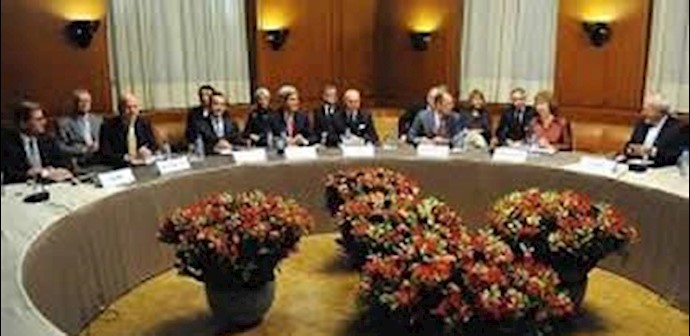
This fourth round of negotiations in the Austrian capital began on Wednesday and ended on Friday.
The U.S. official said the Vienna talks would resume at an unspecified date in June and that all parties wanted to adhere to their July 20 deadline for completing a deal that would curb sensitive parts of Iran’s nuclear program in exchange for a gradual lifting of sanctions.
“This has, candidly, been a very slow and difficult process and we are concerned with the short amount of time that is left,” the U.S. official added. Another Western official added that the six powers expected more from Iran. “On some issues we would have probably expected a little bit more flexibility on their side,” the official said.
For the first time since the six powers and Iran began negotiating on a long-term deal in Vienna in February, European Union foreign policy chief Catherine Ashton, who speaks on behalf of the six powers, and Iranian Foreign Minister Mohammad Javad Zarif chose not to appear for a joint news conference.
CENTRIFUGE NUMBERS
The six powers want Iran to agree to scale back uranium enrichment and other sensitive nuclear activity and accept more rigorous U.N. inspections to deny it any capability of quickly producing atomic bombs, in exchange for an end to sanctions.
Both sides made clear the talks were an uphill struggle.
No progress has been made,” Iranian Deputy Foreign Minister Abbas Araqchi told reporters at the end of the between Iran and the United States, France, Germany, Britain, China and Russia.
The U.S. official, who declined to be named, said earlier: “Iran still has some hard decisions to make. We’re concerned that progress is not being made and that time is short.”
The U.S. and Iranian statements might be designed in part to raise pressure on the other side but they also betrayed deep differences that must be overcome to clinch a final accord.
But diplomats say positions remain far apart on the issue of pivotal concern for the West: Iran’s capacity to refine uranium, which can be used to generate electricity but also, if processed to a high degree, provides material that detonates an atom bomb.
Iran says it wants to expand the number of centrifuges it has refining uranium,
That is unacceptable for the United States and its allies, concerned that the same activity can be put to building bombs. They want Tehran to instead significantly reduce the number of centrifuges – roughly 10,000 – it now operates.
BALLISTIC MISSILES
Iran rules out shutting any of its nuclear facilities, which it regards as synonymous with national pride and achievement. Its priority for any deal is an end of international sanctions that have severely damaged its oil-reliant economy.
Other big points of contention include the duration of any limitations of Iran’s atomic activities and the speed of lifting sanctions, as well as whether any agreement should cover the future scope of its ballistic missile program.
On Wednesday, the U.S. delegation made clear that it wanted to discuss both Iran’s ballistic missile program and possible military dimensions of its past nuclear research.
An American official referred to remarks from a senior U.S. official this week, who said “every issue” must be resolved.
U.S. President Barack Obama has not ruled the last-ditch option of military action either.
U.S. warns `time is short` as Iran nuclear talks make little progress
RELATED ARTICLES