
White House looks to address regional conflicts and ease tensions around nuclear negotiations
WASHINGTON- The Wall Street Journal – July 6, 2015—The White House is crafting a Middle East strategy for the remaining 18 months of President Barack Obama’s term that would more forcefully address conflicts in Iraq, Yemen and Syria amid tensions over the conclusion of talks with Iran.
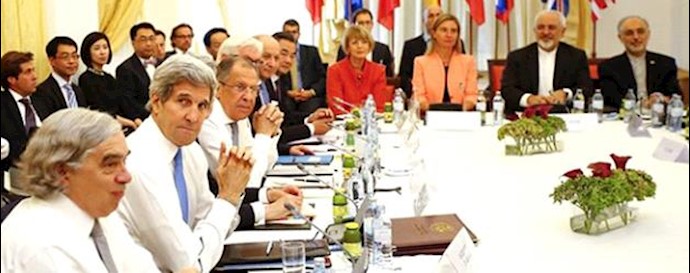
U.S. and Iranian negotiators narrowed some key differences for completing a deal that would scale back Tehran’s nuclear program in exchange for lifting economic sanctions.
Any reorientation of Mr. Obama’s Middle East strategy would test the durability of his broader foreign-policy doctrine, and senior administration officials said the president is intent on cleaning up leftover messes in the region before leaving office in 2017, including relations with key allies that have been strained by the Iran talks.
President Obama spoke about the U.S. military strategy against Islamic State, while visiting the Pentagon Monday. These are his edited remarks.
White House officials see the conclusion of Iran talks as a gateway for Mr. Obama to press for a political resolution in Syria that would facilitate the exit of President Bashar al-Assad, a close Iranian ally.
“It’s something I’d expect to see more pickup on as the Iran talks conclude,” a senior administration official said. “There’s a growing sense that momentum has turned against Assad and that is feeding a belief that there could be more opening on the political track.”
The conclusion of talks would thrust the U.S. into unfamiliar territory in a volatile region where years of diplomacy with Tehran has left relations with America’s allies, including Israel and Saudi Arabia, deeply strained.
Any effort to work with Iran in the fight against Islamic State extremists, for example, likely would generate further anxiety among Iran’s neighbors. Saudi Arabia and other Gulf states have pushed hard to keep Iran out of the alliance patched together to fight the militant group in Syria and Iraq, accusing Tehran of propping up the Assad regime.
White House officials said the Middle East approach would include an expansive U.S. effort to keep ties with Persian Gulf states from fraying further.
Mr. Obama met with officials from members of the Gulf Cooperation Council in May and pledged new military and security measures. The U.S. has designated a team to see through the pledges.
Mr. Obama’s critics say he has been too willing to let other crises, specifically the Syria conflict, fester in an attempt to achieve his overarching goal of reining in Iran’s nuclear program. His 2013 decision to pull back on launching airstrikes in Syria after concluding Mr. Assad had used chemical weapons fueled criticism of his Middle East strategy.
The president’s aides say his approach has been necessary, given the significant threat a nuclear-armed Iran would pose to the region and the U.S.
U.S. officials are unsure how a nuclear deal would affect Tehran’s behavior. Iran could firm its support for Mr. Assad or cut a deal to push him aside, U.S. officials said.
“They’ll have more money to be bad actors if they choose to be bad actors,” another senior administration official said. “But they’ll also have more opportunities to be constructive if they choose that route.”
Secretary of State John Kerry, who has been leading U.S. negotiations with Iran, has been pressing the White House to renew its focus on Syria. It is unclear that Mr. Obama shares Mr. Kerry’s ambition.
Mr. Obama’s resistance to deeper U.S. involvement in Syria also could shift, senior administration officials said, because of assessments that Mr. Assad’s grip on power appears to be weakening. The combination of military and diplomatic pressure, officials believe, could increase pressure on Mr. Assad or those around him to look for an exit plan.
Mr. Obama, in remarks Monday at the Pentagon, said the only way to end Syria’s civil war is for Mr. Assad to exit, a point he said that he stressed to Arab leaders and Mr. Putin during their phone call.