
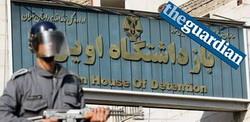
Political prisoners in Tehran’s Evin prison have been subjected to humiliating physical abuse, including being forced to run a gauntlet of guards armed with batons, the Guardian reported on April 22nd.
Hassan Rouhani, has been silent despite chilling details being revealed by prisoners and their families about how Thursday’s disturbances marked a dark episode in one of the country’s most notorious prisons.
Dozens of inmates held in Evin’s ward 350, including journalists, lawyers and opposition members, were injured, with some suffering skull fractures, broken ribs, wounds and swelling on their bodies after guards and intelligence officials created a tunnel and made prisoners run through it as they beat them with batons, according to opposition sources.
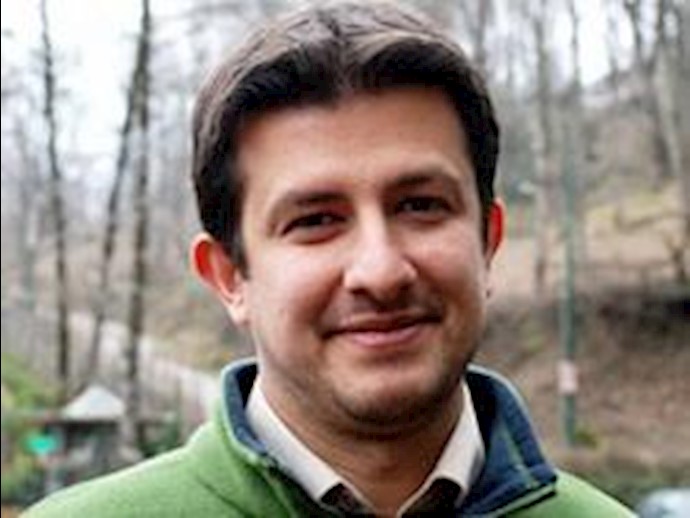
Emad Bahavar, who is serving a 10-year sentence because of his political activities, recounted some of the horrific moments in a letter sent out of jail on Tuesday.
In separate interviews, a group of relatives who met a number of prisoners beaten up in Evin’s violence last week echoed Bahavar, saying some could hardly speak and others had bruises on their bodies. The incident has been described by activists as Iran’s “black Thursday”.
“‘Beat them up,’ they shouted. Forty guards armed with batons then rushed down the stairs … they sent more guards as it went on,” Bahavar wrote in his letter. “They made us stand in a row facing the wall in ward 350’s corridors while being handcuffed and blindfolded. They started to beat us up from behind. You could hear a whining noise. Outside the ward’s gate, the guards stood liked a tunnel and forced us to go through it before taking us on to a minibus. You could see blood on the way and inside the minibus.”
The head of Iran’s state prisons, Gholam-Hossein Esmaeili, has denied clashes occurred in Evin, describing the reports as propaganda against the Islamic republic.
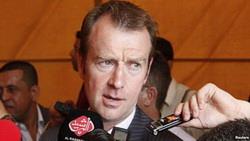
Michael Mann, spokesperson for the EU foreign policy chief, Lady Ashton, said on Tuesday that she was looking into the reports.
“We are in the process of assessing the exact nature and extent of the incident in Evin prison,” Mann told the Guardian. “[Ashton] has on many occasions issued statements on the need to protect human rights in Iran.”
Reports from Iran suggested that guards were particularly violent towards those prisoners accused of having links with the Iranian dissident group the People’s Mujahideen of Iran (MEK) and held for many years.
Dozens of prisoners are reported to have been put in solitary confinement following the attack.
Family members had earlier staged a protest in front of the presidential offices.
The human rights organisation Amnesty International said the disturbances at Evin raised fears about the safety of prisoners in Iran. It said at least two prisoners, Esmail Barzegar and Akbar Amini, had had their ribs broken and a number of prisoners were transferred to the intensive care unit.
The New York-based Committee to Protect Journalists (CPJ), said at least seven Iranian journalists were among those beaten up, including Mohammad Davari, Saeed Matin-Pour, Omid Behroozi, Seyed Hossein Ronaghi Maleki, Siamak Ghaderi, Saeed Haeri and Mohammad Seddigh Kaboudvand.
“There is no reason for any of these journalists to be imprisoned in the first place. Their only ‘crime’ is independent journalism, and now they are being punished with physical violence on top of detention,” said CPJ’s Sherif Mansour. “We call on the Iranian government to hold to account those involved in the attack and to ensure that all the journalists receive appropriate medical care.”