
Extracted from a Washington Post article
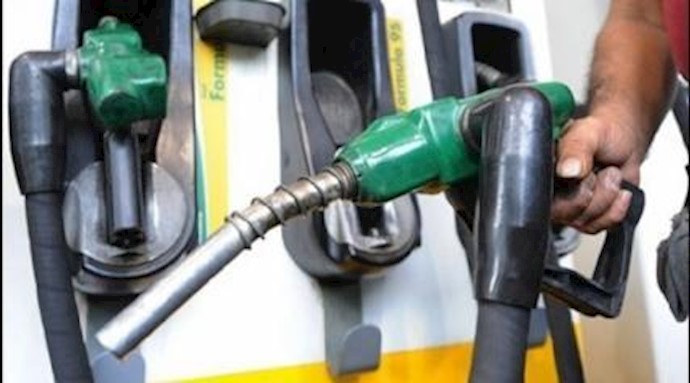
Gasoline prices in Iran have risen steadily and dramatically in recent years, The Washington Post reported on Thursday, April 24th.
A new increase scheduled for this week will test the patience of a public that has been waiting nearly a year for signs of an economic recovery promised by Hassan Rouhani when he was elected last June.
For citizens here, the skyrocketing price at the pump in relation to the value of their national currency, the rial, is shocking.
When Iranians paid 800 rials in 2005, five-digit gasoline prices seemed unfathomable, but the new rate will almost certainly enter that unchartered territory.
The head of Iran’s association of gas station operators, Bijan Hajjmohammadreza, said Tuesday that digital readers at pumps throughout the country are not equipped to display prices if they surpass 9,999 rials per liter. The current price is 7,000 rials per liter. (The official rate of exchange Wednesday was more than 25,530 rials to the U.S. dollar, and the open rate, at which the vast majority of transactions are conducted, was 33,000 rials to the dollar.)
Just how much prices will increase this week is unclear, but most expect it to be upwards of 50 percent, although some officials insist that it will be less. The new price could reach as much as 12,000 rials per liter.
Tehran’s currency market has responded to the uncertainty with a decline of more than 5 percent in the rial against the U.S. dollar this week in open rate trading.
Iran’s main car manufacturer, Iran Khodro, one of the country’s biggest employers, suspended sales until new fuel prices are announced, as the news would impact the auto giants pricing structure.
The increase at filling stations is another in a series of attempts by Rouhani’s administration to reduce subsidies.
“In the past, we had a saying that to avoid trouble, Iran’s leaders shouldn’t play with peoples access to bread and tea. In modern times, we’ve said the same about gasoline. Raising the price on these products is always risky in Iran,” said Ardeshir Golami, a retired petrochemical engineer.
Iran’s government has often tinkered with its gasoline pricing structure, but not until recently have authorities planned to remove the subsidies completely, and they now realize that process will take time.
Starting in 2006, a tiered pricing system was introduced that gave car owners an allotment of 60 liters per month at a highly subsidized rate of 1,000 rials, after which they had to buy at the open market rate of 4,000 rials, which was still a controlled rate.
That system is still in place, with current rates of 4,000 rials ($.12) for the monthly ration and 7,000 rials ($.22) for the open rate. Three days into the new Iranian month, however, and the reduced-rate supply is still not available to drivers lining up at gas stations across the country.
This time around, though, the surge coincides with troubling economic conditions that include steep inflation, a sharply devalued currency and high unemployment, all of which are blamed in large part on the tough economic sanctions imposed on the Islamic republic over its controversial nuclear activities.
The gas price hike in itself is likely to cause a short-term backlash, but the bigger worry is the impact on wider inflation, which Rouhani’s economic team has chosen to prioritize, said a Tehran-based analyst.
If the projected short-term spike in inflation turns into a longer period of pre-election inflation levels, Rouhani will face a major challenge, he added.