
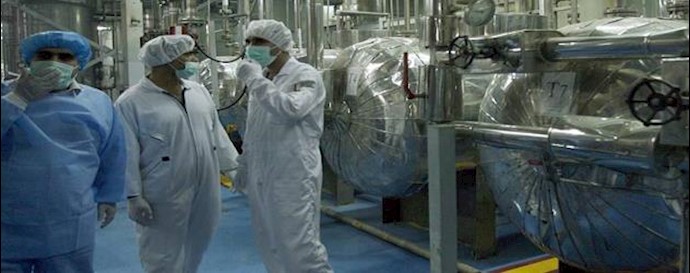
Stance complicates the International Atomic Energy Agency’s probe into suspected nuclear-military program
The Wall Street Journal, Washington, 6 August 2015
Iran so far has refused to allow United Nations inspectors to interview key scientists and military officers to investigate allegations that Tehran maintained a covert nuclear-weapons program, the head of the U.N.’s nuclear watchdog said in an interview Wednesday.
Iran’s stance complicates the International Atomic Energy Agency’s probe into Tehran’s suspected nuclear-military program—a study that is slated to be completed by mid-December, as required by the landmark nuclear agreement forged between world powers and Iran on July 14 in Vienna.
The IAEA and its director-general, Yukiya Amano, have been trying for more than five years to debrief Mohsen Fakhrizadeh-Mahabadi,an Iranian military officer the U.S., Israel and IAEA suspect oversaw weaponization work in Tehran until at least 2003.
Mr. Fakhrizadeh is under U.N., U.S. and EU sanctions for his alleged role in Iran’s nuclear weapons program. Under the terms of the Vienna agreement, the penalties on him would be lifted by 2024.
But during an interview in Washington, Mr. Amano said Iran still hasn’t agreed to provide access to Mr. Fakhrizadeh or other top Iranian military officers and nuclear scientists to assist the IAEA in completing its probe. Mr. Amano visited Capitol Hill on Wednesday in a bid to assure skeptical U.S. lawmakers the IAEA is capable of implementing a vast inspections regime of Iran’s nuclear facilities and clarifying the weaponization issue.
Senate Republicans and skeptical Democrats, however, left the 90-minute closed-door meeting frustrated that Mr. Amano refused to share the agency’s classified agreements on access to Iranian military sites, scientists and documents.
“I would say most members left with greater concerns about the inspection regime than we came in with,” Senate Foreign Relations Committee Chairman Bob Corker (R., Tenn.) told reporters. “It was not a reassuring meeting.”
Many senators remained dissatisfied with his answers, saying they doubted the strength of the inspection regime. Sen. John Barrasso (R., Wyo.) said he was concerned that Iran would be responsible for collecting its own samples, rather than the international agency.
“It’s like asking an NFL player to mail in their own urine sample instead of the collection being done so you can verify what you’re getting is real,” Mr. Barrasso said. “My impression listening to him was that the promises the president made are not verifiable.”
Some Democrats who have said they would support the deal when Congress votes on it next month said the debate about the confidential documents was a convenient target for critics.
U.S. lawmakers are specifically concerned that the IAEA won’t get access to a sprawling military base south of Tehran, called Parchin, where the testing of explosive devices allegedly occurred in the early 2000s.
The agency repeatedly has been denied access to Parchin, and Mr. Amano has charged Tehran in the past with trying to sanitize the site.
On Wednesday, the Institute for Science and International Security, a Washington think tank, published satellite photos taken after the Vienna agreement was signed that appeared to show bulldozers moving more land at Parchin.
“These activities could be related to refurbishment or cleanup prior to any IAEA inspection or the taking of environmental samples,” the Institute for Science and International Security said in a report accompanying the pictures.