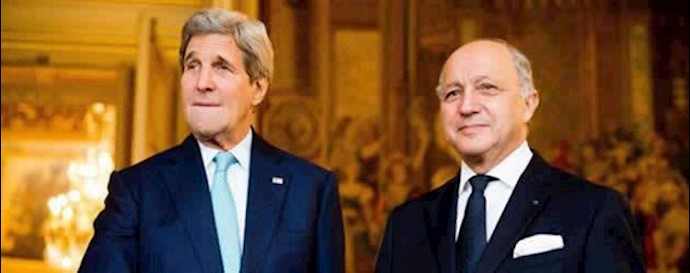
US Secretary of State John Kerry and his Iranian counterpart Foreign Minister Mohammad Javad Zarif will meet in Switzerland this weekend as part of a push to seal the deal, US officials said.
With the issue of access to military sites emerging as a potential deal-breaker, Iran’s supreme leader Ayatollah Ali Khamenei praised the work of his nuclear negotiators after they came under heavy criticism from conservatives in parliament.
Khamenei, quoted on his website, said: “On nuclear issues, our positions are clear and the same as I have expressed publicly… These are the positions of the regime.”
Critics accuse negotiators of having accepted demands for international inspections of Iran’s military sites, a position which Khamenei has totally ruled out.
French Foreign Minister Laurent Fabius warned on Wednesday that France would oppose a final nuclear accord unless it allowed inspections of military sites.
An agreement “will not be accepted by France if it is not clear that verifications can be made at all Iranian facilities, including military sites,” Fabius told parliament.
On Tuesday, Yukiya Amano, the head of the UN’s atomic watchdog, said Iran had agreed to implement the Additional Protocol of the Nuclear Non-Proliferation Treaty (NPT) that allows for snap inspections.
“When we find inconsistency or when we have doubts, we can request access to the undeclared location for example, and this could include military sites,” the Japanese diplomat told AFP.
“Some consideration is needed because of the sensitiveness of the site, but the International Atomic Energy Agency has the right to request access at all locations, including military ones.”
Zarif has said the protocol allows “some access” but not inspections of military sites, in order to protect national “military or economic secrets”.