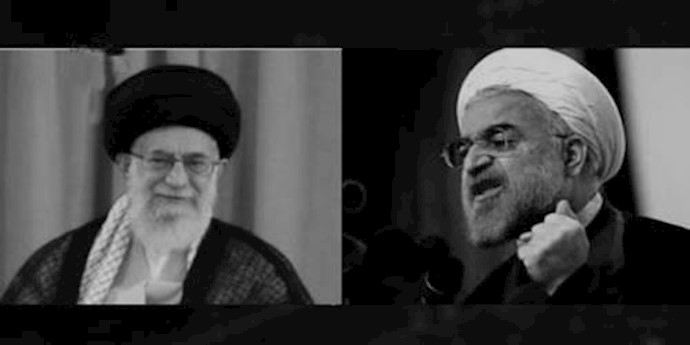
DUBAI — Iranian fundamentalist regime Leader Khamenei said those opposed to the values of Iran’s Shi’ite theocracy, meaning Shiite radicalism, should not be allowed to run for parliament, signaling the deepening rift between him and Rouhani over the February elections.
Reuters cited Iranian official data saying almost 12,000 candidates have registered for the Feb. 26 elections in Iran, where the 290-seat parliament and 88-member assembly have long been dominated by conservatives close to Khamenei.
But Iranian media reports indicate the Guardian Council, a vetting body made up of hardline clerics, all devoted to Khamenei, has disqualified the majority of candidates close to Rouhani.
“The primary reports I’ve received did not make me happy at all,” Rouhani told a news conference on Monday. “I will use all my power to protect the rights of candidates,” he vowed.
In a meeting on Wednesday with officials involved in organizing the elections, Khamenei – who wields the final say on all high matters of state in Iran – made clear he did not agree with Rouhani on who should be able to take seats in parliament.
KHAMENEI WANTS “LOYAL” CANDIDATES ONLY
“I said that even those who oppose the Islamic Republic should take part in the election,” he said, underlining his wish for engineering a high turnout to pretend there is a popular support for the system.
“(But) this does not mean that opponents of the Islamic Republic should be elected to parliament… Only those who believe in the Islamic Republic and its values should be allowed to enter parliament,” Khamenei insisted.
“Even in America, which claims it is the land of freedom and some people naively accept that, during the Cold War those with slightest socialist leaning would have been marginalized.”
Ahmad Jannati, the hardline ultra-conservative head of the Guardian Council, assured Khamenei at the same meeting that its consideration of candidates’ qualifications would be done “carefully and will not be affected by any pressure”.
Hossein Marashi, politician from Khanenei’s rival faction, told ILNA news agency 3,000 reformists had registered for the election so far but only 30 had seen their candidacies certified. “On this basis only one percent of reformists were approved,” he said.
Iran’s success in winning an end to international sanctions in exchange for curbing its disputed nuclear program is expected to intensify a power struggle within an elite split into two factions.
Khamenei grudgingly allowed Rouhani to negotiate the nuclear deal after he won a landslide election in 2013 on a pledge of easing Iran’s isolation abroad and repression at home.
But hardliners now fear that voters, hoping living standards can rise with sanctions out of the way, will reward pro-Rouhani candidates in the elections, with the vote for the Assembly of Experts in particular crucial in shaping Iran’s future path.
Reuters has contributed to this analysis, Jan. 20, 2016