Manama: The lifting of the international sanctions against Iran following the announcement by the International Atomic Energy Agency (IAEA) that Tehran had complied with the deal aimed at scaling down its nuclear program has been greeted with varying degrees of jubilation and skepticism in the region, Gulf News reported January 17, 2016.
In the Gulf, the pronounced fanfare did not seem to have impressed the Arabs.
“Kerry claims that the world is safer today. It seems that Kerry believes that he is playing the role of the good guy in a Hollywood movie where the good guy wins,” Abdullah Al Shayji, a professor of political science at Kuwait University, said.
“President Barack Obama and the mullah regime in Iran are claiming they have triumphed after seven years. We now have an Obama–US–Persian alliance sponsored by Kerry and Zarif. It is obvious that Obama had bet on Iran since his election to the White House. He never disturbed Iran and never put its terrorist arms on the terror list or bombed them,” Al Shayji said.
He added that Obama fulfilled his dream for which he worked for seven years just months before leaving the White House.
“I had warned that the Obama-Gulf Summit at Camp David had no guarantees. The ball is in our field now and the rules of the game have changed,” he added.
In Saudi Arabia, 140 religious scholars warned against a “Safavid plan” targeting the Middle East, saying that the “arrogance and insolence” of the mullah regime in Iran had reached alarming levels.
The scholars, in a statement issued on Saturday, said that Iran was seeking hegemony by “supporting criminal regimes, mobilising sectarian armed militias in conflict zones, and misusing sects and minorities in political calculations”.
The scholars said Iran was bidding to influence the implementation of the deal based on its own potential, on the wealth of the countries under its control, and on the money taken from the people under religious claims.
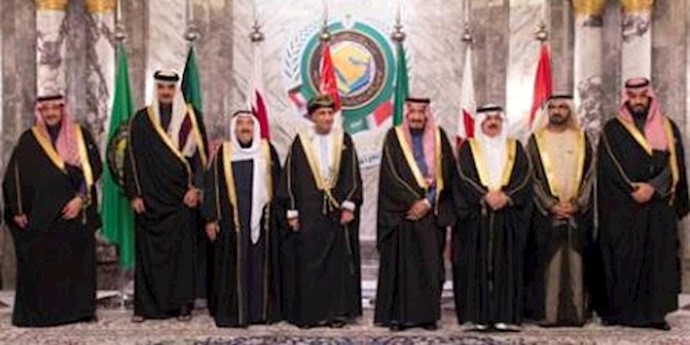
The statement called on the Gulf Cooperation Council (GCC), comprising Bahrain, Kuwait, Oman, Qatar, Saudi Arabia and the UAE, to be wary of infiltrations at the intelligence and political levels and to set up a military, economic, religious and media counteroffensive to halt the “Iranian project” in the region.
The scholars heaped praise on countries that have severed or downgraded their diplomatic relations with Iran following the attacks on the Saudi diplomatic missions and the blatant interference in Arab countries.
Several Arab countries have severed diplomatic relations with Iran as they denounced Tehran’s interference in the domestic affairs of Arab countries and the twin attacks on the Saudi embassy in Tehran and the general consulate in the northern Iranian city of Mashhad.
Gulf political analyst Mohammad Jaber said the latest developments in the region were aimed at weakening the stances in the Gulf in particular and in the Arab world in general.
“It is obvious that many researchers and decision makers in the West today view the Arabs as a heavy political burden, particularly amid all the tensions in the region, and they believe that by working closely with Iran would help them at least reduce problems,” the analyst in Bahrain said.