United Nations atomic energy agency chief said he believes the investigation into Iran’s past nuclear activities will be wrapped up on time by mid-December, even though he acknowledged “much work” still needs doing to shed light on Tehran’s past actions, The Wall Street Journal reported on Monday, September 7th.
In comments at a news conference in Vienna, International Atomic Energy Agency Director-General Yukiya Amano noted that Iran had met its Aug. 15 deadline to provide written explanations on its past nuclear work, which many western officials say was aimed at gaining nuclear weapons know-how. He said the IAEA is analyzing that information and will meet its own Sept. 15 deadline to send follow-up questions to Tehran.
Under an agreement reached in July, Iran and the IAEA are then supposed to hold a month of follow-up technical talks to sift through outstanding concerns. However the timeline, which is supposed to be completed when the agency hands in a report to its Board of Governors by Dec. 15, was always contingent on Iranian cooperation.
Mr. Amano said that “much work needs to be done” to complete the nuclear probe, which is one of the key conditions for the lifting of broad international sanctions on Tehran.
Despite that, he suggested the IAEA wouldn’t need to extend the probe to seek more information from Iran.
“I don’t have particular concern that we’ll not be able to complete a final assessment by December 15th and our assessment will be factual and impartial,” Mr. Amano said.
The IAEA probe into Iran’s past actions has become a flash-point for critics of the July 14 nuclear agreement between Iran and six major powers, including the U.S. That separate agreement commits Tehran to scale back large parts of its nuclear activities for 10-15 years in exchange for broad sanctions relief.
Critics say the terms of the IAEA’s probe of Iran’s past nuclear work are too weak and will make it relatively straightforward for Tehran to conceal evidence of its past actions.
Former senior IAEA officials have also questioned whether the short timeline for the probe will really give the agency time to find out what nuclear work Iran has carried out in the past. Tehran has long refused IAEA access to key sites, people and documents.
Although some U.S. lawmakers have called for the terms of the IAEA’s investigation to be made public, Mr. Amano said the IAEA had received no such request from any of the agency’s member states.
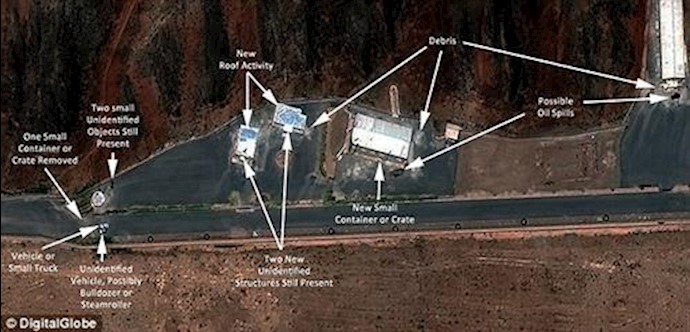
Mr. Amano repeated the agency’s concern about construction work at Iran’s Parchin military site. He said recent work could “undermine the capability” of the IAEA to verify what past activities Iran carried out at the site.
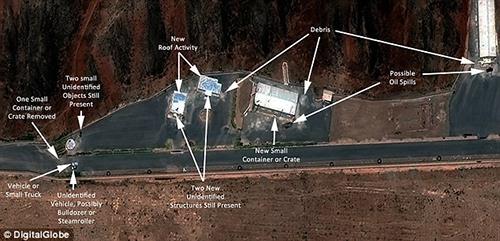
Iran has refused access to Parchin since 2005. Western officials have said Iran has carried out extensive work to sanitize the site to erase evidence of tests that could be used to develop nuclear weapons know-how.