House Democrats and Republicans sparred on Wednesday over a bill aimed to ensure that no U.S. financing can be used in the sale of Boeing jets to Iran.
House Financial Services Committee Chairman Jeb Hensarling (R-Texas) said the bill would provide “a little insurance” against President Obama or his successor waiving a prohibition placed on U.S. financial institutions and the Export-Import Bank from financing Boeing’s recently announced sale of passenger planes to Iran.
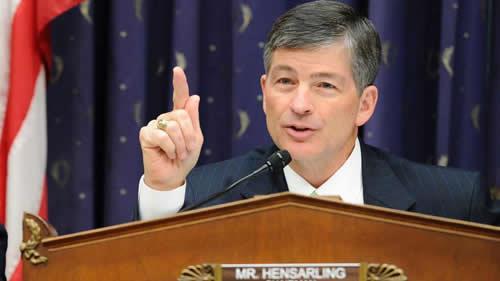
House Financial Services Committee Chairman Jeb Hensarling (R-Texas)
“These bills are all part of a bipartisan effort to ensure that Iran does not have access to the U.S. financial system and that taxpayers and depositors are not forced to pick up the tab for these risky arrangements,” Hensarling said.
“They are about taking every possible step to ensure that American made aircraft are never used in pursuit of ending the lives of Americans or our allies.”
The committee on Wednesday evening approved three bills designed to prevent Boeing’s sale.
President Obama would likely veto any attempts by Congress to stop the sale.
Boeing’s agreement to sell 80 commercial aircraft to Iran Air for $17.6 billion and lease another 29 aircraft, bringing the deal to $25 billion, has faced increasingly stiff headwinds on Capitol Hill.
Republicans and some Democrats are expressing concern that Iran would use the new airplanes for nefarious purposes in the region, such as flying weapons into Syria.
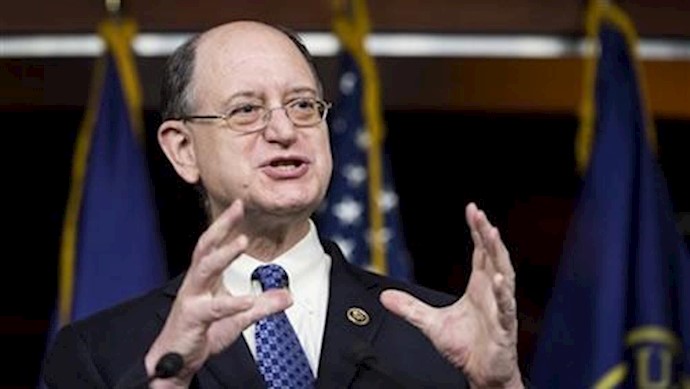
Democratic Rep. Brad Sherman (Calif.), who is a Democratic supporter of the Republican-sponsored Ex-Im bill, argued that the measure would shift the waiver decision to Congress from the White House.
Sherman, who voted against the nuclear agreement, wrote a letter to the Obama administration in June saying it is “virtually certain” that Iran would use the aircraft for illicit purposes because Iran Air is aligned with the Iranian Revolutionary Guard Corps, which is still under sanction.
He also insinuated that “one of the presidential candidates” would be too unpredictable to trust with the waiver power.
Last week, the committee held a hearing on Boeing’s sale where a couple of witnesses suggested that Iran take a five-year cooling off period before purchasing the airplanes.
The Obama administration, Ex-Im officials and Boeing have said that they don’t intend to seek U.S. financing because Iran is on the State Department’s list of state sponsors of terrorism.
Ex-Im President Fred Hochberg wrote in November that he did not “anticipate any scenario in which the bank would seek a waiver from the president” to do business with Iran.
The state and foreign operations spending bill signed into law in December includes a provision that expressly prohibits Ex-Im financing to Iran, the agency said.
The other two bills considered by the committee would prohibit Treasury from authorizing transactions by U.S. financial institutions in connection with these sales. The third measure would prohibit Treasury from licensing the export of commercial aircraft to Iran.
Last week, the House approved two amendments by voice vote that were included in the House-passed financial services and general government spending bill
Source: Hill, 14 July 2016