
The Financial Times, 7 Feb 2013 – In February, the weather in Almaty is usually well below freezing. So as some of the world’s top diplomats prepare to travel to the former capital of Kazakhstan this month for yet another meeting with Iran over its nuclear programme, most will be feeling somewhat gloomy.
The concern is not just the weather, of course, The thing that will induce angst is the near-certain prediction that they will sit there for days in the freezing cold of the southern Kazakh mountains – only to make no progress yet again in talks with Iran over its nuclear ambitions. As one top diplomat tells me: “The best I’m hoping for is that we agree another date to meet. That’s it.”
Judging by the advanced briefing for this meeting – where Iran will negotiate with the US, Britain, France, Russia, China and Germany – it’s easy to see why Almaty is set to join Istanbul, Baghdad and Moscow as the scene of another negotiating failure.
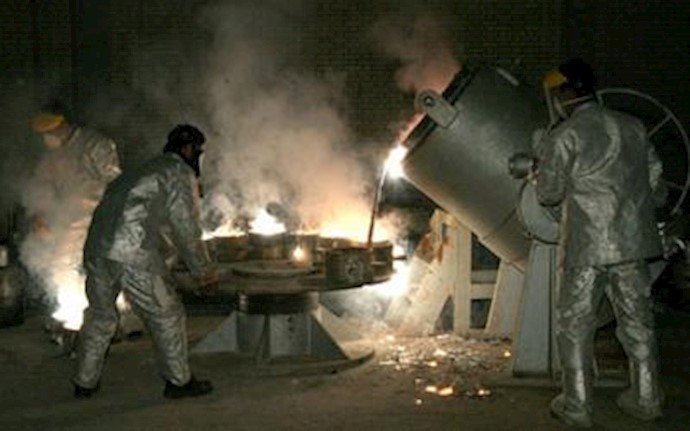
The six powers have imposed sanctions on Iran because they fear Tehran seeks to build a bomb. But the six will not scale back those existing sanctions nearly as much as Iran demands if it is to start making concessions over its nuclear programme. As a result, there will be deadlock. The sanctions will remain. And Iran will not do what the six want. It will not stop production of more highly enriched 20 per cent uranium, it will not ship its existing stocks of 20 per cent uranium out of the country, and it will not shut down the Fordow enrichment plant. At least, that is what most analysts expect the result in Almaty to be.
Why is diplomatic deadlock continuing like this? And how worrying is it? If there is no movement right now it is because the US and Iran feel under no pressure to make concessions. The US and European Union are the prime architects of energy and banking sanctions on Iran that are seriously hurting the Iranian economy. They are therefore eyeballing Iran, convinced that the regime of Supreme Leader Khamenei will cave in at any moment.
One western diplomat spelled out his thinking to me at the weekend. Energy sanctions mean Iran has now lost billions of revenues, equivalent to eight per cent of annual GDP, he said. Inflation means that the purchasing power of the average Iranian has plunged, he argued. In his view, the June presidential election in Iran, meanwhile, is of no interest in terms of who gets elected. Instead, he says, the big issue is whether the election will be the stage for major protests against the regime, similar to those of 2009.
The trouble is, Iran is intransigent and feels no need to give ground either. According to analysts, the regime seems to be retreating into a “war economy” and believes it can somehow muddle through the sanctions storm. Besides, the nuclear programme is a totemic issue for the regime. As Cliff Kupchan of the Eurasia Group think tank puts it in his latest briefing note: “Iran’s ruling elite maintains a deep commitment to its nuclear program, and is unlikely to accept sharp limits on it.” It is “one of Khamenei’s few remaining domestic trump cards.”
There is another factor, however, that adds to the lack of momentum in negotiations right now. This is the belief that, after much huffing and puffing last year, Israel will not launch a military strike in 2013. In part, this is because Benjamin Netanyahu, Israel’s PM, has been told by his military chiefs that they won’t conduct an attack without very good reason. But also, the reason isn’t there right now. Iran is certainly making progress with its nuclear programme, it is getting closer to the point where it could test a bomb. But the assessment of leading experts is that Iran is not yet at the point where it could make a sudden last dash to test a nuclear device without the US and Israel having time to stop that effort through military action.
By the second half of 2014, things will be different. By then the Iranian programme will probably be more developed. Iran could well be in a position to conduct that sudden dash to manufacture weapons-grade uranium and test a device without being stopped. But that problem is still a year or more away.
So, the prospect for 2013 is that there will be no deal on the Iranian programme, but no pre-emptive Israeli military action either. Good news? Not really. The risk is that, while diplomacy is blocked, the “shadow war” between an increasingly fearful Israel and an increasingly beleaguered Iran gets worse. Last year we wondered whether Iran might vent its anger by blocking oil shipments through the Straits of Hormuz. This year, the shadow conflict between Israel and Iran has moved to other theatres. One of them is Syria.
Last week, Israel mounted a lightning air strike on a convoy of Syrian regime weapons bound for Lebanon. That triggered a tough verbal response from Iran, raising questions about whether this tension might escalate. Another area worth watching is cyber conflict, where both sides are increasingly active. Israel and the US have used cyber weapons to try and degrade Iran’s nuclear facilities. Iran, in turn, is being seen by the US as an increasingly capable actor in cyber offensive weaponry, one that US Air Force General William Shelton said last year will be “a force to be reckoned with”.
In short, 2013 will be an edgy year. A deal between the six powers and Iran will not come quickly. Israel will not take military action against the Iranian program. But it would be no surprise if both sides tried to gain an advantage over the other by covert means, and especially in the realm of cyber conflict.