Mohammad Malaki, the first Tehran University dean following the 1979 revolution remains banned from leaving the country to see his children abroad. In an interview with EuroNews he referred to the pressures and dire human rights situation in Iran.
“Many of our friends are on travel bans. Therefore every Monday we stage a gathering in Tehran’s Vanak Square,” this former political prisoner said.
“After my last release from prison I received a letter from the prosecutor’s office informing me of my travel ban,” he added.
Mr. Malaki is suffering from cancer and he was last detained for 190 days back in 2009. He spent 3 months of that period in solitary confinement.
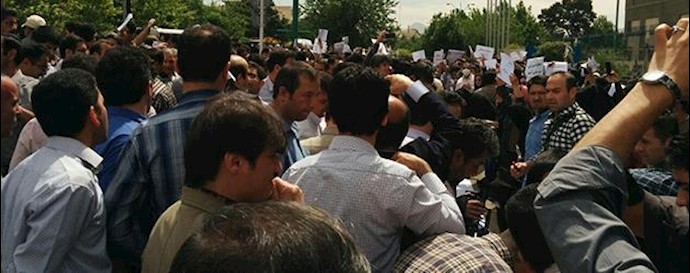
On the prospect of the human rights situation in Iran Mr. Malaki referred to the recent ban imposed on teachers staging a rally as the latest such case of how the government treats civil protests.
“The teachers sought to stage a rally (last Wednesday) outside the regime’s parliament. We went to Baharestan Square and saw that all the adjacent roads were full of police. Anyone standing before the building would be arrested. We witnessed how they arrested five or six individuals and did not permit the teachers to even stage a peaceful rally. These measures are taking place as the teachers were only seeking their rights and had no other demands in this gathering. This is an example to see that nothing has changed and the harassment has even escalated,” he explained.
On a question about the recent nuclear agreement and will this sideline the human rights issue in Iran in its relations with the West he said, “The West is seeking their own interests. They are looking to send delegations to Iran to recommence their trade. There have been remarks about human rights but they are not true.”
Along with other critics of the political system and fellow human rights activists including Nasrin Sotudeh and Nargis Mohammadi, Mr. Malaki has been arranging and taking part in protest rallies for a long time now. Nargis Mohammadi, always taking part in these gatherings, is currently behind bars.
(EuroNews – July 25, 2015)