
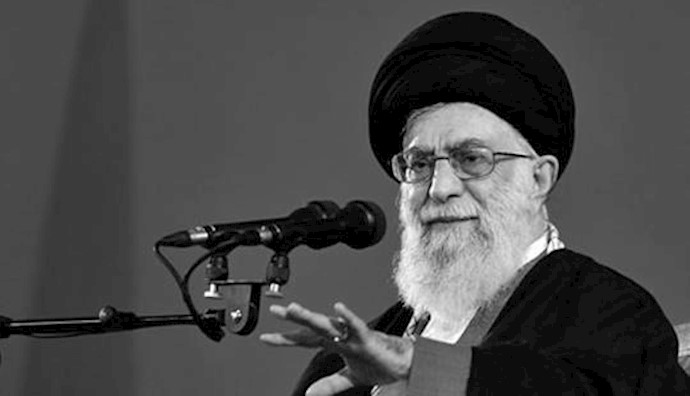
Reuters, Vienna, 14 July 2014 – A major speech by Iran’s Supreme Leader has limited the ability of the Iranian delegation at high-level nuclear talks to make concessions with six world powers and this could scuttle chances for Tehran to reach an accord to end sanctions, diplomats said.
In a public address filled with technical detail, Khamenei said last week Iran needs to significantly increase its uranium enrichment capacity, clashing with the powers’ push for it to be reduced to minimise the risk of nuclear bombmaking, as a July 20 deadline for a deal nears.
In his speech, which analysts compared in importance to a State of the Union address by a U.S. president, Khamenei said he had faith in his negotiating team led by Foreign Minister Mohammad Javad Zarif and his deputy, Abbas Araqchi.
Several diplomats close to the talks said the speech, which included many details about the nuclear program and Iranian demands on it, came as a surprise to the Iranian delegation.
One Western diplomat said the delegation appeared “taken aback” by Khamenei’s remarks at such a sensitive time in the nuclear negotiations – just ahead of the July 20 deadline for a deal. Two Iranian sources confirmed that assessment.
“In ostensibly expressing support for the Iranian negotiating team, close scrutiny of Khamenei’s speech shows that in reality his remarks were aimed at severely curtailing his team’s room for manoeuvre, making it effectively impossible to bridge gaps with the stance of the (six powers),” according to a Western intelligence analysis of the speech seen by Reuters.
Khamenei’s message was a reminder of the tensions within Iran’s complex power elite between conservative hardliners – like him – wary of any detente with the West they fear would imperil the Islamic Revolution – and moderates who see a nuclear deal as Iran’s ticket out of economically crippling isolation.
DISPUTE OVER CENTRIFUGES
A relative of Khamenei’s explained to Reuters the motivation for the speech. “The leader is above all the factions. He felt that it was essential to state his red lines publicly to avoid any misunderstanding by either side involved in the talks.
Khamenei suggested that Iran needed 190,000 centrifuge machines in the long term – a 19-fold increase in its current operational capacity to refine uranium.
U.S. and European negotiators want Iran to have a figure in the low thousands to ensure it cannot quickly amass enough for atomic bomb fuel, should it someday choose to do so.
“(Khamenei’s) statement served both as a directive upon his negotiating team and as an apparent effort to shift the framework of the debate away from Western demands, essentially grounding the talks,” the intelligence analysis said.
“In our assessment, Khamenei’s remarks were not coordinated with the Iranian negotiating team in Vienna at present, and were intended to cut off their ability to negotiate effectively,” the intelligence analysis said.
“Furthermore, they were aimed at sending a clear message to the international community that the negotiating team does not have the mandate to compromise on the most critical issues under discussion – above all, Iran’s uranium enrichment capacity.”
Iran expert Ali Vaez of the International Crisis Group said of Khamenei’s speech that “drawing public red lines won’t help the negotiators to narrow the gaps” in positions.
The talks on a long-term nuclear deal can theoretically be prolonged for up to six months if all sides agree. Some analysts and diplomats say an extension might be necessary but U.S. officials say there needs to be further progress on key issues in the coming days if an extension is to be approved.