
By Heshmat Alavi
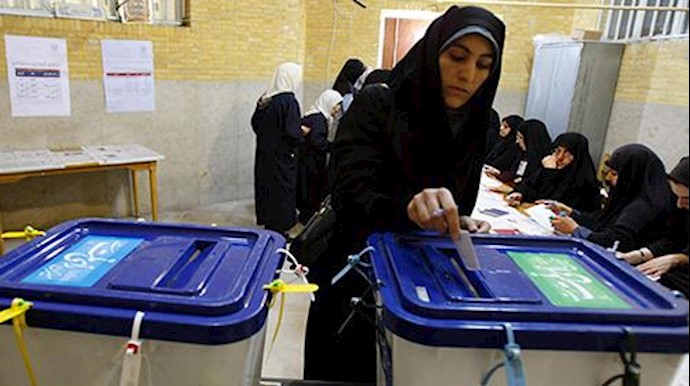
The American Thinker, May 31, 2017 – The presidential election in Iran is over and Hassan Rouhani has been selected to a second term. Already there are strong allegations of fraud and vote rigging, especially from the camp loyal to Iranian Supreme Leader Ali Khamenei.
The “vote rigging” industry in Iran under the mullahs’ rule has been a very long-lasting practice. One of the most common methods is to simply multiply the true number of all the votes for all candidates, to legitimize the collective process for the better good of the entire regime apparatus.
The mullahs are also known to print a large number of voting slips, far more than enough, and placing them in ballot boxes at a variety of pit stops. This is, again, aimed at depicting a canvas of a very large voter participation.
The most important example was unveiled by former prime minister Mir Hossein Mousavi in 2009 when he said the Interior Ministry had printed an extra 22 to 32 million voting slips. Moreover, a certain entity in the Interior Ministry, known as the “Vote Compiling Room” is where any and all types of statistics are literally materialized.
Of course, this was back in 2009. In this year’s election, eight years down the road, the “printing” phenomenon escalated into an enormous scale. According to reports published by state media, the number of ballots printed for this year’s vote was over 200 million.
The semi-official Tasnim news agency, affiliated with Iran’s Revolutionary Guards Quds Force, unveiled these numbers while specifying the number of eligible number voters in Iran was 56,410,234.
It is worth noting that 200 million voting papers were printed for three rounds of elections, all held on May 19th:
• Presidential election
• City and village council elections
• Midterm parliamentary elections.
For the first two, an adequate number of 56 million voting papers were needed. However, for the midterm parliamentary elections held in only four provinces, there was no need for another 60 to 70 million voting papers. Especially since the constituencies were related to one city and a few towns:
1) Maraghe and Ajab Sheer (northwest Iran). Population = 314,000
2) Ahar and Harees (northwest Iran). Population = 192,000
3) City of Isfahan (central Iran). Population = Around 1.6 million
4) Bandar Lange, Bestak and Parsiyan (southern Iran). Population = Less than 200,000.
The total number of eligible voters in these four constituencies is less than 2.5 million people.
This brings us to this conclusion that these three different elections did not need anything more than 150 to 160 million voting slips. The question is what does this make of the 40 million extra voting slips printed? Where did they end up?
Needless to say, according to the Interior Ministry’s own official numbers, in all the years of Iran being ruled by the mullahs, 25 to 49 percent of eligible voters have refused to cast their ballots. Again, this is according to the Interior Ministry’s numbers. Rest assured the truth is far higher.
While Iran claimed 73 percent of the eligible voters turned out for this year’s presidential election, of the 2.5 million Iranians living abroad only 6 percent cast their ballots, according to the Interior Ministry.
Mohammad Bagher Ghalibaf, Tehran’s former mayor and a presidential candidate, said this regime only represents 4 percent of Iran’s population. Considering the vote engineering seen in this round, we can reach a reasonable conclusion that only 6 to 7 percent of the Iranian populace actually cast their votes on May 19th.
And as the elections have come to an end, popular protests across the country have intensified. Many Iranians have invested in the Caspian housing firm, only to see their money plundered. This has sparked a string of protests across the country.
Of course, considering the intense political disputes between this regime’s various factions, more light will be shed on the entire scope of the vote rigging process practiced in this year’s elections.
This is the true nature of a regime that only represents a single digit percentage of the Iranian people.
Heshmat Alavi is a political and rights activist. His writing focuses on Iran, ranging from human rights violations, social crackdown, the regime’s support for terrorism and meddling in foreign countries, and the controversial nuclear program.