

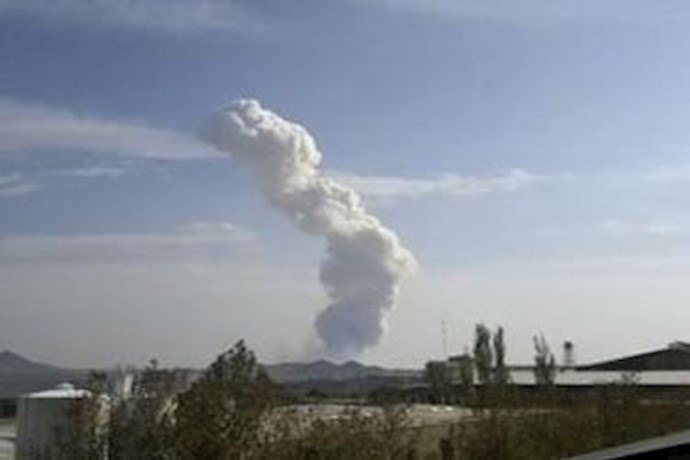
The New York Times, Washington, 5 Dec 2011 – The huge explosion that destroyed a major missile-testing site near Tehran three weeks ago was a major setback for Iran most advanced long-range missile program, according to American and Israeli intelligence officials and missile technology experts.
In interviews, current and former officials said surveillance photos showed that the Iranian base was a central testing center for advanced solid-fuel missiles
, an assessment backed by outside experts who have examined satellite photos showing that the base was almost completely leveled in the blast. Such missiles can be launched almost instantly, making them useful to Iran as a potential deterrent against pre-emptive attacks by Israel or the United States, and they are also better suited than older liquid-fuel designs for carrying warheads long distances.
It is still unclear what caused the explosion, with American officials saying they believe it was probably an accident, perhaps because of Iranian experience with a volatile, dangerous technology. Iran declared it an accident, but subsequent discussions of the episode in the Iranian news media have referred to the chief of Iran missile program as one of the martyrs killed in the huge explosion. Some Iranian officials have talked of sabotage, but it is unclear whether that is based on evidence or surmise after several years in which Iranian nuclear scientists have been assassinated on Tehran streets, and a highly sophisticated computer worm has attacked its main uranium production facility.
Both American and Israeli officials, in discussing the explosion in recent days, showed little curiosity about its cause.
Anything that buys us time and delays the day when the Iranians might be able to mount a nuclear weapon on an accurate missile is a small victory, one Western intelligence official who has been deeply involved in countering the Iranian nuclear program said this weekend. At this point, well take whatever we can get, however it happens.
In addition to providing a potential deterrent to attackers, Iran advances in solid-fuel missile technology, and the concern it could eventually have intercontinental reach, have been at the heart of the Obama administration insistence on the need for new missile-defense programs.
As concerns about Iran intentions have deepened in the West, intense surveillance efforts have been turned on suspected Iranian weapons sites. Iran has frequently accused the United States and Israel of spying and sabotage programs, and on Sunday made another such claim, saying it had shot down an advanced American RQ-170 drone in eastern Iran.
That particular drone is among the most sensitive in the American fleet, and if the report is true it would mean Iran had gained at least partial access to closely guarded American technology. A stealth version of the drone was flown for hours, on repeated occasions, over Osama bin Laden hide-out in Abbottabad, Pakistan, earlier this year, without being detected by Pakistani air defenses, American officials said. There have been reports for months, all unconfirmed, that the same drone was being used regularly over Iran, presumably to hunt for hidden nuclear or missile sites.
In a statement on Sunday, the American-led International Security Assistance Force in Afghanistan said that the drone to which the Iranians are referring may be a U.S. unarmed reconnaissance aircraft that had been flying a mission over western Afghanistan late last week.
It added that operators of the remotely controlled drone aircraft lost control of it and had been working to determine its status. The statement did not say what kind of drone was lost, or what might have caused the loss.
The statement would seem to suggest that the craft wrongly flew across the border into Iran. If a drone was used for intelligence gathering in Iran, it presumably would not belong to the military since there are no open hostilities with Iran but rather to the C.I.A. or another intelligence agency, acting under a presidential finding about the Iranian nuclear program.
One of the many theories swirling around the explosion at the missile base is that it could have been hit by a weapon, including one fired from a drone, setting off the huge explosion that followed. But since no outsiders can approach the base or gather evidence, it is unclear whether it will ever be known publicly what triggered the explosion.
Even if the cause was an accident and the United States has suffered some with its own solid-fuel motors several officials said that it was a major setback for Iran effort to focus much of its industrial prowess on that kind of missile.
Missiles powered by solid fuels rather than liquids have no need for trucks to fill them with volatile fluids, and can be fired on short notice, making them hard for other nations to destroy before they are launched. That would add to Iran ability to protect its nuclear sites from an Israeli strike a subject of renewed debate in Israel in recent weeks because Iran could threaten to retaliate before many of its missiles were struck. Solid-fuel missiles are also easier to hide. For those reasons, modern militaries rely on solid fuels for their deadliest missiles.
Blast That Leveled Base Seen as Big Setback to Iran Missiles
RELATED ARTICLES