
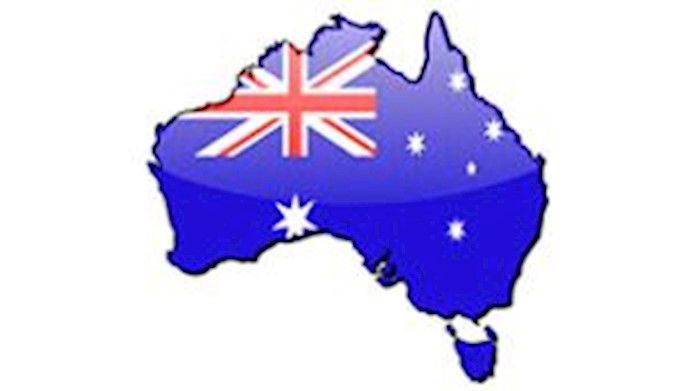
AFP, Sydney, 1 March 2012— An Australian man indicted by a US federal grand jury for plotting to export components for missiles, drones and torpedoes to Iran said Thursday he had no idea his actions were in breach of an embargo.
David Levick and his Sydney-based company ICM Components were each charged with one count of conspiracy to defraud the United States and to violate the International Emergency Economic Powers Act (IEEPA) and the Arms Export Control Act, according to the US Justice Department.
Levick, 50, was also charged with four counts of illegally exporting goods to an embargoed nation in violation of the IEEPA.
He and his company allegedly carried out purchases from 2007-2009 on behalf of an unnamed Iranian who would not have been able to make such purchases without US government consent.
But Levick said he’d had no idea when contacted by the Iranian that shipping the products in question, which he had purchased in the United States, was in breach of an embargo.
“I didn’t even know there was an embargo against it… he asked me all these questions about could I supply these, and I said ‘yeah, okay, I’ll supply you’,” he told the Australian Broadcasting Corporation.
Levick said he had been investigated by ASIO, Australia’s domestic spy agency, over the Iran claims in 2008 and they had seized his computers but he “heard nothing else from them and that was ages ago”.
When ASIO informed him that he was breaching an embargo Levick said he cancelled everything he had on order for the Iranian contact straight away.
“It’s just that he asked me for it, and I’ll supply anything if someone asks me for it,” he said.
“I didn’t realise that I wasn’t allowed to sell stuff to Iran.”
Levick said his business mostly sold semi-conductors to clients around the world including Europe, India, Japan and Taiwan.
He faces a potential maximum sentence of 85 years in prison if convicted of all charges, according to the US Justice Department.
While U.S. officials say they have no immediate plans to attack the facility and warn an attack by U.S. or Israeli forces could cause oil prices to skyrocket, they nonetheless contend the site is not nearly as protected as Iran claims, The Washington Post reported Wednesday.
Officials speaking to the Post on condition of anonymity said “bunker buster” bombs could irrevocably damage the Fordow site without having to reach its deepest point.
“Hardened facilities require multiple sorties,” said a former senior intelligence official familiar with Fordow. “The question is, how many turns do you get at the apple?”
“Our approach to this has been to galvanize and mobilize the international community to make it clear that Iranian behavior is the issue, to pressure and sanction Iran for its failure to live up to its international obligations, and to ratchet up that pressure and increase the sanctions on Iran to the point where we hope Iran will — Iran will change its behavior,” White House spokesman Jay Carney told reporters Wednesday.
“We believe that there’s time and space to continue to pursue that approach, even as we, you know, refuse and make clear that we do not take any option off the table in — in our effort to prevent Iran from acquiring a nuclear weapon. …
“We are determined to prevent Iran from acquiring nuclear weapons. We obviously monitor through [International Atomic Energy Agency] inspectors their nuclear programs. And there is no question that Iran has not lived up to its international obligations with regards to uranium enrichment and their level of cooperation with the IAEA,” Carney said.