
Reports of an unusually public spat between Iranian Supreme Leader Ali Khamenei and Hashemi Rafsanjani, an influential former president over the country’s recent missile tests have caught the attention of Arabic language commentators this week.
In comments published, Khamenei appeared to rebuke Rafsanjani, who last week criticized the missile tests, suggesting that “tomorrow’s world is the world of dialogue, not missiles”.
Defending the tests conducted by the Revolutionary Guard, Khamenei hit back: “Our enemies are constantly enhancing their military and missile capabilities, and given this how can we say the age of missiles has passed?”
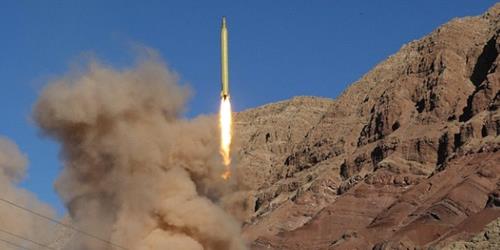
A long-range Qadr ballistic missile is launched in the Alborz mountain range in northern Iran on 9 March, 2016
Speaking to Saudi Arabia’s Al-Sharq newspaper, Mosa Afshar, a key Iranian opposition figure, said Khamenei was “trying to restore his respect which he lost with the nuclear agreement,” a reference to the deal between Tehran and world powers to curb its nuclear program.
“This [Iranian] regime is criminally complicit in wars in Syria, Yemen and Iraq. This regime can’t be trusted in any deal with the international community or with any other party.” Afshar added.
Also in Saudi Arabia, the Al-Sharq Alawsat newspaper highlighted Khamenei’s criticism of Rouhani’s stewardship of the economy, suggesting that Iranians were suffering and needed to protest for improved living conditions.
Writing for the Algerian Elitihadonline website, Ahmed al-Mola speculated that Khamenei’s anger and the Revolutionary Guard’s missile tests may have been prompted by a feeling that they had been misled by the nuclear deal.
Mola urged the Gulf States to seize on Khamenei’s remarks as proof of the regional threat posed by Tehran to mobilize international opinion against Iran.
Egyptian news website Bldnaalyoum adopted a similar tone in an opinion piece by Sayed Moustafa headlined “Iranian missiles threaten the thrones of Gulf countries”.
Speaking to Al-Alam, Mohsen Rezaee, the secretary of Iran’s influential Expediency Discernment Council, said: “We will not submit to disarmament”, while Iranian defense minister Hosain Dahqan said: “Iran doesn’t need a license from anybody to develop its military capabilities.”
The Abu Dhabi-based Skynewsarabia, which often follows the foreign policy of the GCC countries, suggested that Moscow was behind Tehran’s ballistic belligerence, and that the country was trying to compensate for the loss of its nuclear program.
“Iran is showing its muscles with these endless tests of long and medium range ballistic missiles. Iran is determined that its missiles capabilities are not part of the nuclear deal… but it has already stirred the anger of the international community,” it said.
Source: Middle East Eye, April 1, 2016