
In 1916, Irish nationalists organized the Easter Rising in Dublin. The rising failed, but it mobilized a surge of widespread opposition against British rule in Ireland.
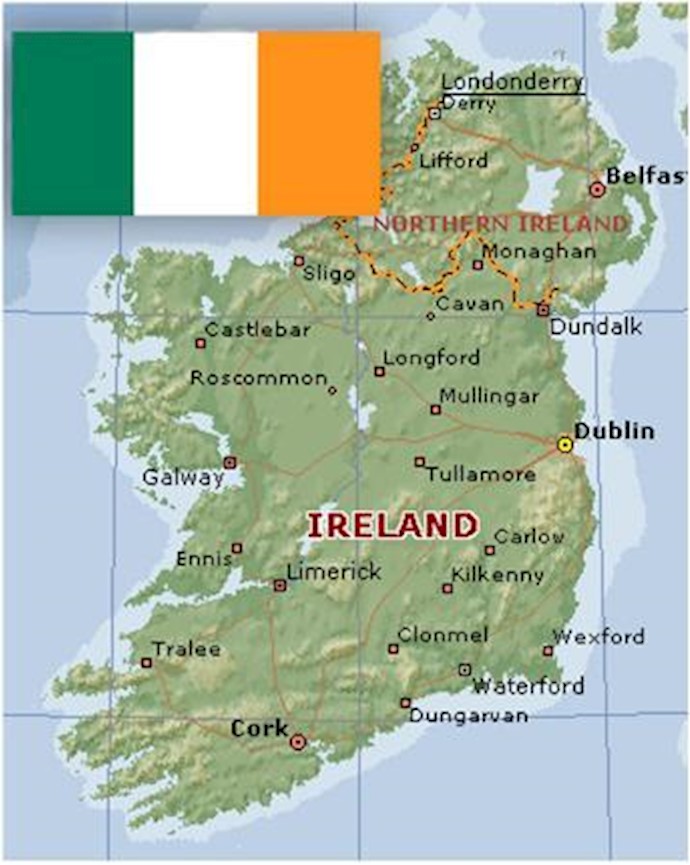
On January 2, 1919, the Irish parliament proclaimed this country’s government as a republic that ignited a 3-year war between the Irish Republic Party and Britain. In 1921, the Irish Republic Army signed a peace treaty with Britain and South Ireland was granted dominion status. In 1923, South Ireland reached its independence and was announced as Ireland Free State, while 6 provinces in the north remained as part of British kingdom. As the South Ireland law was implemented in 1949, this country gained its independence and was removed from any British influence. In 1973 Ireland joined the European Economic Community (later the European Community); it is now a member of the European Union. The last decades of the 20th century were dominated by sectarian hostilities between the island’s Catholics and Protestants. The Irish government played a pivotal role in negotiating and winning public support for the Belfast Agreement (1998), which gave the country a consultative role in the affairs of Northern Ireland and modified Ireland’s constitution to remove its claim to the territory of the entire island.
Irish uprising after World War I
RELATED ARTICLES