
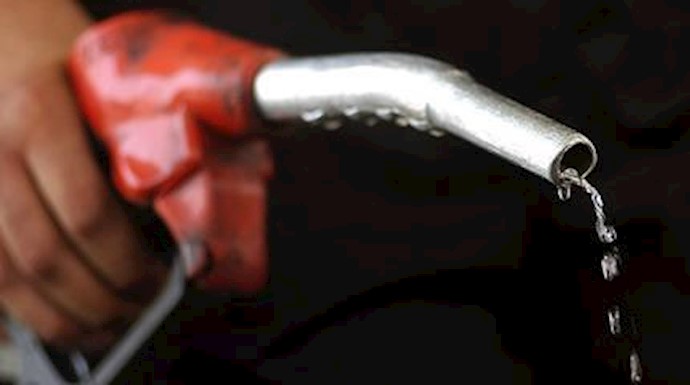
Iranians have rushed to gas stations to fill their cars before a price surge expected at midnight on Thursday, as Hassan Rouhani pushes ahead with a policy to cut fuel subsidies, Reuters reported on Thursday, April 24th.
The new prices of subsidized petrol, diesel and compressed natural gas (CNG) have not been announced, but the increases will test Rouhani among a population battered by soaring inflation that has been exacerbated by economic sanctions.
With memories of riots at the pumps when cheap fuel was rationed for the first time, in 2007, police are on the alert.
Rouhani’s predecessor, Mahmoud Ahmadinejad, last cut subsidies for fuel, food and utilities in December 2010.
The impact on inflation – which shot up from a record low of 8.8 percent in August 2010 to around 40 percent by the end of his term, exacerbated by tightened Western sanctions – was a major cause of public resentment.
The subsidy cut is likely to reverse some of his progress on that front. Inflation currently stands at 35 percent.
“(In 2007) there was chaos everywhere all across Tehran,” remembers a 34 year engineer speaking by telephone from the capital.
EXPECT MORE
“Of course I don’t want prices to go up, said a 30-year-old communication specialist in Tehran.
Rouhani’s first attempt at implementing subsidy reform was a disaster.
In February, his government partially replaced cash subsidies with food handouts. Images of people waiting hours for a few bags of groceries tarnished Rouhani’s image as a competent manager
Currently, motorists with the right to subsidized gasoline receive 60 liters a month at the price of 4,000 rials ($0.16) a liter, or $0.61 a gallon, using the central bank’s official exchange rate.
Above that, motorists pay 7,000 rials ($0.28) a liter for gasoline, or $1.02 a gallon.
($1 = 24797.0000 Iranian Rials)