Democrats and Republicans say their support would hinge on how the terms of the deal can be verified
The Wall Street Journal, Washington, 26 June 2015
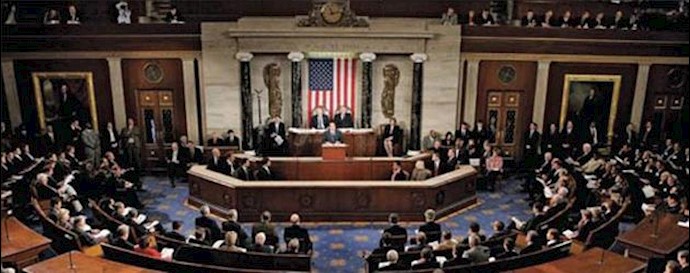
President Barack Obama faces a skeptical Congress as his administration attempts to reach a final agreement to curb Iran’s nuclear program.
Lawmakers are expressing concerns over lingering unresolved issues, such as how much access inspectors will have to Iran’s facilities, as negotiators approach a month’s end deadline for a final agreement.
Both Democrats and Republicans said this week their support for a deal would hinge on how negotiators resolve remaining sticking points, particularly how international inspectors will be able to verify Iran’s compliance with any new requirements.
“There needs to be immediate access anywhere so that if the Iranians cheat, we can detect it,” said Rep. Eliot Engel of New York, the top Democrat on the House Foreign Affairs Committee. “If that’s not going to be the case—as we hear some rumors—then that’s problematic for me.”
U.S. and European officials said they believed Mr. Khamenei’s comments were intended to extract more concessions from the Obama administration and its negotiating partners.
House Speaker John Boehner (R., Ohio) sharply criticized the White House. “The president has handed Iran concession after concession,” Mr. Boehner said Thursday. “Giving Iran more flexibility will not lead to a good deal. It will only lead to more concessions for a regime that has no intention of giving up its desire for a nuclear weapon.”
Sen. Lindsey Graham (R., S.C.) said on the Senate floor Thursday that the U.S. should halt its negotiations until Iran agrees to a gradual lifting of sanctions and unfettered inspections at Iranian military sites, including an accounting of past activity.
Reflecting a congressional desire to make sure the U.S. can apply pressure on Iran if it reneges on any deal, Sens. Mark Kirk (R., Ill.) and Bob Menendez (D., N.J.) introduced legislation Thursday extending for 10 more years sanctions on Iran set to expire next year.
“If a deal is reached with Iran, it is critical that should Iran violate the terms of an agreement, severe penalties will follow and a forceful snapback of sanctions will occur,” Mr. Menendez said in a statement. “For me, the trend lines of the Iran talks are deeply worrying.”
“This has been a real near-death experience with trade, and it finally looks like we’re going to survive, and then we’ll turn our attention to the next crisis,” said Rep. Gerry Connolly (D., Va.), who said his primary concern is the strength of the inspections regime.
At a security conference in Washington Friday, Deputy Secretary of State Antony Blinken said a deal with Iran would include “exceptional constraints” on Iran’s nuclear program as well as intrusive transparency measures and inspections.
Senior administration officials say they expect the June 30 deadline to slip a few days, as did the March 31 deadline for a framework.
Mr. Earnest said this week that “at this point, we’re not planning any sort of longer-term extension.”.