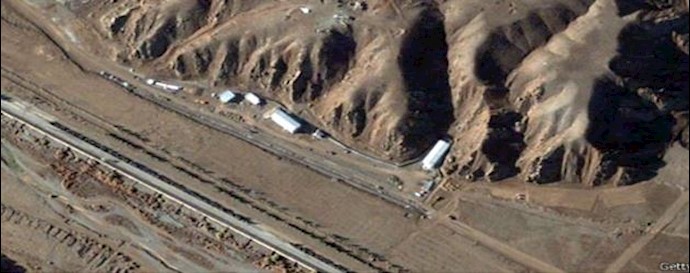
Fresh criticism in Congress rose after Iran revealed Monday it took its own samples at a suspect military site without international inspectors present. The criticism is on the nature of a United Nations investigation into whether Tehran once worked on nuclear weapons, The Wall Street Journal reported on Monday.
The revelations that Iran, rather than the IAEA, took the samples at Parchin—a key step in the investigation—only deepened concerns that the world will never get a clear understanding of any past weaponization work in the country. The U.N. nuclear watchdog’s investigation has become a focal point of critics of the nuclear deal between Iran and six world powers, among them some U.S. lawmakers.
As part of the nuclear deal reached in July, the IAEA is supposed to release by December a report affirming Tehran cooperated in its investigation as a prelude to sanctions on Iran being lifted.
The IAEA has disclosed detailed evidence that Iran carried out experiments at Parchin in the early 2000s on explosives that could be used in a nuclear weapon.
It has sought samples of soil, air or dust from Parchin to detect radioactive material or other evidence of experiments that could be used to help build a weapon.
Iran’s state-run IRNA news agency quoted a spokesman for the Iranian atomic energy agency, Behrouz Kamalvandi, as saying samples were taken at Parchin “only by the Iranian experts and without the presence of the agency’s inspectors.”
The IAEA declined to comment on his remarks.
Sen. Tom Cotton (R., Ark.), a chief critic of the Iran nuclear deal, pointed to Iran’s latest disclosures as more evidence of the flaws in the nuclear agreement.
“The fact that Iran is taking its own soil samples shows that the verification scheme is an embarrassing charade, and yet another concession we can add to the pile of concessions that make up the dangerous Iran deal,” he said.
IAEA Director General Amano reiterated the IAEA’s view that Iranian construction at Parchin has undermined his agency’s ability to verify what happened there. Mr. Amano has, in the past, accused Tehran of trying to sanitize the site.
The IAEA has raised repeated questions about the use of a large explosives containment chamber at the Parchin site south of Tehran.
Some nuclear experts and Western officials have said the IAEA probe will be credible only if it allows broad sampling and follow-up visits to Parchin and if the IAEA has access to important documents and to top officials, including nuclear scientists, involved in its past program.
Even some supporters of the Iran deal in Washington said they were skeptical the IAEA would be able to issue a conclusive report by December.