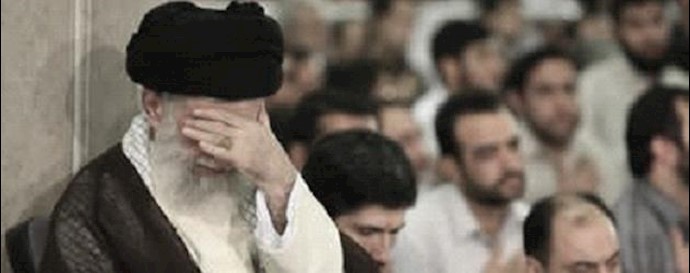
Two months after the July 14th signing of the Iran nuclear accord, concern remains over possible opposition from a different source: Iran’s supreme leader, Ali Khamenei.
It has been assumed in Western capitals, and in Tehran, that the deal to curb the Iranian nuclear program in exchange for sanctions relief would never been have sealed on July 14 without the blessing of Iran’s top official.
But in recent weeks, Khamenei has subtly distanced himself from the accord, sending signals that he is not happy with some aspects. Although there are competing explanations for why that may be, his moves and comments are nevertheless causing anxiety about the agreement’s long-term durability.
The internationally negotiated pact has had to navigate a complex labyrinth of Iranian politics. Iranian leaders — especially Khamenei — do not want to appear too enthusiastic about an accord that has incurred the wrath of many Iranian hard-liners, who fear any hint of improved relations with Washington.
Rep. Adam Schiff (D-Burbank), the ranking minority member of the House Intelligence Committee and a supporter of the deal, said Khamenei “has left himself an exit.”
Officials in the United States and elsewhere have long suspected that Tehran seeks nuclear weapons capability.
Nearly all important decisions in Iran are made by Khamenei. Any role he took in forging and building consensus for the agreement has taken place very much outside public view.
One sign of Khamenei’s views came late last month, when Hossein Shariatmadari, who is managing editor of the conservative Kayhan newspaper and often a mouthpiece for the supreme leader, wrote in an editorial that Khamenei is “well aware that the agreement could have disastrous consequences” and “is not in any way satisfied with the text.”
Khamenei has made it abundantly clear that the deal does not augur a broader opening to the West. This week, he issued a public declaration that the Islamic Republic “did not and will not hold talks with [the] U.S. on issues other than nuclear negotiations.”
In the same speech, the supreme leader voiced the hope that “the Zionist regime” — Tehran’s standard label for Israel — would not exist in 25 years.
In a speech this week, Khamenei even recalled the “Great Satan” sobriquet placed on the United States by Khomeini, the founder of Iran’s Islamic Revolution.
“Some people insist on disguising this Great Satan as the savior angel,” the supreme leader said. However, he said, “the Iranian nation expelled this Satan; we must not allow that after we expelled it through the door, it could return and gain influence through the window.”
Even so, Khamenei praised Iranian negotiators of the deal, who he said “did a good job.”
Part of that balancing act stems from a desire to avoid alienating ordinary Iranians who hope the deal will bring a better economy and more contact with the world.
Obama administration officials say they can’t predict what Iranian leaders’ attitudes about the deal will be in the future. But they say they are confident that the agreement had Khamenei’s support when it was signed. And they say that it was crafted to make sure Iran won’t receive its benefits unless its leaders follow through on their commitments.
“They understood what the terms were when they agreed to the deal,” said a State Department official, who was not authorized to discuss the agreement publicly. “They have to follow them.”