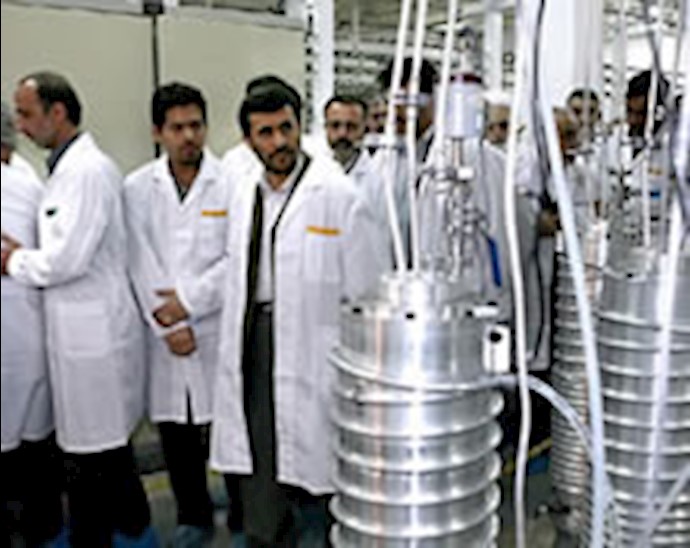
The Associated Press, 30 August 2008 (excerpts) – Iran has increased the number of operating centrifuges at its uranium enrichment plant to 4,000, a top official said Friday, pushing ahead with the nuclear program despite threats of new U.N. sanctions.
The number was up from the 3,000 centrifuges that Iran announced in November that it was operating at its plant in the central city of Natanz. Still, it is well below the 6,000 it said last year it would operate by summer 2008, suggesting the program may be behind schedule.
Deputy Foreign Minister Ali Reza Sheikh Attar, who visited Natanz last week, said Friday that Iran was preparing to install even more centrifuges, though he did not offer a timeframe.
“Right now, nearly 4,000 centrifuges are operating at Natanz,” Attar told the state news agency IRNA. “Currently, 3,000 other centrifuges are being installed.”
The United States and its allies are likely to press the U.N. later this year for a new round of sanctions after Iran did not accept a package of economic and technological incentives in return for suspending enrichment.
By reaching 4,000 centrifuges, the program is moving into an industrial-scale program that could churn out enough enriched material for dozens of nuclear weapons.
Experts, however, say Iran would need to change the way the centrifuges are operating to enrich uranium to high, weapons-grade levels, something that would be difficult since the Natanz facility is under IAEA video surveillance.
Last month, Iranian President Mahmoud Ahmadinejad said Iran possesses 6,000 centrifuges, though he did not specify how many were operating. He also suggested that negotiations with the U.N. had raised a possible compromise whereby the enrichment program could continue as long as it was not expanded beyond 6,000 centrifuges. However, the IAEA and the countries involved in the nuclear issue – the U.S., Britain, France, Germany, China and Russia – have not shown any public sign that such a compromise was on the table.