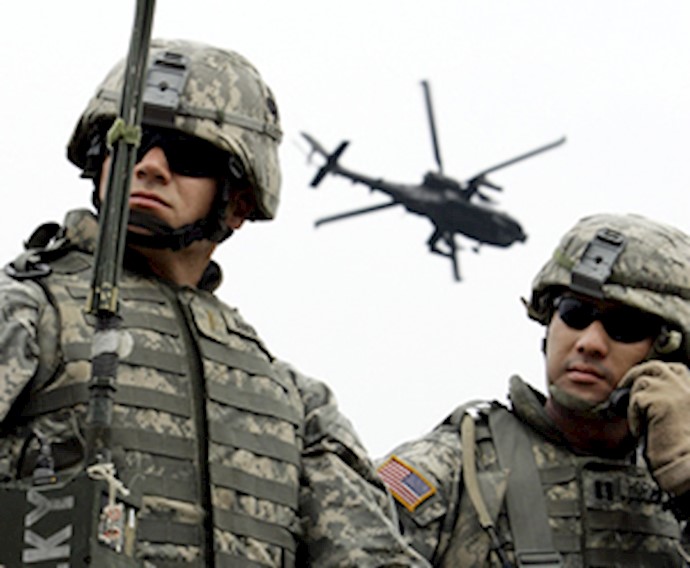
Using an array of sophisticated tracking equipment and biometirc information, the military aims to keep suicide bombers and fighters out.
Washington Post, Zurbatiyah, Iraq , October 31, 2008 — Twenty-eight teams of U.S. military officials, customs experts and former U.S. Border Patrol agents working as private contractors have been sent to small outposts along Iraq’s 2,270-mile border, where U.S. officials also employ ground sensors linked to satellite cameras and unmanned aerial vehicles.
U.S. officials say the dragnet has led to the detention of hundreds of ’adversaries’ and yielded a clearer understanding of smuggling networks. Officials plan to double the number of border teams by the end of the year.
’Internal security is getting much better,’ said Lt. Col. Steven Oluic, who is a liaison between the teams and top U.S. commanders in Baghdad. ’Now … we need to help them shut down the borders to malign influence. Borders are now the hot issue.’
U.S. military officials in Iraq and Afghanistan have collected biometric information from more than 1.5 million people. The U.S. program is largely separate from Iraq’s halting efforts to control its borders. The government has allocated hundreds of millions of dollars to build up border and customs agencies, but Prime Minister Nouri al-Maliki recently took direct control of the customs bureaucracy because of corruption.
The Zurbatiyah port of entry, east of Baghdad, is one of Iraq’s busiest. Iranian trucks, which are not allowed to cross into Iraq, line up early in the morning at a parking lot on the Iranian side, where cargo is loaded onto Iraqi vehicles.
Hundreds of Iranian tourists, mainly pilgrims bound for the Shiite holy cities of Najaf and Karbala, are dropped off on the Iranian side each day. Older travelers are carried on wobbly metal carts loaded with bulging suitcases.
Military-age men must pass through a trailer, where U.S. soldiers sit behind laptop computers emblazoned with a bat symbol, a reference to the acronym of the system: Biometrics Automated Toolset. The scanning and photography take a few minutes. In some cases, officials use a second scanner with facial recognition software.
U.S. officials began devising a border security strategy in late 2005 to stem the flow of weapons and would-be suicide bombers into Iraq from Syria. But since last year, Iraq’s 900-mile border with Iran has become the top priority: U.S. officials accuse Iran of arming, training and financing militias in Iraq, a charge Iranian officials have consistently denied.
Though the borders remain porous, U.S. officials say the new measures have contributed to the sharp reduction of violence in Iraq this year by forcing insurgents and smugglers to use remote and dangerous routes.
’It’s becoming more and more effective as the database is built,’ Oluic said. ’Monthly, it’s becoming more and more difficult to use the ports of entry’ for weapons and fighters.
Ground sensors outside ports of entry, similar to ones installed along the southwest border in the United States, are linked to cameras that alert intelligence officers in the United States to suspicious movements. The officers then report the activity to U.S. soldiers near the border.
U.S. military officials say they hope to implement some of the screening methods at Iraq’s commercial airports.
Military-age men must pass through a trailer, where U.S. soldiers sit behind laptop computers emblazoned with a bat symbol, a reference to the acronym of the system: Biometrics Automated Toolset. The scanning and photography take a few minutes. In some cases, officials use a second scanner with facial recognition software.
U.S. officials began devising a border security strategy in late 2005 to stem the flow of weapons and would-be suicide bombers into Iraq from Syria. But since last year, Iraq’s 900-mile border with Iran has become the top priority: U.S. officials accuse Iran of arming, training and financing militias in Iraq, a charge Iranian officials have consistently denied.
Though the borders remain porous, U.S. officials say the new measures have contributed to the sharp reduction of violence in Iraq this year by forcing insurgents and smugglers to use remote and dangerous routes.
’It’s becoming more and more effective as the database is built,’ Oluic said. ’Monthly, it’s becoming more and more difficult to use the ports of entry’ for weapons and fighters.
Ground sensors outside ports of entry, similar to ones installed along the southwest border in the United States, are linked to cameras that alert intelligence officers in the United States to suspicious movements. The officers then report the activity to U.S. soldiers near the border.
U.S. military officials say they hope to implement some of the screening methods at Iraq’s commercial airports.