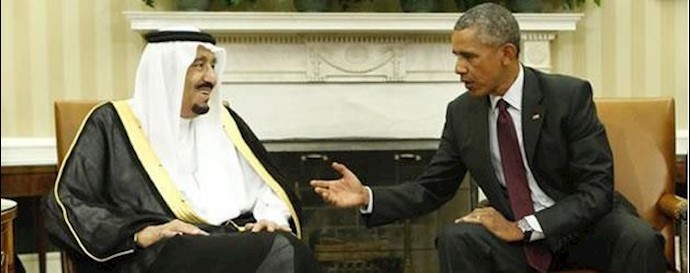
King Salman of Saudi Arabia is being greeted by the Obama administration with assurances that a nuclear deal with Iran also comes with the necessary resources to help check its regional ambitions, the Associated Press reported on Friday, September 4th.
The king is making his first visit to the White House since ascending the throne in January. The visit on Friday comes at an important moment. Congress will soon take up a resolution of disapproval of the nuclear agreement, though Democrats are expected to provide Obama with enough votes to sustain his expected veto.
Saudi officials have voiced support for the deal, but they are also worried about the international community’s ability to enforce it. The visit is pushing the administration to publicly address those concerns before Congress votes.
To that end, Secretary of State John Kerry said the U.S is working with allies in the Middle East to develop a ballistic missile defense system, special operations training and will team up on large-scale military exercises.
“We are determined that our Gulf friends will have the political and military support that they need,” Kerry said during a speech delivered in Philadelphia, which was also broadcast in Iran.
Some suspect that the administration’s promises of support are aimed more toward easing the concerns of Congress and the American public than of the king.
“Obama only has about a year left so promises about American foreign policy are going to have a very short life,” said Elliott Abrams, who served as deputy national security adviser to President George W. Bush. “… I don’t know if he’s really interested in the president’s promises at this point.”
Rather that exchanging promises, the leaders of the U.S. and Saudi Arabia are focused on delivering a message, Abrams said.
“I think he wants to tell the president that Iran is a great danger and an enemy,” Abrams said of the king. “The Saudis think we view Iran as a possible partner. They don’t.”
Meanwhile, the president will want to assure the king he’s well aware of the dangers Iran poses.
One of Saudi Arabia’s greatest concerns is what Iran will do as relief from sanctions and access to frozen assets boosts its economy. The White House now estimates that Iran will be able to access $56 billion once it completes key steps in the agreement.
Some have expressed concern that Iran will use the newly freed money to fund Lebanon-based Hezbollah terror activities, bolster Bashar Assad or continue to help destabilize Yemen through the Houthi rebels.
“We also acknowledge the fact that we need to ensure that we’re doing everything we can to counter Iran’s destabilizing activities in the region,” said Ben Rhodes, a deputy national security adviser.
Jeff Prescott, a senior director in the president’s National Security Council, said the U.S. is asking all sides to allow for unfettered humanitarian access to all parts of Yemen and to avoid damage to infrastructure required to deliver assistance.
“I expect the president will express the concerns that we have about the urgent need to find a resolution to this crisis,” Prescott said during a conference call with reporters previewing the king’s visit.