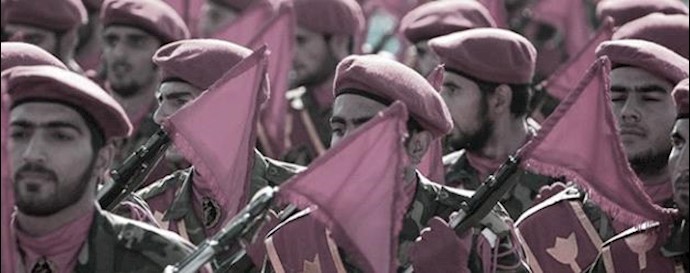
Alarm bells rang for Iranian businessmen in May when the elite Revolutionary Guards cancelled the Forum of Young Global Leaders – an annual event sponsored by the World Economic Forum – shortly before the gathering was due to take place in Tehran and Isfahan.
It was a reminder to the business community that the 120,000 strong military force, known for its loyalty to Khamenei, the supreme leader, feels increasingly insecure about what a nuclear deal could mean not just for Iran but also for its commercial empire, whose interests stretch from telecoms to construction to consumer goods imports.
The elite force – designated by the US state department as a “proliferator of weapons of mass destruction” but whose interests have long extended beyond the purely military – urged organizers not to publicize the fact that it was behind the cancellation and embarrass a regime that had just reached a framework nuclear agreement.
“The Guards are worried that a new phenomenon of closer relations with the west, notably the US, is happening while they don’t know how to handle it,” said one businessman involved in organizing the forum. “They are paranoid about lots of communications and contacts over which they fear they have little control.”
As Iran negotiates with the six major powers – US, UK, France, Russia, China and Germany – in Vienna to reach a deal by the extended deadline of July 7, Iran’s hardliners led by the Guards are worried about what a post-deal Islamic republic might look like. They fear the consequences of any deal on the country’s politics, economy and military influence in the region after more than three decades of anti-western rhetoric and international isolation.
But analysts say the hardliners’ main concern is about losing control of its vast business interests now that the country is preparing to open up its doors to foreign investment. This investment is widely seen as necessary to tackle a devastated, though oil and gas-rich economy, where youth unemployment is at least 25 per cent, according to the government’s own figures.
It is impossible to know how much wealth the elite force has accrued because of the organization’s opacity but independent analysts estimate it to be probably worth hundreds of billions of dollars.
The eight-year presidency of hardline president Mahmoud Ahmadi-Nejad, which ended in 2013, and the tightening of international sanctions in 2011 gave the Guards a golden opportunity to capitalize on Iran’s more hostile relations with the west. During that period, the Guards profited from $120bn of privatizations. An affiliated company bought the state-run telecoms company in 2009 for about $7.8bn. Providing landline, mobile phone and internet services to a 78m-strong tech-savvy population, this business is estimated to generate income of tens of billions of dollars every year. At the same time, they received big energy and construction projects and became key importers of everything from food to sports cars. Khatam-ul-Anbia — effectively the construction arm of the Guards which has been hit by UN, US and EU sanctions — has taken over hundreds of projects in sectors as varied as oil, gas, petrochemicals, marine installations, consulting, mining, pipelines, dams, jetties, tunnels and irrigation networks. Meanwhile, companies and individuals affiliated to the Guards run tens, if not hundreds, of credit institutions.
While analysts expect the Guards to resist foreign investors, at least in the short term, they are divided as to how far they will go to undermine rivals.
In 2004, they occupied the runway of the International Imam Khomeini Airport with tanks under the pretext of “security reasons” to stop a Turkish-led consortium, Tepe Akfen Vie, from taking over the management of the airport. “This generation of the Guards that is running the market is still the generation of war and ideology,” said one legal consultant. “But we should hope that they are gradually getting retired and hand over business to the next generation which has to compete with the private sector and foreign investors.”
It is not clear if Iran’s supreme leader and ultimate decision maker, Khamenei, will force the Guards to rein in their business interests and go back to their garrisons after any nuclear deal. Any such move risks alienating the top leader’s most devoted force. “Resistance against reforms is the nature of Iran’s political system in which parallel organizations operate,” said a senior economist.
AFP – July 2, 2015