
BBC, 4 Dec 2012 – NATO Secretary General Anders Fogh Rasmussen has underlined US President Barack Obama’s warning to the Syrian government not to use chemical weapons against its own people.
At a NATO foreign ministers’ meeting in Brussels, Mr Rasmussen said their use would be “completely unacceptable”.
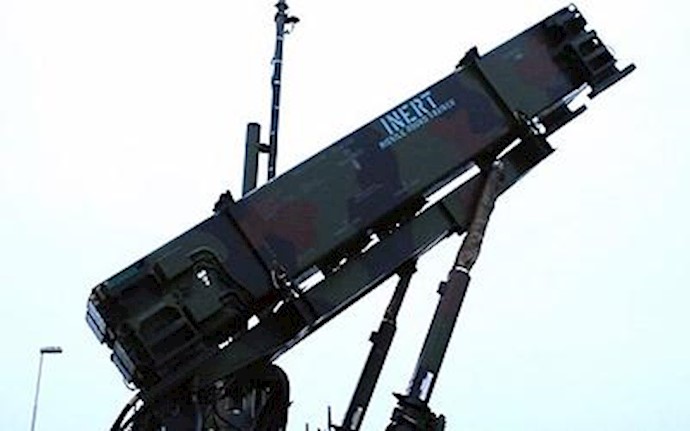
The foreign ministers are expected to approve the deployment of Patriot anti-missile batteries to Turkey.
The move is designed to defend Turkey’s border with Syria.
Activists say more than 40,000 people have been killed since the Syrian uprising against President Assad began in March 2011. Hundreds of thousands of people have fled the country and another 2.5 million are displaced within its borders.
NATO’s expected deployment of Patriot surface-to-air missile batteries to south-eastern Turkey is essentially a gesture of reassurance to Ankara.
Turkey feels threatened by the growing crisis in Syria. Stray Syrian artillery shells have already come across the border on several occasions. Turkey fears that worse could follow.
Patriot is highly capable against both advanced aircraft and ballistic missiles. But NATO will underline that this is to be seen as a defensive deployment only. Patriot has no capacity to deal with stray shell fire.
While Patriot can reach into Syrian airspace, NATO is at pains to stress that this is in no sense a step towards establishing a no-fly zone over Syria. Nonetheless, NATO may also hope that there will be a deterrent effect that may dissuade Syria from operating its aircraft too close to the Turkish frontier.
On Tuesday, a teacher and at least 28 students were killed when shelling hit their school inside the Wafideen refugee camp, 20km (15 miles) north-east of Damascus.
The origin of the firing was not clear – state media said it was a rebel mortar attack but rebels blamed government troops.
Speaking ahead of the NATO meeting, Mr Rasmussen told reporters: “The possible use of chemical weapons would be completely unacceptable for the whole international community.
“If anybody resorts to these terrible weapons, then I would expect an immediate reaction from the international community.”
Russia’s Foreign Minister Sergei Lavrov, who is at the meeting, said any breaches of international agreements relating to the use and transportation of chemical weapons would be “absolutely unacceptable”, Russia’s Interfax news agency reports.
The meeting of the 28-member Western military alliance’s foreign ministers in Brussels follows a request from Turkey to boost its defences along the border. NATO officials have made clear such a move would be purely defensive.
President Obama has warned Syrian President Bashar al-Assad he would face “consequences” if he used chemical weapons against his people.
“The world is watching. The use of chemical weapons is and would be totally unacceptable,” said Mr Obama in a speech at the National Defense University in Washington.
“If you make the tragic mistake of using these weapons there will be consequences and you will be held accountable.”
A Syrian official has insisted the country would “never, under any circumstances” use such weapons, “if such weapons exist”.
Rebel gains
A NATO team has already visited a number of sites in Turkey in preparation for the deployment of Patriot batteries, which could be used to shoot down any Syrian missiles or warplanes that stray over the border, says BBC defence correspondent Jonathan Beale.
The missile deployment is likely to be approved despite opposition from Russia, whose foreign minister is also attending Tuesday’s meeting in Brussels, adds our correspondent.
But analysts say any deployment – possibly supplied by the US, Germany or the Netherlands – could take weeks.
Syrian opposition fighters have reportedly made dramatic gains recently, and several government mortar shells – aimed at rebel targets close to the border – have landed across its 900-km (560-mile) border with Turkey.
Ankara’s request for NATO to deploy the anti-missile batteries came after intelligence assessments that Damascus was contemplating using ballistic missiles, potentially armed with chemical warheads, reports say.
Syria’s chemical weapons
• The CIA believes Syria has had a chemical weapons programme “for years and already has a stockpile of CW agents which can be delivered by aircraft, ballistic missile, and artillery rockets”
• Syria is believed to possess mustard gas and sarin, a highly toxic nerve agent
• The CIA also believes that Syria has attempted to develop more toxic and more persistent nerve agents, such as VX gas
• A report citing Turkish, Arab and Western intelligence agencies put Syria’s stockpile at approximately 1,000 tonnes of chemical weapons, stored in 50 towns and cities
• Syria has not signed the Chemical Weapons Convention (CWC) or ratified the Biological and Toxin Weapons Convention (BTWC)
Syria is believed to hold chemical weapons – including mustard gas and sarin, a highly toxic nerve agent – at dozens of sites around the country.
The CIA has said those weapons “can be delivered by aircraft, ballistic missile and artillery rockets”.
One unnamed US official told the New York Times on Monday that the level of concern in Washington was such that contingency plans were being prepared.
On Monday the United Nations said it was pulling “all non-essential international staff” out of Syria, with as many as 25 out of 100 international staff expected to leave this week.
The European Union has withdrawn its mission altogether. The ambassador and head of delegation to Syria, Vassilis Bontosoglou, left Damascus with his six remaining international staff members on Tuesday morning.
Although the head of the Arab League Nabil al-Arabi told AFP on Monday that the Syrian government could fall “any time”, it still holds the capital, parts of the second city Aleppo, and other centres.
Syrian foreign ministry spokesman Jihad Makdissi is said to have fled the country, amid reports he has been dismissed, ostensibly for making statements out of line with government policy.
Syria crisis: NATO in chemical weapons warning
RELATED ARTICLES