Washington Examiner, Nov 28, 2017
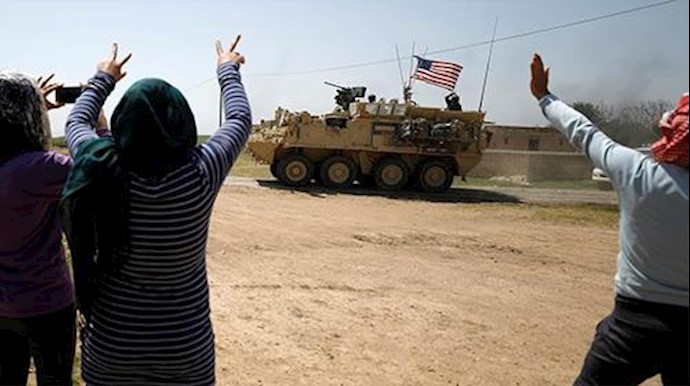
CUTTING ARMS FOR THE KURDS: The U.S. continues to walk a fine line with Turkey, as it navigates a contentious relationship with a NATO ally infuriated over U.S. military backing for Syrian Kurds fighting the Islamic State in Syria. On Sunday, Turkey’s foreign minister said President Trump told Turkish President Recep Tayyip Erdogan in a phone call that he had “given clear instructions” that no more weapons are to be provided to the Kurds, and quoted Trump as saying “this nonsense should have ended a long time ago.”
A White House statement following the call said Trump simply informed Erdogan of “pending adjustments to the military support” given that the battle for Raqqa was over, and the counter-ISIS campaign is moving into a “stabilization phase.”
Yesterday both the Pentagon and the White House portrayed the move as the logical next step as the fighting against ISIS winds down. “We’ve been clear with Turkey that weapons provided to the Syrian Democratic Forces, which includes Kurdish elements of the SDF, would be limited, mission-specific, and provided incrementally to achieve our objectives,” said Col. Rob Manning, a Pentagon spokesman. Manning said the Pentagon is constantly assessing what arms and equipment it provides to Syrian forces fighting ISIS, and that the review is simply part of that process. “We are taking a hard look at the adjustments that need to be made to the military support provided to our Kurdish partners,” Manning said. “We’re always taking a look and assessing how we can do that better.”
At the White House, press secretary Sarah Sanders denied the “adjustments” amount to an abandonment of America’s Kurdish partners who provide the crucial combat power to defeat ISIS on the ground. “Look, once we started winning the campaign against ISIS, the plan and part of the process is to always wind down support for certain groups; now that we’re continuing to crush the physical caliphate, that we’re in a position to stop providing military equipment to certain groups,” Sanders said. “But that doesn’t mean stopping all support of those individual groups.”
THE PERILS OF PEACE: The U.S. is pinning its hopes on a stable Syria during a new round of U.N.-brokered peace talks in Geneva that began again today. The talks are aimed at finding a political settlement between the Syrian government of Bashar Assad and opposition forces. But two reports this week cast a cloud over the prospects.
The Institute for the Study of War is warning that al Qaeda is growing stronger in southern Syria. “An assassination campaign targeting mainstream opposition commanders and governance officials is facilitating al Qaeda’s consolidation of power along the borders of Jordan and Israel. Southern Syria stands at increasing risk of becoming a second Idlib Province, which currently serves as a formidable safe haven for al Qaeda,” the think tank says.
Meanwhile, Conflict Monitor by IHS Markit predicts the Syrian government is unlikely to adhere to the de-escalation zones established by an agreement once it has fully re-established control over Syria’s Deir al-Zour province. The analysis by IHS Markit principal Middle East analyst, Columb Strack, also concludes it’s likely U.S.-backed Kurdish components of the SDF will be compelled to give back Deir al-Zour’s oilfields to the Syrian government as well as territory captured from ISIS by the SDF in return for a degree of political autonomy within the north.
FICTIONAL TROOP NUMBERS: Despite published reports suggesting the Pentagon was ready to provide a more accurate number of U.S. forces in Syria, and a pledge by Defense Secretary Jim Mattis to be more transparent with the American public about the number of U.S. troops in harm’s way, the Pentagon yesterday continued to hide behind its official “force management level” of 503. It’s a number that no one believes, as veteran CBS national security correspondent David Martin pointed out in a spirited back and forth with Pentagon spokesman Manning.
“I do not have an announcement today regarding force management level number in Iraq or Syria. As we’ve said in the past it’s approximately 500 in Syria. Could be more could be less. And its approximately 5,000 in Iraq” Manning said. “Do you believe those numbers? Do you believe that’s an accurate count?” Martin asked. “Those are our official numbers,” Manning replied. “Don’t you think it’s a problem when all the sets of official numbers are wrong?” Martin countered. Manning said the process of determining the actual number of troops is ongoing. “We just have not gotten to a point where we can officially announce that right now.”
The Pentagon’s own Defense Data Manpower Center, as of September, listed 9,123 DoD personnel in Iraq and 1,723 in Syria.