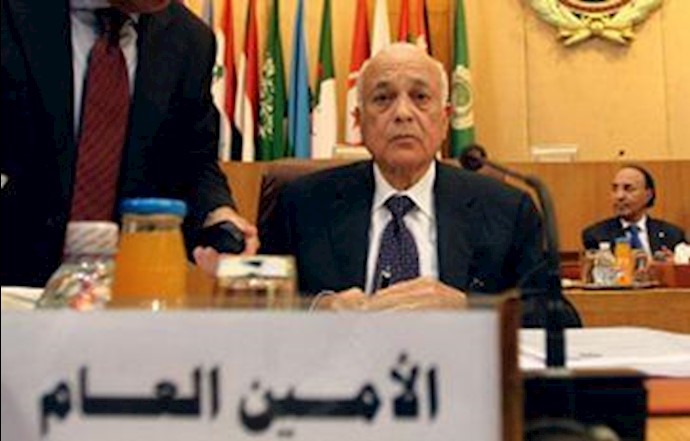
AL ARABIYA, 26 April 2012 – Arab League chief Nabil al-Arabi demanded on Thursday the “rapid deployment” of U.N. observers to Syria to monitor a ceasefire that is becoming ever more tenuous, as Europe pressed the United Nations Security Council to implement an embargo on sending weapons to Syria.
“The entire world is waiting for a truce and the observers to be deployed, but unfortunately the fighting has not stopped and every day new victims die,” he said at a league ministerial meeting in Cairo.
As many as 25 people have been killed by the gunfire of Syrian forces on Thursday, Al Arabiya reported citing Syrian activists. Nine people were killed in Deir al-Zor alone, activists said, as Europe pressed the United Nations Security Council to implement an embargo on sending weapons to Syria.
Mu Hassan village, al-Hawy neighborhood and al-Bu Omar town in Deir al-Zor were exposed to intensive shelling. Scores of people were injured during crackdown campaigns by government troops in Duma in Damascus suburbs, activists told Al Arabiya. Explosions and shootings were also heard in Deraa and Hama, activists said.
“The United Nations has had difficulties in sending monitors, and this morning I called (U.N. and Arab League envoy) Kofi Annan and found him to be as ill at ease as I am” about the situation, Arabi said.
“We agreed that I would contact the U.N. secretary general (Ban Ki-moon) and I sent him a message about the necessity of a rapid deployment of observers in Syria,” Arabi said.
He added that he urged Ban “to take advantage of U.N. observers already in the region,” without elaborating.
“The important thing now is the ceasefire, and this will only happen if a sufficient number of observers in deployed” on the ground, the head of the 22-member pan-Arab organization said.
U.N. peacekeeping chief Herve Ladsous has said it would take at least a month to get the first 100 observers into Syria.
He told the Security Council Damascus was refusing to accept monitors from the Western and Arab coalition of countries in the so-called Friends of Syria group that has backed the Syrian opposition.
Syrian National Council spokeswoman Basma Kidmani was earlier quoted by the state-run Middle East News Agency as saying officials needed to issue a strong call to ensure the deployment of 300 unarmed U.N. observers charged with monitoring a cease-fire designed to end fighting between Syrian government forces and rebels.
Kidmani said a meeting of various Syrian opposition groups could be held under the auspices of the Arab League on May 16-17 to agree a united front for the groups.
The ceasefire has been crumbling, according to U.N. envoy Annan, and the opposition has been pushing for tougher measures against President Bashar al-Assad’s government.
Europe calls for arms embargo
Meanwhile, European representatives pressed the U.N. Security Council on Thursday to urgently implement an embargo on sending weapons to Syria.
The Parliamentary Assembly of the Council of Europe, which pushes for improved human rights across its 47 member states and in other nations, adopted a resolution condemning Assad’s regime.
“The assembly calls on the United Nations Security Council to urgently put in place an embargo on the importation of all weapons and supporting material into Syria,” the resolution stated, according to AFP.
U.S. Secretary of State Hillary Clinton last week called on the Security Council for a similar embargo. The European Union and Turkey already forbid the export of arms to Syria.
The Syrian Observatory for Human Rights monitoring group says violence in Syria has claimed at least 11,000 lives in more than a year of popular revolt.
Russia and China have blocked the adoption of two Security Council resolutions condemning the repression orchestrated by Assad’s regime, but accepted the implementation of a truce brokered by U.N.-Arab League envoy Kofi Annan.
The supposed ceasefire has been interrupted with frequent killings since it was put in force April 12.
“The dictatorship which has oppressed the Syrian people for decades has no future,” the assembly said. “It seems clear that Assad’s regime is coming to an end. This puts a heavy responsibility on both the international community and the domestic opposition.”
Syrian transitional government
Exiled Syrian businessman Nofal Dawalibi announced in Paris on Thursday the setting up of a “transitional government to answer the needs of the Syrian opposition.”
“The situation in Syria is getting worse every day. Chaos is rising,” said Dawalibi, whose father Maarrouf was Syrian prime minister before Assad’s Baath party took power in 1963.
“We have decided to replace existing structures with a purely executive structure which coordinates the operations of the divisions fighting for freedom and follows the will of the sovereign Syrian people,” he told reporters.
He did not specify how the “transitional government” would coordinate with the Syrian National Council (SNC) headed by exiled academic Burhan Ghalioun that is considered the Syrian opposition’s most representative political body.
Armed opposition to Assad’s regime is centered on the Free Syrian Army (FSA).
Dawalibi said that “many” members of the SNC and the FSA backed his transitional government, although others were subject to “pressure.”
“Unfortunately the SNC, which chose a legislative body while ours is an executive body, could not prove that its structure represents the Syrian people and the revolution,” he said.
The “transitional government’s” objectives are to arm anti-regime fighters, to implement “direct international military intervention” and ensure the return of security and stability to Syria,” Dawalibi said.
The names of the 35 Syrians making up the “transitional government,” described as civilians and soldiers within Syria, “will for security reasons be announced in a few days,” he said, according to AFP.