Towns and villages near the epicenter of Saturday’s earthquake in central Nepal have suffered “almost total devastation”, the Red Cross says.
Assessment teams say they have found survivors in a “desperate situation”.
Nepal says 6,204 people are known to have died in the 7.8-magnitude quake and 13,932 were injured.
But the fate of thousands more in many remote areas remain unknown and the government has warned that the death toll could rise to more than 10,000.
Although rescue teams from Nepal and the international community are operating in the capital Kathmandu and the surrounding area, landslides and poor weather have hampered efforts to reach isolated districts.
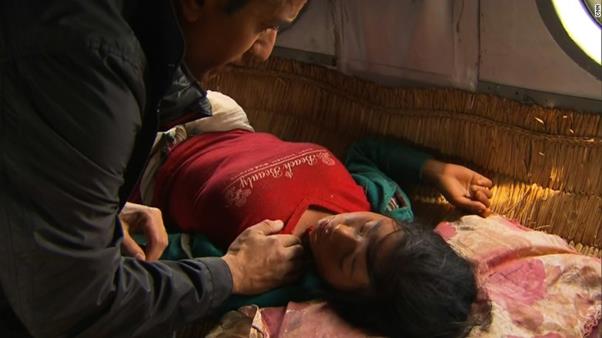
A young woman rescued but in critical condition in Nepal earthquake
Aid is beginning to arrive in some of the worst-affected areas In Kathmandu, hopes of rescuing more trapped survivors are fading and the focus turns to recovering bodies – such as that of 14-year-old Anita’s father, who died in a collapsed building
On Thursday there was good news in the capital when a 15-year-old boy and a woman in her 20s were pulled from the wreckage of two collapsed buildings in Kathmandu.
But there has been growing anger at the government’s response to the disaster, with a number of protests breaking out.
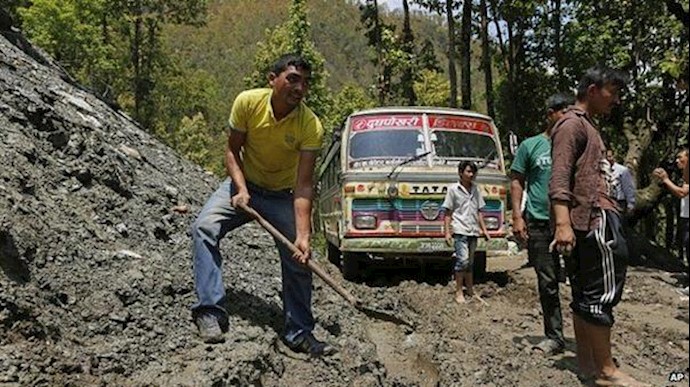
Landslides triggered by the quake have blocked roads to rural area.
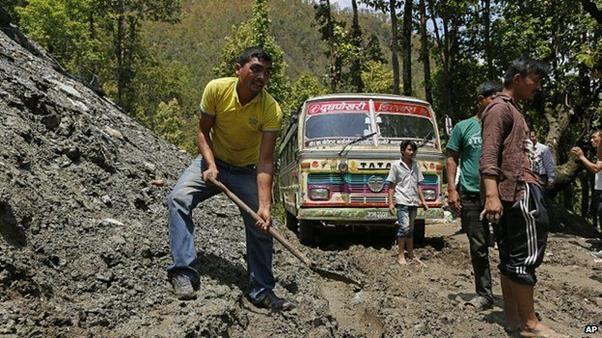
Hard to reach towns and villages are yet to be explored as the death toll in Nepal earthquake rises every day
The UN has also warned of the challenges facing Nepal’s farming community, which comprises up to two-thirds of the country’s 27 million people.
It says that the quake destroyed seed stocks for the mid-May rice sowing season, as well as grains kept dry in stone storage huts that have now been razed to the ground.
If farmers miss this month’s planting season, they will be unable to harvest rice – Nepal’s staple food – until late 2016, the UN says.