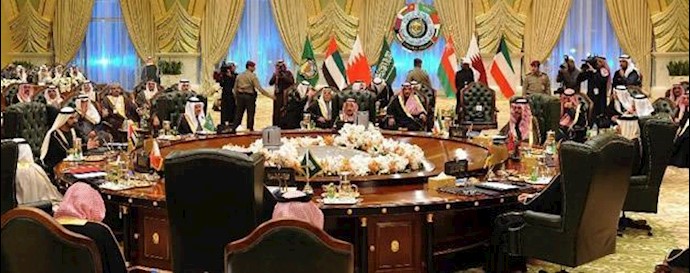
The U.S. Secretary of State joined Foreign Ministers of the Gulf Cooperation Council (GCC) states and the Secretary General of the GCC today in New York for a ministerial meeting of the GCC-U.S. Strategic Cooperation Forum (SCF). It was the fifth SCF since its establishment in March 2012. The SCF has served as an important forum to strengthen strategic cooperation and advance shared priorities and interests on political, security, economic, and military issues. Today’s discussions examined a range of issues, including the humanitarian and political crisis in Syria, the importance of the Joint Comprehensive Plan of Action (JCPOA) between the P5+1 and Iran, the Middle East peace process, and the need for a political solution to the conflict in Yemen. The Ministers also discussed progress and next steps on the GCC-U.S. strategic partnership and areas of cooperation announced at Camp David on May 14, 2015.
The Ministers affirmed their commitment to addressing the tragic situation of refugees fleeing the conflict in Syria. The Ministers underscored the need for financial support to address the crisis and called attention to the UN Appeal for Syria, and urged the international community to provide urgently needed assistance, recognizing that previous generosity does not mitigate the need for additional, immediate funding to confront this catastrophe.
The Ministers agreed that the humanitarian crisis, destruction, and terrorism in Syria are symptoms of the Syria conflict and the brutality of Assad, who has lost all legitimacy. The only way to solve the crisis, they emphasized, is a managed political transition away from Assad, in accord with the Geneva Communique that establishes a new government in Syria, reflecting the aspirations of the Syrian people, and that advances national unity, pluralism, and human rights for all Syrian citizens. The Ministers noted the regime has demonstrated neither the will nor the capability to confront Da’ish (ISIL/ISIS) safe-havens in Syria. The Ministers also noted the regime’s relentless violence against its own people, including the use of barrel bombs and chemical weapons. They strongly supported increased efforts to degrade and ultimately defeat Da’ish in Syria and warned against the influence of other extremist groups represent a danger to the international community and are a significant cause of the refugee crisis.
The Ministers discussed the JCPOA and plans for its implementation, including the limits on Iran’s nuclear program and the provision for transparency, safeguards, and access to any Iranian nuclear facility. The Ministers supported the JCPOA for effectively blocking all of Iran’s pathways to a nuclear weapon, and reaffirmed the support expressed at Camp David that “a comprehensive, verifiable deal that fully addresses the regional and international concerns about Iran’s nuclear program is in the security interests of GCC member states as well as the United States and the international community.” They concurred that, once fully implemented, the JCPOA will be a significant step towards establishing long-term regional stability and enhanced security.
GCC member states and the United States reiterated their opposition to Iran’s support for terrorism and its destabilizing activities in the region and pledged to work together to counter its interference, particularly attempts to undermine the security of and interference in the domestic affairs of GCC member states. The Ministers called on Iran to take steps to cooperatively resolve its differences with its neighbors through peaceful means and to immediately cease all destabilizing activities in the region. They emphasized that Iran must demonstrate with concrete confidence-building measures that it is committed to stability and security in the region and peaceful conflict resolution.
The United States reiterated its commitment to working with the GCC to prevent and deter external threats and aggression. In the event of such aggression or the threat of such aggression, the United States stands ready to work with our GCC partners to determine urgently what action may be appropriate, using the means at our collective disposal, including the potential use of military force, for the defense of our GCC partners.
Recalling the decades-long partnership between the United States and the GCC member states, the Ministers reaffirmed commitment to strengthening their strategic partnership across the full range of issues discussed at Camp David, including facilitating arms transfers, bolstering counter-terrorism efforts, enhancing military preparedness, building cybersecurity capabilities, and establishing a GCC interoperable ballistic missile defense architecture. They welcomed the accomplishments of the working groups established to follow up on the Camp David commitments and endorsed the results of their senior officials’ meeting on September 24 in New York. The United States underscored its commitment to the security of the GCC states, to their political independence, territorial integrity, and safety from external aggression.
The Ministers welcomed the return of representatives of the legitimate Government of Yemen to Aden, including President Hadi, and called for an immediate end to the violence by the Houthis and forces loyal to Ali Abdullah Saleh. They reiterated their support for the efforts of the UN Special Envoy Ismail Ould Cheikh Ahmed to resume a fully inclusive, Yemeni-led, peaceful political dialogue based on relevant UN resolutions, including UNSCR 2216, and consistent with the framework of the GCC Initiative and the National Dialogue Conference. The Ministers underscored that all of Yemen’s communities have important roles to play in the country’s peaceful governance, and that a durable solution to Yemen’s current crisis needs to be achieved through peaceful political dialogue. The Ministers reaffirmed the call by the Security Council for all sides to comply with international humanitarian law, including taking all feasible precautions to minimize harm to civilians and civilian objects. The Ministers committed to working with coalition and international partners to allow for unfettered and swift access to humanitarian assistance and commercial goods vetted by the UN and its partners, including fuel, to all parts of Yemen through all of Yemen’s ports in order to respond to the urgent needs of all Yemeni people. The Ministers reiterated their support to and called on the international community to increase their humanitarian assistance to Yemen. They strongly condemned the violent and destabilizing tactics of Al Qaeda in the Arabian Peninsula and ISIL affiliates in Yemen, noting the threat these groups pose both to the people of Yemen and the region.
The Ministers supported and called for full implementation of the reform initiatives of the Abadi government in Iraq, and emphasized the need for a national reconciliation process that ensures all Iraqis have a stake in the Iraqi government. Expressing solidarity with all the people of Iraq as they combat the terrorist organization Da’ish, the Ministers agreed to intensify support to and cooperation with the Government of Iraq as it strives to address the needs of all its communities.