Beirut – Lebanon’s political stalemate has not only left uncollected garbage piling up in the streets, but now risks losing millions in international loans for key development projects because of a paralyzed parliament, AFP reported Nov. 2nd.
To secure the funds, Lebanon’s parliament is required to approve loan deals or pass legislation on which the money is conditioned.
But the legislature, deeply divided over issues ranging from minor domestic disagreements to the conflict in neighboring Syria and under pressure from the Iranian backed Hezbollah, has not met since May 2014.
The World Bank warns that Lebanon could lose half a portfolio worth $1.1 billion (1 billion euros) if parliament fails to ratify loan agreements before December 31.
Around half that money is for the Bisri Dam project in southern Lebanon, which is intended to provide 1.6 million people with water for drinking and irrigation.
Legislative inaction has already led France to cancel 46.5 million euros for building schools and 70 million euros for the electricity sector, in a country where chronic power outages continue 25 years after the end of the 1975-1990 civil war.
Another 70 million euros from France for a water purification project is also on the line because parliament has not ratified a water code that is a condition for the money.
The World Bank has already annulled around $40 million in funds to the country this year.
“The institutional gridlock has led us to cancel a number of important projects for the country’s economic development,” World Bank regional director Ferid Belhaj told AFP.
“In our discussions with Lebanese institutions, there’s an element of ’wake-up’. The political aspect must be separated from the economic and development aspect because otherwise there could be serious consequences.”
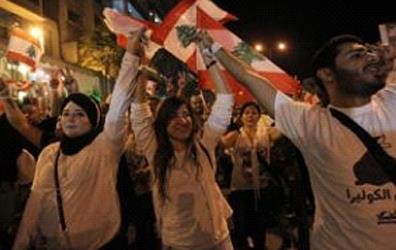
A demonstration organized by “You Stink” campaign in Beirut on October 29, 2013
Other World Bank projects worth around $500 million are already being implemented “but not at the speed or efficiency we’d hope for, and there is a risk they will not achieve their objectives,” he added.
Fragile Lebanon had already been weakened by a series of crises and episodes of violence after the 2005 assassination of former Prime Minister Rafiq Hariri and since Syria’s conflict erupted next door in 2011.
The war has exacerbated tensions between the main Western-backed political bloc led by Hariri’s son, which supports Syria’s opposition, and the Iran-backed Hezbollah-led bloc that backs Syria’s regime.
The conflict has also seen more than one million Syrian refugees pour into Lebanon, costing the economy around $7.5 billion, according to the World Bank.
The country has not had legislative elections since 2009, with parliament meeting only to extend its own mandate twice.
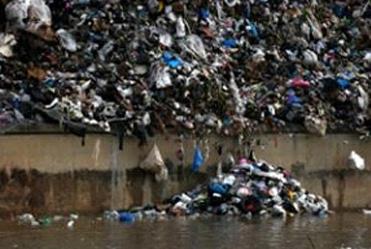
Garbage piled up on the banks of the Beirut River on October 28, 2015
The cabinet has been so divided that it has failed more than two dozen times to elect a successor to President Michel Suleiman, whose mandate expired in May 2014.
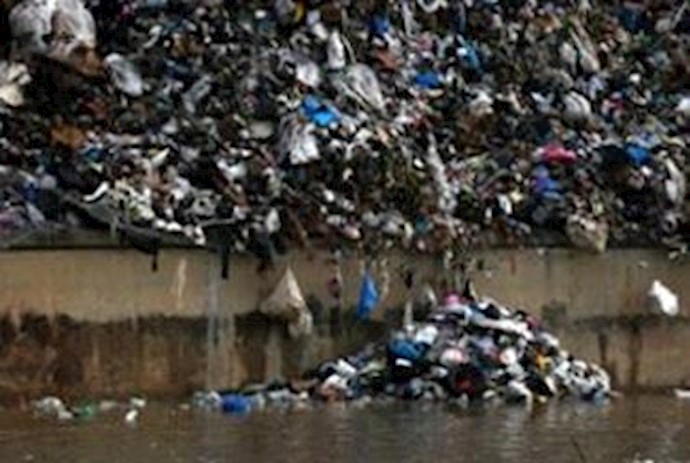
The deadlock has manifested itself most recently in a trash crisis created by the government’s failure to respond to the closure of the country’s largest landfill.