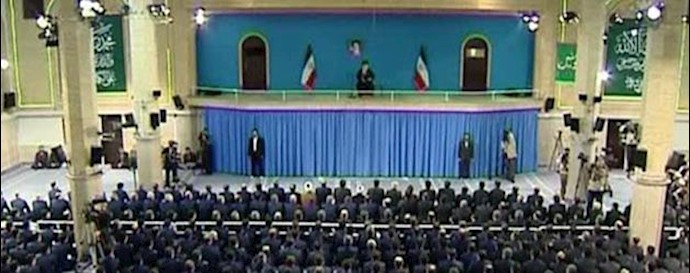
AFP reported that his comments came as US Secretary of State John Kerry met Iranian counterpart Mohammad Javad Zarif for a second time on the sidelines of a security conference in Germany, to ratchet up efforts for a lasting nuclear accord.
“I agree with a deal that can take place but I do not agree with a bad deal,” the mullahs’ leader said, according to the Khamenei.ir website.
“The Americans keep reiterating that it’s better to have no deal than a bad one. I fully agree with that,” he told air force commanders.
“It’s better to have no agreement than one that goes against our national interests.”
Khamenei, who has the final word on all matters of state in Iran, leaves the day-to-day administration of policy to President Hassan Rouhani and his government, but periodically speaks out on the nuclear talks, AFP said.
Khamenei has set “red lines” for the concessions that Rouhani can make.
These include a much bigger uranium enrichment program than Western governments have said they are willing to countenance as they seek to allay concerns about any military dimension to Iran’s nuclear activities.
“Our negotiators are trying to get rid of the sanctions weapon, if they succeed, so much the better. But, if not, there are other ways to make sanctions less effective,” Khamenei said.
“I don’t go along with this talk of striking a deal on general principles first and an agreement on the details afterwards… If they’re going to strike a deal, let them agree the principles and the details at the same time.”
Zarif echoed Khamenei’s comments after meeting Kerry in Munich on Sunday.
“I don’t think if we don’t have an agreement it will be the end of the world. We try, we fail,” he said.
Reuters also cited Khamenei as saying “This means that one side would not end up getting all it wants,” said Khamenei, in office since 1989 and long known for his rejectionist stances against detente with the West until he cleared Rouhani to try to end the long-running nuclear dispute with the West, which has cost Iran international isolation.
The West suspects Iran of covertly seeking a nuclear weapons capability instead of, as the major oil producer maintains, an alternative civilian energy source through its enrichment of uranium, Reuters added.
“Our (nuclear) negotiators are trying to take the weapon of sanctions away from the enemy. If they can, so much the better, if they fail, everyone should know there are many ways at our disposal to dull this weapon,” said Khamenei.
Khamenei, who holds the highest office in the Islamic Republic with powers to overrule laws, has taken a skeptical stand on the nuclear talks. But he has also repeatedly endorsed Rouhani’s course on ending the economically crippling nuclear stand-off against harsh criticism from hardliners in parliament, the Shiite clergy and the powerful Revolutionary Guards.
According to Reuters, late last month, Foreign Minister Mohammad Javad Zarif, who heads Tehran’s nuclear negotiating team, was summoned by parliament for a rebuke over a promenade with U.S. Secretary of State John Kerry along Lake Geneva during a round of talks.