CNN, 6 Feb 2012 – Intense blasts echoed through the Syrian city of Homs on Monday, just a part of the latest violence ravaging parts of the country, as world leaders sought a new strategy to end the deadly fighting.
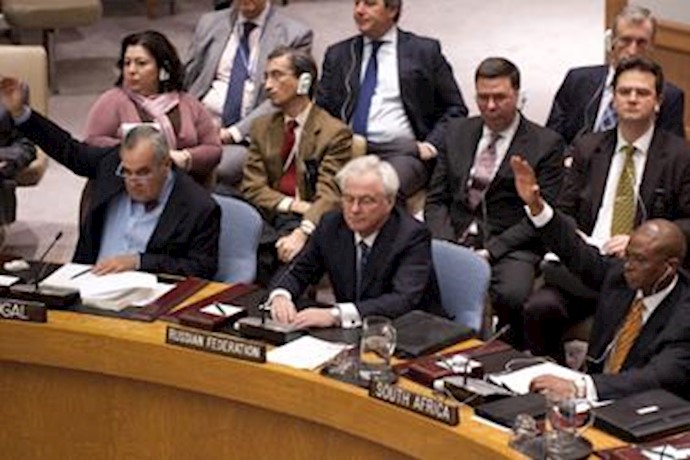
At least 56 deaths were reported Monday by an opposition group, most of them in Homs, two days after China and Russia vetoed a U.N. Security Council draft resolution that would have demanded President Bashar al-Assad stop the violence and seek a solution to the 11-month crisis.
“They chose to side with the Syrian regime and implicitly to leave the door open to further abuses,” British Foreign Secretary William Hague told the House of Commons on Monday.
“Such vetoes are a betrayal of the Syrian people. In deploying them, they have let down the Arab League; they have increased the likelihood of what they wish to avoid in Syria — civil war — and they have placed themselves on the wrong side of Arab and international opinion.”
Both countries insisted they want the violence to end and want to see dialogue among Syria’s opposition factions.
The United States closed its embassy in Syria and pulled out remaining staff after the Syrian government refused to address its security concerns, the State Department said.
U.S. closes embassy in Syria over security concerns
Hague said his country called its ambassador home for consultations. And he demanded that Syria protect the British Embassy in Damascus.
Britain also called Syria’s ambassador for a meeting at the foreign office.
Hague vowed that Britain and other countries will remain focused on pressuring Syria on numerous fronts, “undeterred by Saturday’s vote.”
Opposition activists in Syria said the Syrian regime stepped up its brutal crackdown after the Security Council failed to pass the resolution, leaving hundreds dead over the weekend.
“It is horrible. Especially today, it is horrible,” said Abu Omar, a local activist who said the Syrian army was attacking without warning. “Usually, they are using mortars. They are now using rockets in the sky. We can see them in the sky.”
Four children were among the dead Monday, the opposition Local Coordination Committees said. The death toll includes 37 in Homs, 10 in Damascus suburbs, one in Damascus, two in Aleppo and six in Idlib.
“The U.N. gave them the green light to inflict more violence,” another opposition activist, identified as “Danny,” said from Homs. “If it wasn’t for the U.N., they wouldn’t have did this. It gave them the OK to kill more. If the U.N. had done something about this, this regime would be a little bit scared.”
Danny said the devastation Sunday included a girl who lost an eye to gunfire and a boy with his jaw shot away. Many of the injured were being treated in field hospitals in civilian homes, including some who died from wounds that would not have been fatal with proper care.
“We haven’t got enough doctors. We haven’t got enough medication,” he said.
Omar said one child killed in the violence “was almost in pieces.”
Syrian state-run TV said “armed terrorist groups” were attacking citizens and members of law enforcement in several cities.
Two children were killed by an explosive device planted by a terrorist group in al Bukamal, SANA reported. In Daraa, the city’s chief warrant officer and a conscript “were martyred by an armed group’s gunfire,” SANA said. And in Jboren village west of Homs, “an armed terrorist group today massacred” a family of eight with “bullets and sharp knives,” SANA reported.
A “terrorist group” also targeted a gas pipeline in Homs late Sunday, “blowing it up with an explosive device, causing gas to leak in the area,” SANA reported.
Protesters and rebel fighters are demanding an end to al-Assad’s rule and true democratic elections. Al-Assad has been in power since 2000; his father, Hafez, ruled Syria for three decades.
United Nations officials have said an estimated 6,000 people have died since protests began nearly a year ago. The LCC said at least 7,339 people have been killed.
Syria’s U.N. ambassador, Bashar Jaafari, said the entire crisis has been manufactured and fueled by media campaigns to make the Syrian government look bad.
Referring to the reported deaths in Homs on Saturday, Jaafari asked, “Is there a sensible person who would believe a government commits massacres in a given city on a day when the Security Council is scheduled to hold a meeting to examine the situation in that country? Would any entity put itself in such a position?”
The state-run Syrian Arab News Agency said 15 people — including two children, an army colonel and eight members of a single family — were killed by “terrorists” around the country Sunday.
At least nine government troops died and 21 others were wounded in Idlib, according to the Syrian Observatory for Human Rights, an opposition activist group.
CNN cannot independently confirm opposition or government reports from Syria because the government has restricted journalists’ access to the country.
Several of the 13 Security Council members who voted in favor of the draft resolution said they were furious at Russia and China for their dual veto.
Why China, Russia won’t condemn Syrian regime
U.S. Ambassador Susan Rice said Russia and China “will have any future blood spill on their hands,” while French Ambassador Gerard Araud said Beijing and Moscow have aligned themselves with a regime that is massacring its people.
The Russian and Chinese ambassadors said they support an end to the violence, but did not agree with the text of the resolution, which they said would have complicated the issue and sent conflicting signals.
The two countries — which have major trade deals with Syria — have said they support a dialogue among factions in Syria.
On Monday, China’s Ministry of Foreign Affairs rejected criticism of the country’s veto.
“China does not accept the accusation. We are not selfish in our decision,” the ministry said. “China does not shelter anyone. We uphold justice and take a responsible attitude. We want the Syrian people to be free from the scourge of conflict and warfare.”
Russian Foreign Minister Sergey Lavrov is scheduled to visit Damascus on Tuesday to meet with al-Assad, U.N. Russian Ambassador Vitaly Churkin said.
Arab League Secretary-General Nabil Elaraby insisted Sunday that the Arab League and international community will continue to seek a resolution, according to an Arab League official who could not be named because he is not authorized to speak to the media.
“The Arab League aims to avoid military intervention in Syria and continues to probe for an Arab solution to the Syrian crisis,” Elaraby said, according to the official.
But residents on the ground say so far, the international community has abandoned Syrians and left many to die at the hands of the regime.
“We want to see actions. We don’t want to see talk. We’re really tired of talk, and talk, and talk,” Danny said. “While everyone’s talking, every second, someone’s dying here.”