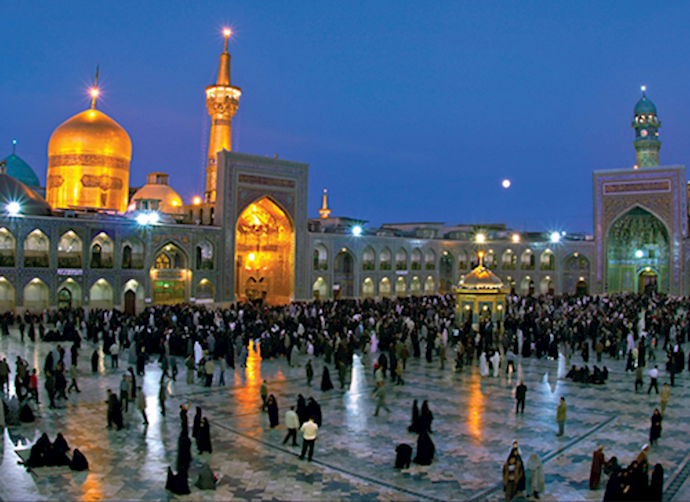
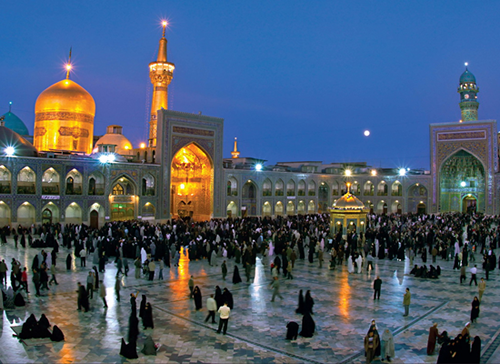
The Baghdad Post, January 23 2018 – The wave of anti-government protests in Iran at the end of December began in one of the country’s conservative strongholds: its second city, Mashhad. The site of the huge Imam Reza shrine that draws more than 20 million Shia pilgrims a year, the city’s population has ballooned to around 3 million in recent years.
Rampant development has emphasized a widening social gap in Mashhad, the starting point of last year’s anti-government protests, according to a report published in The Guardian.
After a proposed modernization of the area around the shrine complex by architect Dariush Borbor was abandoned following the Iranian revolution, rampant development in the last two decades may have helped aggravate social forces hitting the streets today.
It’s been rumored that hardline rivals to Iran’s reformist president Hassan Rouhani orchestrated the street protests from their nationalist-religious base of Mashhad. A 50-year-old urban sociologist whose father made pilgrimages to the city and who later studied there thinks this underestimates a widening social gap.
Rising inequality
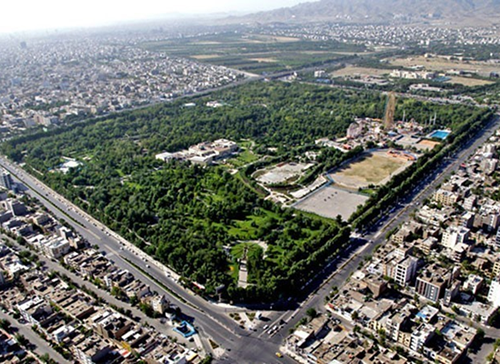
An elite – many connected with the Astan-e Quds charitable foundation that manages the shrine – are profiting from the cluster of the luxury hotel and retail developments in the Thamen district surrounding the holy site. “The rapid rate of change has emphasized the inequality,” sociologist says. “People can see the whole of commercialization, capital accumulation and possibly embezzlement. But this kind of economic development is heaven for the conservatives who run the city.”
To the rural poor who flock to Mashhad as pilgrims and many of whom provide the workforce building it, such affluence in a sacred place may even seem hypocritical. “Many are religious, and they notice the inequalities in everyday life,” says sociologist. “So I don’t think it’s the end of the protests.”
Key subculture
The gentrification of Thamen is alienating ordinary Iranians of the original pilgrim demographic, says sociologist: “People from villages and small cities cannot find proper places to stay. They don’t use these hotels very much because they’re too expensive. They used to go to very small houses in narrow lanes.” Even with a recent shift to catering for international pilgrims, hotel occupancy – now reportedly down to 20% – is becoming a problem.
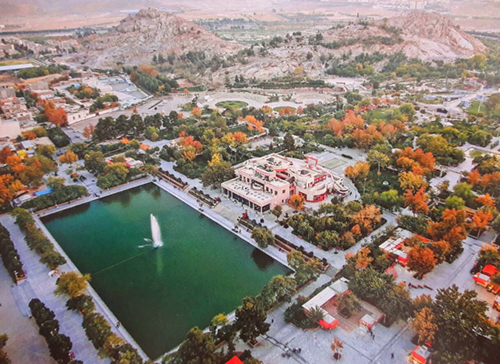
With recent tensions with Saudi Arabia further reducing foreign visitors, the city’s dependency on religious tourism has become painfully obvious. Hence an unlikely move to give pilgrims more reasons to hang around in Mashhad; the city has become known for its many water parks, for those who like to follow ablutions with a bout of waterslide action. “As a pilgrim, you just need to go once or twice to the shrine. Then you have a lot of free time. So religious and leisure practices are tied to each other here,” says sociologist.
How livable is Mashhad?
Outside of the center’s “rich ghetto”, deprivation is growing alarmingly. Mashhad’s precipitous growth – it has outgrown the 22,000-hectare limit laid out in its 1995 comprehensive plan by nearly a third – has made it particularly prone to slum proliferation. Up to 33% of the city’s population is thought to be crammed into 22% of its land area; some think it will rise to two-thirds in coming years.
For those on Mashhad’s poorest areas, the infrastructure and service provision is miles off the pace: the 800,000 in its 42 “marginal” neighborhoods have access to a single hospital, and in some places, it’s 16,000 to a pharmacy. Alongside the long commute times to informal construction work in the center, the reasons for civil unrest come into clear focus. “There are frustration and desperation,” says sociologist. “You imagine a young person who wants to start his or her career in this city, and they can only get temporary unstable jobs.”