The Washington Post, April 21- UNITED NATIONS — The U.N. Security Council voted Saturday to establish a full-fledged U.N. mission, with up to 300 unarmed military observers and an unspecified number of civilian specialists, to monitor a shaky cease-fire between the Syrian government and armed opposition forces.
The newly minted U.N. Supervision Mission in Syria is set to reinforce a small advance team that began testing the nine-day-old cease-fire this week with visits to a handful of Syrian towns, including a trip Saturday to the town of Homs, the scene of a military crackdown in recent months.
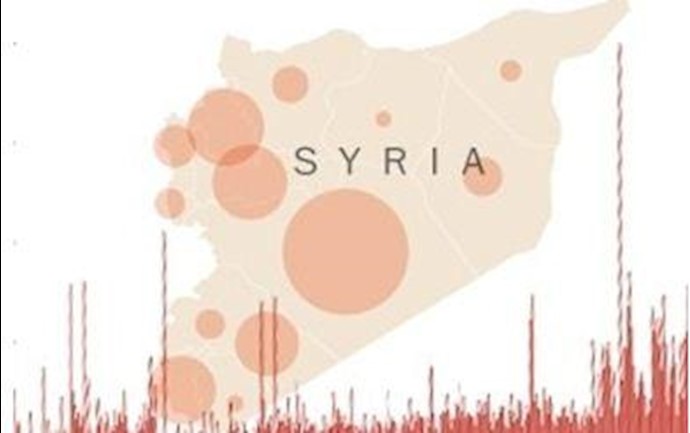
A look at the Syrian uprising one year later. Thousands of Syrians have died and President Bashar al-Assad remains in power, despite numerous calls by the international community for him to step down.
The agreement preserves a public show of unity among the United Nations’ fractious big powers in support of special emissary Kofi Annan’s six-point plan for ending the bloodiest political upheaval of the Arab Spring and clearing the way for a political settlement between the government and a diverse array of armed and civilian opponents of President Bashar al-Assad’s government. The Security Council did not set out a timetable for the mission’s deployment, leaving it to U.N. Secretary General Ban Ki-moon to determine when and whether the cease-fire has taken hold sufficiently to allow for it.
“The Secretary-General calls upon the Government of Syria and other parties swiftly to create the conditions necessary for the deployment of the mission,” a statement from Ban’s office said. “He stresses the need for the Government of Syria to end all violence and human rights violations, and in particular to stop the use of heavy weapons and to withdraw such weapons and armed units from population centres.”
Meanwhile, members of the small advance team of observers visited the Syrian city of Homs, where residents reported that the military had halted its artillery bombardment for the first time in more than a week. Cellphone coverage also returned for the first time in months, but amateur video footage of the observers driving and walking through Homs neighborhoods seemed to show that there was gunfire in the vicinity of one patrol.
According to Ban, the Syrian government, which is responsible for the observers’ safety, had previously prevented the team from visiting Homs, citing security reasons. In one video shot Saturday by activists in the suburb of Khalidiyeh, which has seen fierce fighting in recent months and been heavily shelled by government forces, a weeping woman bangs on the window of the U.N.-marked vehicle, trying to pass the observers a letter.
In another, as two monitors walk in the street with chanting residents waving the flag of the uprising, the sound of gunfire can be heard and the demonstrators hustle the observers to the side of the road, apparently to protect them. No injuries were immediately reported.
Homs has been a center of rebellion against the government for months, with peaceful protesters and armed rebels alike present in large numbers. Thousands are believed to have died in fighting between security forces and the heavily outgunned opposition, and some neighborhoods, particularly the hard-hit Baba Amr area, have been badly damaged, with many buildings ruined.
Activists and diplomats say that in contravention of the cease-fire agreement, the government has maintained a military presence in the city, while the government asserts that armed groups continue to fight there. Activists said Saturday some tanks had been hidden in trenches ahead of the U.N. visit.
After a Friday of protests in which dozens of people — including civilians, security forces and armed opponents of Assad — were reportedly killed, the country was relatively quiet on Saturday, according to the Britain-based Syrian Observatory for Human Rights. Syrian state media reported, however, that an “armed terrorist group” blew up an oil pipeline near Deir el-Zour, in the east, and that four policemen were abducted in the restive northern province of Idlib.
The adoption of the supervision mission resolution Saturday followed a day of intensive negotiations in which Britain and France on the one hand and Russia on the other tabled competing resolutions that reflected the sharp differences over the United Nations’ role in the crisis.
Britain and France, supported by the United States, favored including in the resolution a provision threatening Syria with sanctions if it does not withdraw its troops and military equipment to barracks.
Russia, however, offered a milder text that included no threat of sanctions, and it sought to spread blame for the crisis.
In the end, the council rallied behind the Russian draft, striking a compromise that includes an expression of “profound regret” at the deaths of thousands of Syrian civilians and condemns “widespread violations of human rights by the Syrian authorities, as well as any human rights abuses by armed groups.”
The resolution reiterates U.N. calls on Syria to guarantee freedom of movement for the monitors, and it prods the government to swiftly conclude an agreement allowing the United Nations to use planes and helicopters in Syria to quickly transport monitors to trouble spots. It also increases pressure on Syria to rapidly implement all six elements of Annan’s plan, including the release of political prisoners, guarantees of freedom of movement for international aid workers and journalists, and allowing anti-government protesters to hold peaceful demonstrations.
The resolution also goes beyond the Annan plan in its call for Syria to withdraw its forces and equipment to barracks. Annan’s plan only requires Syria to begin that process.
Fordham reported from Beirut.