TEHRAN, Iran (AP) – 25 Aug. 2016- Iran’s kidney program stands apart from other organ donation systems around the world by openly allowing payments, typically of several thousand dollars.
Critics warn the system can prey on the poor in Iran’s long-sanctioned economy, with ads promising cash for kidneys. The World Health Organization and other groups oppose “commercializing” organ transplants. Some argue such a paid system in the U.S. or elsewhere could put those who cannot afford to pay at a disadvantage in securing a kidney if they need one.
“Some donors have financial motivations. We can’t say they don’t. If (those donors) didn’t have financial motives, they wouldn’t … donate a kidney,” Hashem Ghasemi, the head of the patient-run Dialysis and Transplant Patients Association of Iran, told The Associated Press. “And some people just have charitable motivations.”
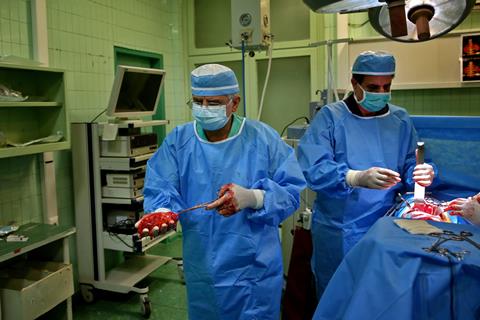
In this July 2, 2016 photo, an Iranian doctor carries a kidney from a kidney seller to a transplant recipient at Modarres Hospital in Tehran, Iran.
However, it’s clear that some donors are motivated by the cash payout. Inflation and unemployment remain high in Iran even after last year’s nuclear deal with world powers that saw some sanctions lifted.
One man said he applied to sell one of his kidneys to pay off his debts. Debtors can be imprisoned in Iran.
“I am here because if I don’t get the money my entire life will be ruined,” said the man, who spoke on condition of anonymity for fear of ruining his professional image. “My life and my public face are in danger. This has driven me to do this.”
Poverty around the world drives black market kidney sales, a lucrative business the World Health Organization estimated represented at least 5 percent of all transplants in 2005, though it acknowledges that figure is only a guess.
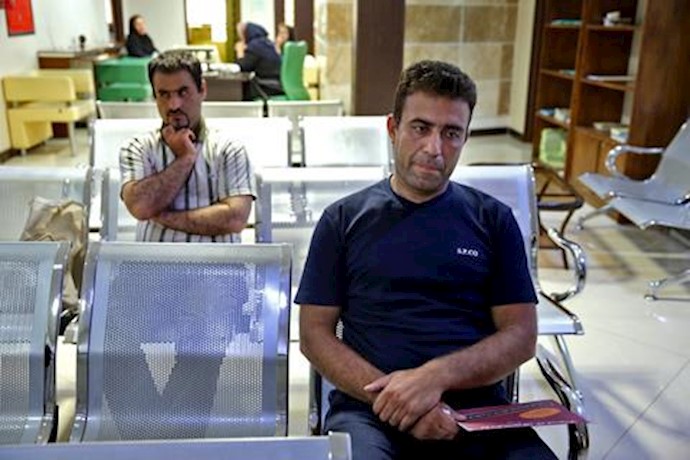
The AP gained rare access to Iran’s program, visiting patients on dialysis waiting for an organ, speaking to a man preparing to sell one of his kidneys and watching surgeons in Tehran perform a transplant. All of those interviewed stressed the altruistic nature of the program — even as graffiti scrawled on walls and trees near hospitals in Iran’s capital advertised people offering to sell a kidney for cash.
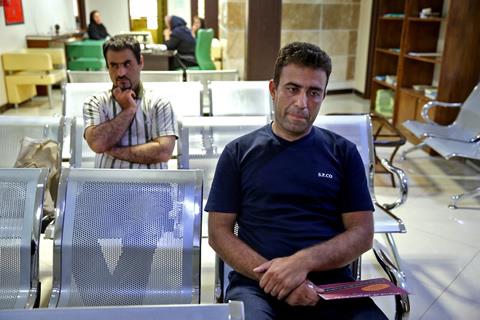
In this June 6, 2016 photo, Sajjad Ghanbari, right, waits for a medical exam as part of the process of selling his kidney in a clinic in downtown Tehran, Iran.
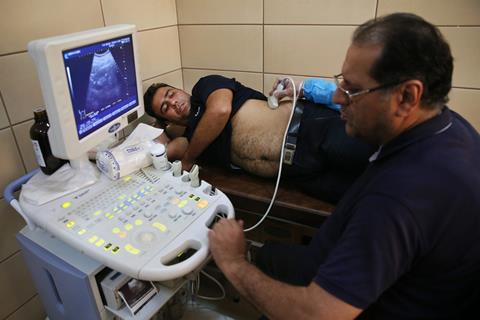
In this June 6, 2016 photo, Sajjad Ghanbari undergoes a medical exam as part of the process of selling his kidney, in a clinic in downtown Tehran, Iran.
As far as organ donations go, kidneys are unique. While people are born with two, most can live a full, healthy life with just one filtering waste from their blood. And although a donor and recipient must have a compatible blood type, transplants from unrelated donors are as successful as those from a close relative. In addition, kidneys from a living donor have a significantly better long-term survival rate than those from a deceased donor.
In 1988, Iran created the program it has today. A person needing a kidney is referred to the Dialysis and Transplant Patients Association, which matches those needing a kidney with a potential healthy adult donor.
Today, more than 1,480 people receive a kidney transplant from a living donor in Iran each year, about 55 percent of the total of 2,700 transplants annually, according to government figures.
The U.N. health agency’s guiding principles on organ transplantation call for banning organ sales, though it allows for “reimbursing reasonable and verifiable expenses,” including the loss of income by a living donor.

This Saturday, Aug. 6, 2016 photo, shows handwritten advertisements for kidneys for sale, that include the sellers’ phone number and blood type, posted on a door in downtown Tehran, Iran.
Some ethicists and doctors argue that compensating donors in the U.S. would put the poor at a disadvantage of getting a transplant while also pressuring them to offer their organs for sale when they face financial trouble.
“We still think profiteering or someone making a profit from a sale and making this a commercial enterprise is a slippery slope,” said Kevin Longino, the CEO of the National Kidney Foundation in the U.S. “It’s still an easy way to exploit poor people and underprivileged people.”
Source: The Associated Press, 25 Aug. 2016