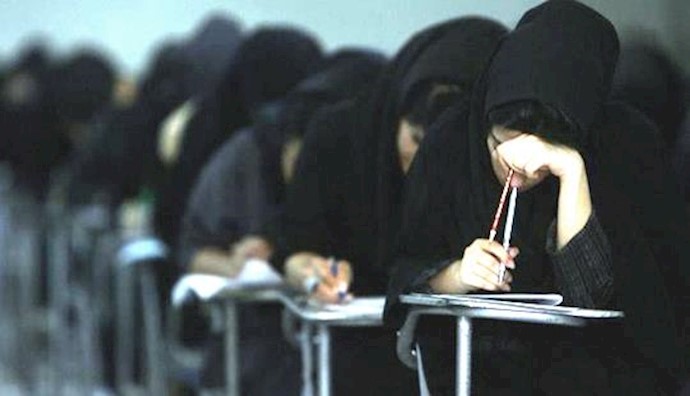
Amnesty International has released a report condemning the status of higher education in Iran. The following are excerpts from this in-depth report:
MECHANISMS OF REPRESSION
Students face restrictions and abuse from many quarters, though most actors implementing repressive measures are either officially or unofficially linked to the state.
In accordance with resolutions of the SCCR, all universities and other institutions of higher education have Disciplinary Committees37 whose task it is to ensure observance by the student body of rules laid down by the SCCR relating to gender segregation, dress, behavior, devotion to Islamic principles, and other matters, and to impose punishments on those students who are deemed to have contravened any of these rules. Apart from common offences such as theft or forgery, students face penalties if they are judged to support groups that the authorities consider atheist or mohareb, if they are held to have insulted Islamic teachings or opposed the state, or if they fail to comply with the Islamic dress code, engage in “illicit relations” or commit “immoral acts.”38 Students suspected or accused on these grounds are often likely to be arrested and detained by state security authorities but also face punishment by their university or other institution’s Disciplinary Committee, which may impose a variety of sanctions.
DISCRIMINATION BASED ON GENDER AND RELIGION
Despite constitutional guarantees of equality40, discrimination on the grounds of gender, sexual orientation and gender identity, ethnicity and religion is widespread in Iran. Members of minority groups are subject to discriminatory laws and practices, including restricted access to basic amenities such as housing, water and sanitation, land and property confiscation, denial of state employment under discriminatory criteria, and restrictions on their economic, social, cultural, and linguistic rights.
Ethnic minorities, such as Arabs, Azerbaijanis, Baluchis, and Kurds, who have actively sought greater recognition of their cultural and political rights, have long faced state repression. Activities of members of these groups are frequently regarded with suspicion by the Iranian authorities, who often accuse them of threatening state security and prosecute them on charges such as membership of armed opposition groups.
LIMITING WOMEN’S ACCESS TO HIGHER EDUCATION
Efforts to reduce the proportion of female students in higher education were already being considered during President Khatami’s administration. In April 2003, Hassan Rahimi, the head of the Education Assessment Organization, said that a 50 per cent entry limit would be placed on the number of female university entrants accepted to study certain subjects, including mining engineering, agriculture and medicine. This had been proposed by conservative members, who were then a minority within the parliament. In the event, the limit was dropped by order of President Khatami after he received a letter signed by 158 other members of parliament who opposed the gender quota.
EDUCATIONAL APARTHEID – KEEPING THE SEXES APART
In 2011, the University of Tehran and around 20 other universities began employing a single- sex admission policy for more than 40 courses that they reserved exclusively for study by either male or female students.80 In addition, 45 universities applied measures as part of their efforts to ensure that male students outnumbered female students. In 2012, 60 universities imposed gender segregation in university classrooms and took further steps to discriminate in favour of the admission of male rather than female students to a wide range of courses.
DISCRIMINATION BASED ON RELIGIOUS BELIEF OR AFFILIATION
Throughout the period since the 1979 Revolution, the authorities have applied discriminatory
practices to bar members of certain religious minorities such as Bahai’s from accessing higher education in universities and other institutions and put in place restrictions that limit the enjoyment of others including Ahl-e Haq, Sufis, and Sunni Muslims of their right to education.89 These discriminatory restrictions have clearly been sanctioned, if not instigated, by the highest state authorities, including both the former and current Supreme Leaders.
ACADEMIC FREEDOM UNDER ATTACK
Following Mahmoud Ahmadinejad’s election as President in 2005, the authorities embarked on a renewed campaign of “Islamicization” of the universities and other institutions of higher education. This, saw further tightening of rules on gender segregation and mixing of the sexes, the expulsion or suspension of student activists and increased use of “starring” to threaten or intimidate other students. As well, it involved the removal or revision of humanities courses that the authorities deemed western-influenced and “un-Islamic” and the barring of female students from courses that they considered suitable only for male students. In addition, university teachers and academic staff whom the authorities saw as critics or deemed overly “reformist” or insufficiently deferential to Iran’s clerical leaders and the views they espoused were dismissed or forced into early retirement.
TARGETING STUDENT ACTIVISTS: “STARRING”, SUSPENSION AND EXPULSION
In recent years, university authorities have increasingly used a “starring” system to warn students that they are under suspicion and may incur disciplinary sanctions, including suspension or expulsion.
Demonstration at the University of Tehran on national Student Day, 7 December 2006
The banner says “We condemn “starring” and banning of students from education”. The term “starred students” came into use during the administration of President Khatami when Mostafa Mo’in was the Minister of Science. Years later, however, while acknowledging this, he accused President Ahmadinejad’s government of expanding a system that had involved only a few cases each year under President Khatami into a major instrument of repression.
ARRESTS, TORTURE AND IMPRISONMENT
At various periods throughout the history of the Islamic Republic, students, teachers and academics have been among those particularly targeted by the Ministry of Intelligence and other security authorities for expressing dissent or leading protests. Often, they have been arrested and detained in harsh conditions, tortured or subjected to other forms of ill- treatment, and tried before grossly unfair Revolutionary Courts on vaguely-drawn charges, and convicted and sentenced to prison terms and, in some case, flogging.
UNFAIR TRIALS
Many student defendants have been tried before unfair Revolutionary Courts, which are used to try cases involving alleged offences against national security or under the Anti-Narcotics Law. A single judge, sitting alone, presides. Trials before Revolutionary Courts fall far short of international fair trial standards. Cases involving alleged security offences are frequently held behind closed doors, with public and press excluded, as the Code of Criminal Procedures permits. In other cases, Revolutionary Courts have been used to hold “show trials” when the authorities have wished to promote a particular narrative publicly, as in late 2009 when state media were permitted access to the Revolutionary Court to film alleged protest organizers “confessing” their guilt.
IMPRISONMENT OF ACADEMICS
Scores of university academics were among those arrested and imprisoned for engaging in peaceful protests or exercising their right to freedom of expression in other ways in the aftermath of the 2009 election, or on account of their religious or ethnic identity. Of these, many were still imprisoned as of March 2014. Those arrested had been employed at the universities of Tehran, Amir Kabir, Tarbiat Modares, Sharif, Tehran Medical Sciences, Mofid in Qom, Shiraz, Tabriz, and International Imam Khomeini in Qazvin, Mazandaran and Bojnourd. Many of them were linked to reformist political groups.
IMPUNITY
Iran’s security forces, including Ministry of Intelligence officials, Revolutionary Guards and others, have tortured and otherwise ill-treated detainees in their custody over many years, and have done so with almost total impunity. Although many of the individuals whose cases are briefly described in this report alleged that they were tortured and subjected to other abuse in detention, the only known official investigations are those which occurred following the spate of deaths of detainees – including some with high level political connections – at Kahrizak detention centre in June-July 2009. Even that investigation was far from transparent and may not have been independent – it appears to have portrayed the abuse of detainees at Kahrizak as an aberration whereas, in practice, torture and other ill-treatment of detainees has long been the norm throughout Iran’s prisons. Indeed, detainees who allege torture sometimes then face reprisals and can expect to receive no protection from the judiciary. Courts routinely ignore defendants’ allegations of torture in pre-trial detention, without taking any steps to investigate them, and frequently rely on contested “confessions” – that defendants say were coerced – to convict those on trial before them and impose long prison sentences or even, in some cases, the death penalty. By routinely dismissing defendants’ allegations of torture and failing to investigate them, the courts and the judiciary are effectively complicit in the use of torture.
ACADEMIC PURGES
The Cultural Revolution that Ayatollah Khomeini launched in 1980 saw a significant exodus of academic teaching talent from Iran’s universities during the almost three years while the Cultural Revolution Headquarters oversaw the revision of their teaching curricula to align them with the tenets of the Islamic Revolution. Some academics voted with their feet and took other jobs or went abroad because they disagreed with the policies of the new government or to further their careers in higher education, but others the authorities effectively purged on ideological grounds, especially academics who had been engaged in teaching humanities courses that were seen by the new authorities to “promote un-Islamic topics such as liberalism, neo-Marxism and secularism.”
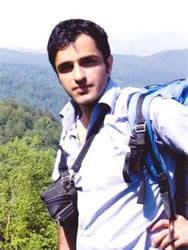
Sayed Ziaoddin (Zia) Nabavi has been imprisoned since 14 June 2009 when security forces arrested him shortly after he attended a peaceful protest against President Ahmadinejad’s re-election. In January 2010, Branch 26 of the Revolutionary Court in Tehran sentenced him to 15 years’ imprisonment, later reduced on appeal to 10 years’ imprisonment, to be served in internal exile in Izeh, Khuzestan province, and a flogging of 74 lashes. The court convicted him of “gathering and colluding against national security”, “spreading propaganda against the system”, “disturbing public order”, and most seriously, moharebeh, “enmity against God”. In spite of is strong denial, the court found him guilty of having links and cooperating with the outlawed People’s Mojahedin Organization of Iran (PMOI), several thousand of whose members have lived in exile for many years in a camp in Iraq. His conviction on the lesser charges was overturned on appeal but the 10 year prison term and internal exile that he received for “enmity against God” was confirmed. Initially held at Evin Prison in Tehran, Zia Nabavi is now held at Karoun Prison in Ahvaz, south-western Iran, far from his family, and in harsh conditions. He alleged that security officials beat, kicked and humiliated him during his pre- trial detention and that prison guards assaulted him when he arrived at Karoun Prison in September 2010. Since his arrest in 2009, Zia Nabavi has only been granted a nine-day leave from prison in January/February 2014.
Prior to his arrest and imprisonment, Zia Nabavi co-founded ACRE in 2008, to represent the interests of students whom the authorities barred from continuing in higher education because of their political opinions or identity as Baha’is. He was first arrested when he was at Mazandaran University in 2007 after he joined a sit-in protest against the arrest of another student. Later, he was barred from continuing his studies after he was issued with three “stars” on account of his peaceful political activism. During his imprisonment, Zia Nabavi wrote a poem that he addressed to the judge who sentenced him, whose opening line reads “Alas! Title of Justice they gave you…and all you handed me was injustice”.
On 6 March 2013, Zia Nabavi was taken from Karoun prison to a Revolutionary Court in Ahvaz where he reportedly faced a new charge of “spreading propaganda against the system” because of comments he made in a letter he wrote from prison criticizing the manner in which an Ahwazi Arab prisoner named Mohammad Ali Amouri was sentenced to death. The court acquitted him on 14 October 2013.
Amnesty International considers Zia Nabavi to be a prisoner of conscience and continues to call on the Iranian authorities to ensure his immediate and unconditional release.
Shabnam Madadzadeh, a student at Teacher Training University who was the vice secretary of the Tehran branch of the OCU, was arrested on 21 February 2009 and charged with “enmity against God”. She was sentenced to five years’ imprisonment in internal exile. She appears to have been convicted on account of her family connections with members of the PMOI in Iraq. She was released on 21 January 2014 after serving her prison term.