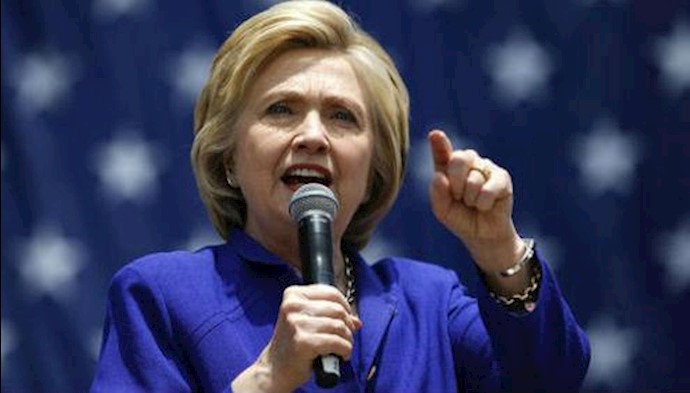
Hillary Clinton clinched the Democratic presidential nomination Monday, according to CNN’s delegate and superdelegate count, and will become the first woman in the 240-year history of the United States to lead the presidential ticket of a major political party.
A strong showing in Puerto Rico’s Democratic primary on Sunday and additional support from superdelegates put Clinton, 68, over the top to become the presumptive nominee. She has secured 1,812 pledged delegates and 572 superdelegates for a total of 2,384 delegates — one more than needed for the nomination.
Clinton’s delegate count will grow Tuesday when six states, including delegate-rich California and New Jersey, hold contests. Speaking in Long Beach, California, on Monday, Clinton said she was still focused on the states where voters head to the polls Tuesday.
“We are on the brink of a historic, historic unprecedented moment but we still have work to do, don’t we?” she said. “We have six elections tomorrow and are going to fight hard for every single vote, especially right here in California.”
After three decades at the center of American politics as a pioneering feminist icon, the victory brings Clinton within reach of finally cracking the “highest, hardest glass ceiling” she lamented eight years ago when she conceded the Democratic race to Barack Obama. The former first lady, senator from New York and secretary of state will officially become the Democratic nominee at next month’s convention and will face presumptive Republican nominee Donald Trump in a general election battle that is already shaping up as one of the nastiest campaigns in modern U.S. history.
AP also reported from Los Angles that striding into history, Hillary Clinton will become the first woman to top the presidential ticket of a major U.S. political party, capturing commitments Monday from the number of delegates needed to win the Democratic nomination.
Clinton’s rise to presumptive nominee arrived nearly eight years to the day after she conceded her first White House campaign to Barack Obama. Back then, she famously noted her inability to “shatter that highest, hardest glass ceiling.”
Campaigning this time as the loyal successor to the nation’s first black president, Clinton held off a surprisingly strong challenge from Vermont Sen. Bernie Sanders. He mobilized millions with a fervently liberal message and his insurgent candidacy revealed a deep level of national frustration with politics-as-usual, even among Democrats who have controlled the White House since 2009.
The former secretary of state, New York senator and first lady reached the 2,383 delegates needed to become the presumptive Democratic nominee on Monday with a decisive weekend victory in Puerto Rico and a burst of last-minute support from superdelegates. Those are party officials and officeholders, many of them eager to wrap up the primary amid preference polls showing her in a tightening race with presumptive GOP nominee Donald Trump.
Clinton has 1,812 pledged delegates won in primaries and caucuses. She also has the support of 571 superdelegates, according to an Associated Press count.
The AP surveyed all 714 superdelegates repeatedly in the past seven months, and only 95 remain publicly uncommitted.
“We really need to bring a close to this primary process and get on to defeating Donald Trump,” said Nancy Worley, a superdelegate who chairs Alabama’s Democratic Party and provided one of the last endorsements to put Clinton over the top.
Clinton had a muted reaction to her claim on the nomination Monday night as she campaigned in California. She told a cheering crowd she was on the brink of a “historic, unprecedented moment,” but said there was still work to be done in the six states to vote Tuesday.
“We’re going to fight hard for every single vote,” Clinton said at a rally in Long Beach.
Indeed, Clinton’s victory is broadly decisive. She leads Sanders by more than 3 million cast votes, by 291 pledged delegates and by 523 superdelegates. She won 29 caucuses and primaries to his 21 victories.
That’s a far bigger margin than Obama had in 2008, when he led Clinton by 131 pledged delegates and 105 superdelegates at the point he clinched the nomination.
Echoing the sentiments of California Gov. Jerry Brown, who overcame a decades-long rivalry with the Clinton family to endorse her last week, many superdelegates expressed a desire to close ranks around a nominee who could defeat Trump in November.
“It’s time to stand behind our presumptive candidate,” said Michael Brown, one of two superdelegates from the District of Columbia who came forward in the past week to back Clinton before the city’s June 14 primary. “We shouldn’t be acting like we are undecided when the people of America have spoken.”
She prevailed, in part, by claiming much of the coalition that boosted Obama. She won overwhelming support from women and minorities, catapulting her to decisive victories in diverse, delegate-rich states such as New York and Texas.
When Clinton launched her campaign last April, she did so largely unopposed, having scared off more formidable challengers by locking down much of the party’s organizational and fundraising infrastructure. Vice President Joe Biden, seen as her most threatening rival, opted not to run in October.
Clinton vowed not to repeat the failings of her 2008 campaign and focused early on winning delegates, hiring help from Obama’s old team before launching her campaign. They pushed superdelegates into making early commitments and held campaign appearances in areas where they could win the most pledged delegates.
She now moves on to face Trump, whose ascent to the top of the Republican Party few expected. The brash real estate mogul and reality TV star has long since turned his attention from primary foes to Clinton.
After a long primary campaign, Clinton said this past weekend in California she was ready to accept his challenge.
“We’re judged by our words and our deeds, not our race, not our ethnicity, not our religion,” she said Saturday in Oxnard, California.
Source: CNN,AP, 7 June 2016