How China, Iran, and Russia will challenge Trump in the coming weeks
National Review, Jan. 24, 2017 – Perception is an important element of any foreign-policy decision. This reality was proved repeatedly during President Obama’s tenure in office. Foreign actors knew the United States was the most powerful nation on earth — but they also perceived an American president reluctant to employ his power. And owing to that perception, the leaders of China, Iran, and Russia took aggressive actions to extend their interests. But that time has now passed.
Today, the U.S.’s adversaries want to gain accurate perceptions of the new president’s leadership. And they will seek that understanding by testing Trump. In the near future, therefore, Trump will face three challenges from three different adversaries.
First, from China in the East China Sea. Casting doubt on America’s traditional reluctance to formally recognize Taiwan, and promising to challenge China’s export strategy, Trump is already a persona non grata in Beijing. But yesterday, while Trump gifted China with America’s withdrawal from the Trans-Pacific Partnership, he also threw out a challenge. It came via White House press secretary Sean Spicer, who promised that the U.S. would defend the international waters of the South and East China seas against Chinese militarization. That statement will go down very badly in Beijing. After all, China’s militarization of the China seas is the focal point of its strategy to dominate the region’s economic and political development. It views the success of that strategy as a key national priority. And for
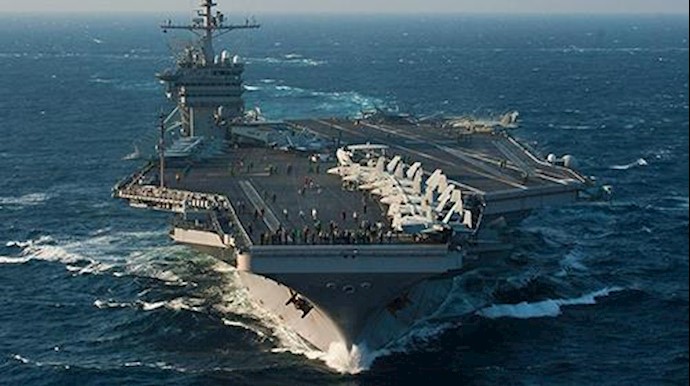
Next up, Iran. As with China, Iran’s test will probably take maritime form. Specifically, Iran’s hardliner faction is likely to test whether Trump will order the U.S. Navy to escalate against Iranian naval threats. The Persian Gulf is regarded by the Iranian Revolutionary Guards Navy (IRGC-N) as a frontier for their theological empire, so the Iranian hardliners love to use the Persian Gulf to challenge U.S. power. Under President Obama, however, tensions in the Persian Gulf rose as Iran faced few challenges for threatening U.S. vessels. Trump’s opposition to the Iran nuclear deal, along with the fact that the new defense secretary is James Mattis (whom the Iranians fear and detest), represents a new development here. The IRGC want to deter Trump from enforcing tougher conditions in the deal and they know that Mattis will likely use the U.S. Navy to exert pressure toward that end. There’s another hardliner rationale at work here. With Khamenei dying, and the Islamic Republic’s future thus facing upheaval during Trump’s term, the hardliners want to ensure that they remain masters of Iran’s destiny. That makes a calculated showdown with America — especially if they come out on top – an attractive temptation. Such action would remind Iranian moderates and the Sunni monarchies that the Islamic revolutionaries remain resolute. Risking the martyrdom of a few IRGC-N sailors thus offers the hardliners a simple tool to achieve many objectives. How should Trump respond? Simple: He should throw the hardliners off balance by ordering the U.S. Navy to sink any Iranian vessels that challenge U.S. personnel at close quarters. And he should get serious about restraining Iranian malfeasance in Iraq and Lebanon. Trump should meet any test by showing that U.S. power is matched by his resolve.
Finally, there’s Putin’s Russia. As I noted recently, Putin intends to mold Trump to his agenda. But unlike China and Iran, Putin will test Trump by offering him dangles of cooperation rather than sticks of threat. We’re already seeing this gambit in Putin’s conditional offer of cooperation against ISIS.
But though it might not be easily apparent at first, Putin will extract far more valuable compromises from Trump in return for his dangles. Putin’s ultimate ambition, as always, is America’s further retreat from the world. Here, Trump’s responsibility is clear. He needs to wake up and listen to his intelligence briefers and General Mattis. They know what Putin is doing. And they want to help Trump understand. Trump should also live up to his pledge to articulate a cyber-defensive posture to deter future threats. Specifically, he should order the NSA to respond in kind to any cyber-attack or significant intrusion by a state actor or state-cutout actor. None of these scenarios, of course, is certain. Yet Trump is now president, and America’s adversaries have major ambitions incompatible with major American interests. A better American future and Trump’s global legacy are now his to win or lose. Rejecting vulture-ism in favor of realism, Trump should meet any test by showing that U.S. power is matched by his resolve.
– Tom Rogan writes for National Review Online and Opportunity Lives. A former panelist on The McLaughlin Group, he is a senior fellow at the Steamboat Institute.