Iran has conducted several highly damaging
By Dorothy Denning
Like
PUTTING IRANIAN HACKERS ON THE MAP
It was clear by the mid-2000s that Iran would become a source of
The group’s website announced that it provided vulnerability testing and secure hosting services, but it was also known for web defacements. In 2005, the group replaced the U.S. Naval Station Guantanamo
Another prominent group, Ashiyane Digital Security Team, ran a website that offered free hacking tools and tutorials. The site claimed to have 11,503 members in May 2006. Like Iran Hackers Sabotage, Ashiyane provided security services while using its members’ knowledge and skills to deface websites. Their defacements frequently included a map of Iran with a reminder that “The correct name is
Ashiyane defaced 500 websites in 2009 during the Israeli incursion into Gaza and 1,000 sites in the U.S., U.K.
A third group, the Iranian Cyber Army, launched a few years later. It has been implicated in several website attacks, including one against Twitter in 2009 that proclaimed support for Iran’s Supreme Leader Ali Khamenei. Other attack targets were the Voice of America in 2011 after the U.S. supported Iran’s Green movement, and regime opposition websites in 2013 just before the presidential election.
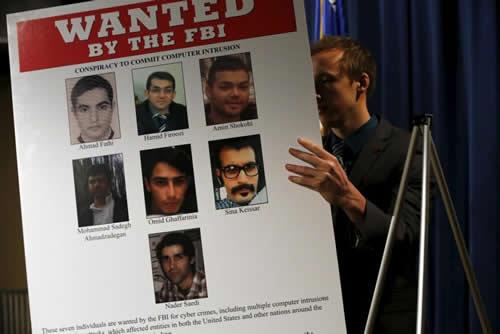
Seven Iranian hackers conducted a coordinated cyber attack on dozens of U.S. banks, causing millions of dollars in lost business, and tried to shut down a New York dam
IRAN’S CYBER MILITARY
The Iranian Cyber Army is said by some cybersecurity
The Revolutionary Guards also command Iran’s voluntary paramilitary militia, known as the Basij Resistance Force. In 2010, the Basij established the Basij Cyber Council, but it focuses more on media and influence
The Bowman Avenue Dam is seen in Rye Brook, N.Y. on March 24, 2016.
TURNING TO SABOTAGE
By 2012, Iranian
One such group called itself the Cutting Sword of Justice. In 2012, it launched
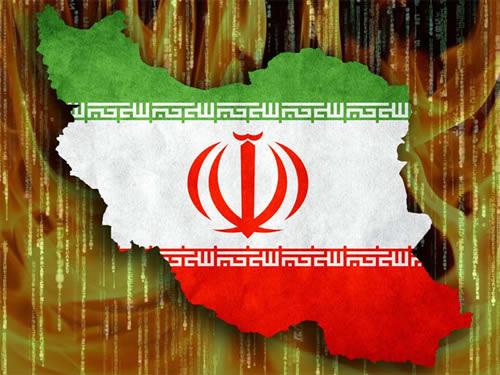
Cyber Threat from Iran
Iran has deployed wiper malware in other acts of sabotage, most notably the 2014 attack against the Las Vegas Sands Corporation. The attack was thought to be a response to remarks made by Sheldon Adelson, the company’s largest shareholder. Adelson suggested setting off a bomb in an Iranian desert to persuade the country to abandon nuclear weapons. And in 2016, the Shamoon malware resurfaced, wiping data from thousands of computers in Saudi Arabia’s civil aviation agency and other organizations.
Iranian hackers operating on behalf of the government have also conducted massive distributed denial-of-service attacks,https://theconversation.com/attackers-can-make-it-impossible-to-dial-911-67980 which flood sites with so much traffic that they become inaccessible. From 2012 to 2013, a group calling itself the Cyber Fighters of Izz ad-Din al-Qassam
In 2016 the U.S. indicted seven Iranian hackers in absentia for working on behalf of the Revolutionary Guards to conduct those bank attacks, which were said to have caused tens of millions of dollars in losses. The motivation may have been retaliation for economic sanctions that had been imposed on Iran or the
Cyber warfare is fast becoming popular with smaller nations that cannot match the weaponry and force of larger powers. By attacking military and civilian systems, smaller nations have the potential to bring world powers to their knees. The 2010 Stuxnet malicious computer worm that targeted Iran’s nuclear program was the opening salvo and the proverbial tip of iceberg in cyber warfare
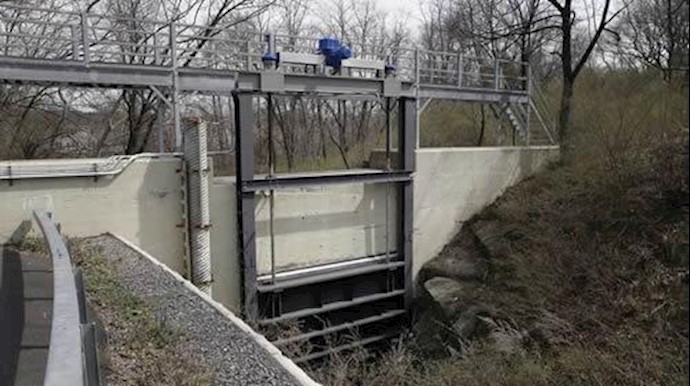
One of the seven indictments was of a man who allegedly obtained access to the computer control system for the Bowman Avenue Dam in New York state. The access would have allowed the intruder to “operate and manipulate” one of the dam’s gates had it not been offline for maintenance.
Iran also engages in cyberespionage. One group, which cybersecurity research firm FireEye named Advanced Persistent Threat 33, has invaded computers around the world, with targets in the petrochemical, defense and aviation industries. The group uses code linked to Iran’s wiper malware, possibly in preparation for more destructive attacks. Another group, called Advanced Persistent Threat 34, has been active since at least 2014, targeting companies in the financial, energy, telecom and chemical industries.
FOREIGN ASSISTANCE
Iran may be beefing up its
According to former Congressman Peter Hoekstra, who chaired the House’s Permanent Select Committee on Intelligence, Iran’s rapid emergence as a major
Iran may also be looking to Mexico for cyber warfare support. According to a documentary aired on the Univision television network in 2011, a former Iranian ambassador to Mexico accepted a plan from undercover Mexican students to launch crippling cyber attacks against the U.S. The targets included the White House, the CIA, the FBI and nuclear installations. The documentary also shows Venezuelan and Cuban officials in Mexico expressing interest in the plot
video: Documentales Univision: “La Amenaza Irani” a Documentary on the Emerging Iranian Threat
STRENGTHENING ITS CYBERWARFARE PROGRAM
Iran may view cyber warfare as a means of overcoming its military disadvantage compared to the U.S. To that end, it will likely continue to improve its cyber capabilities.
Containing Iran’s cyber warfare program would likely be even more challenging than containing its nuclear program. Computer code is easy to conceal, copy and distribute, making it extremely difficult to enforce controls placed on cyberweapons. That leaves cybersecurity and cyber

Dorothy Denning
Dorothy Denning is an Emeritus Distinguished Professor of Defense Analysis, Naval Postgraduate School.