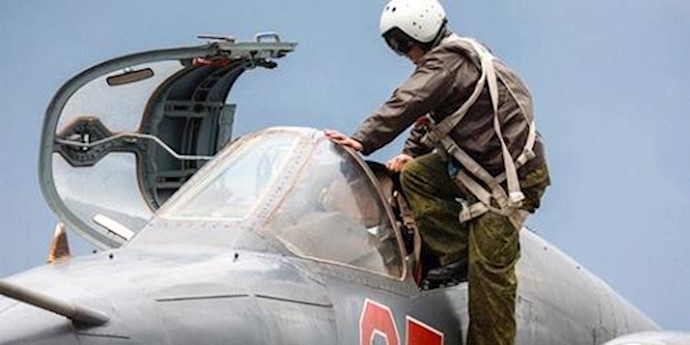
Russian President Vladimir Putin on Thursday in an address to Russian military personnel who served in Syria pledged to continue providing military aid and intelligence to Syrian Bashar al-Assad,declaring that Russian warplanes could redeploy to Syria at any moment.
On Monday, Mr. Putin said the bulk of Russian military forces would withdraw from Syria, after a bombing campaign that began at the end of September—a nearly six-month mission the Russian president said had cost some 33 billion rubles ($477.5 million). Russia’s announcement surprised U.S. and Western officials, and raised questions about the direction of nascent peace talks that began in Geneva the same day.
Putin said the Syrian president was ready for compromise. The move to withdraw Russian warplanes, he added, was an important step given the talks in Geneva.
Russian officials have said they plan to retain an airbase outside the port city of Latakia, and a naval station in Tartus. Mr. Putin said Russia’s military bases in Syria would be protected by advanced air defenses.
Putin also promised the continuation of additional help for the Syrian government, which has received Russian weaponry for the duration of the conflict.
Putin intervened in Syria last fall with the aim of saving the Syrian government and helped regime forces consolidate gains. The Assad regime’s military and diplomatic next steps aren’t clear.
At the Geneva talks, opposition wants a transitional body with executive powers that would strip Mr. Assad of authority and ultimately see him out of power.
Washington and its allies have relied on Moscow to pressure Damascus to comply with agreements on a truce and aid deliveries.
U.N. Syria envoy Staffan de Mistura met with the main opposition delegation on Thursday after days of only halting progress. He has been meeting alternately with Syrian government and opposition delegations.
The groups have yet to meet directly during this round of negotiations for a political end to Syria’s five-year conflict.
Fighting in Syria has calmed since a cease-fire began in late February, allowing for improved aid deliveries. But both sides have alleged violations, and fighting against groups excluded from the truce, including Islamic State, continues.
Jan Egeland, a senior adviser to the U.N.’s Syria envoy, said on Thursday that aid convoys were on their way to four Syrian towns, and permission had been granted for deliveries to 15 new hard-to-reach areas. But he said Damascus still hadn’t given permission for deliveries to six of 18 besieged areas badly in need of aid.
The U.N. and its aid partners inside Syria require permission from Assad’s regime to travel to rebel-held areas under siege by government forces.
The Syrian government still hasn’t approved aid shipments to Daraya, a rebel-held Damascus suburb that the opposition has told the U.N. is in urgent need of relief assistance. No food, water or medicine has been transported there since December 2013, making it the longest besieged area of Syria, opposition activists say.
“We saw initial progress, but it is slower now,” said a Western diplomat involved in monitoring Syria’s humanitarian situation. “We see the regime returning to tactics to stall.”
Russian authorities have assured the task force that the announced withdrawal of some of its military forces from Syria won’t stop efforts to press Assad to address the country’s dire humanitarian situation, U.S. and European officials said.
But these officials cautioned it was too soon to tell how the partial withdrawal of Russian forces might influence Moscow’s relations with the Syrian government.
Source: Wall Street Journal , 18 March 2016