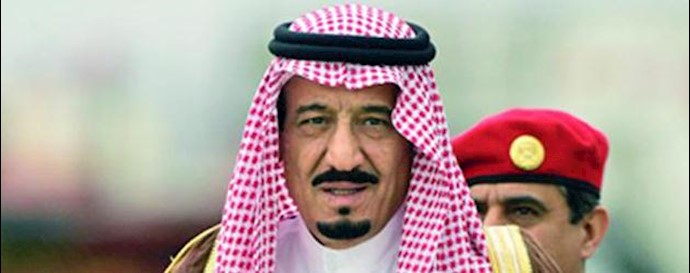
WASHINGTON – New York Times – MAY 10, 2015 – Saudi Arabia announced on Sunday that its new monarch, King Salman, would not be attending meetings at the White House with President Obama or a summit gathering at Camp David this week, in an apparent signal of its continued displeasure with the administration over United States relations with Iran.
As recently as Friday, the White House said that King Salman would be coming to “resume consultations on a wide range of regional and bilateral issues,” according to Eric Schultz, a White House spokesman.
But on Sunday, the state-run Saudi Press Agency said that the king would instead send Crown Prince Mohammed bin Nayef, the Saudi interior minister, and Deputy Crown Prince Mohammed bin Salman, the defense minister. The agency said the summit meeting would overlap with a five-day cease-fire in Yemen that is scheduled to start on Tuesday to allow for the delivery of humanitarian aid.
Arab officials said they viewed the king’s failure to attend the meeting as a sign of disappointment with what the White House was willing to offer at the summit meeting as reassurance that the United States would back its Arab allies against a rising Iran.
A senior administration official said that when the king met Secretary of State John Kerry in Riyadh last week, he indicated that he was looking forward to coming to the meeting. But on Friday night, after the White House put out a statement saying Mr. Obama would be meeting with King Salman in Washington, administration officials received a call from the Saudi foreign minister that the king would not be coming after all.
Jon Alterman, senior vice president at the Center for Strategic and International Studies, said : “For the White House, it sends an unmistakable signal when a close partner essentially says he has better things to do than go to Camp David with the president, just a few days after the White House announced he’d have a private meeting before everything got underway.”
The Arab nations are also angry, officials and experts said, about comments Mr. Obama recently made in an interview with The New York Times, in which he said allies like Saudi Arabia should be worried about internal threats — “populations that, in some cases, are alienated, youth that are underemployed, an ideology that is destructive and nihilistic, and in some cases, just a belief that there are no legitimate political outlets for grievances.”.