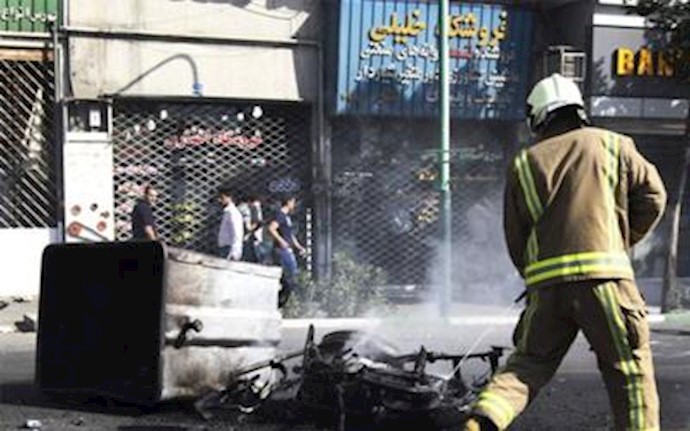
Al-Seyassah (Kuwait), 9 Oct 2012 – The events of October 3rd in Tehran that started from the Bazaar and spread to other areas of the capital presented a strong indication of the characteristics of a serious and deep political crisis in Iran.
Most of the observers and political analysts that followed and looked into this crisis, wrote and talked about it, described the economic element and the fall of Iran’s money against foreign currency being the reason behind it. However, it appears that this unexpected and new reason, despite its importance, is not enough to justify this crisis. In fact, the crisis is much deeper and is related to a political-economic crisis, with its roots multiplied in real grounds of social anger and rage.
It is significant that Tehran’s Bazaar demonstration took place on October 3rd, meaning just five days after the ruling to remove the People’s Mojahedin Organization of Iran from the terrorist list, and what should be taken into consideration and looked into in depth is the slogans chanted by demonstrators in Tehran’s Bazaar; slogans that were first related to the falling value of the rial to half its price, yet very quickly found political depth and dimension. The demonstrators in their slogans called on the regime by saying: “Let go of Syria, think about us”. However, the slogans advanced to the point of “Death to Khamenei”. Iranian regime officials in response to these concerning developments said this demonstration was not staged by the Bazaar merchants and store owners. In fact, they said it was organized by “anarchists”, a reference to protesting youth in the 2009 demonstrations. However, when we analyze these remarks and words, we find out that the regime’s meaning of anarchists are individuals and groups linked to the PMOI. Therefore, issues are related to one another and a specific heading is traced, portraying a graph to show the form and substantiality of this crisis and specifies its nature; especially since before the Oct. 3rd demo, meaning on Oct. 2nd Ahmadinejad in a press conference staged a serious attack on the Majlis (parliament) speaker, the high judicial council and the Revolutionary Guards (all being the bodies under the control of, and linked to, Khamenei). Naturally, this attack by Ahmadinejad followed the arrest of his press advisor under Khamenei’s orders while he was in New York.
We must also consider the fact that Majlis speaker Larijani held Ahmadinejad’s government responsible for the currency crisis. This quarrel in itself portrays a string of linked yet uncoordinated events of the intense disputes between this regime’s various factions and trends. While the regime carried out a massive media campaign against the participants in the Bazaar demonstration, describing them as “agents of Zionism and world arrogance”, Asgar Oladi, head of the government-linked Motalefe Party, announced his support for the ‘legitimate demands’ of the demonstrators.
“Why do the majority take action to suffocate the minority?” he asked in remarks that open a new front in this crisis. This is a meaningful reference to Khamenei and IRGC’s inattention to the demonstrators’ demands in Tehran’s Bazaar. Naturally, this subject has profound significances because Tehran’s Bazaar during the past years has been on the regime’s side and defended it. But now, it has begun to oppose and stand against it.
Iran’s bad conditions have reached the borders of a catastrophe, especially since the average inflation admitted to by the regime itself has reached 22%, and this is the highest number of its kind in the Middle East. This is while independent economists, based on their reliable sources, believe inflation has actually reached 50% and in today’s world, these are conditions that can only be compared to Zimbabwe! However, based on official reports unemployment has reached 13% and this is while based on independent opinions, it is actually over 30%. If we set this aside, after the government cancelled the subsidies, the price of liquid gas, being the “main source of energy for Iranian families” increased ten fold; electricity jumped seven fold; diesel fuel skyrocketed 21 fold and ordinary gasoline upped four fold. As the result of this dark chart, a large portion of Iranians are now under the poverty line.
Despite the issues mentioned above, this regime is currently faced with five major challenges that need solutions and cures. These five challenges are:
– Popular anger and ire that await opportunities to erupt and explode against the regime
– Dire conditions in Syria and the probable downfall of Assad’s regime, meaning the crumbling of Iran’s regional front and its extremely negative impacts and consequences against this regime
– Intense discord between the regime’s various factions, becoming more vicious and harsher by the day
– The regime’s economic downfall
– The crisis caused by the regime’s nuclear program in its relations with the West, and its probable aftermaths.
If we look precisely into any of these quintuplet challenges, we will see that they place the regime in an extreme impasse, closing different doors and outlets to it. More important of all, they escalate the siege against it and lessen and limit the options to a point that one can calculate the best as being the worst!