BOGOTÁ, Colombia — A Colombian peace deal that the president and the country’s largest rebel group had signed just days before was defeated in a referendum on Sunday, leaving the fate of a 52-year war suddenly uncertain.
A narrow margin divided the yes-or-no vote, with 50.2 percent of Colombians rejecting the peace deal and 49.8 percent voting in favor, the government said.
The result was a deep embarrassment for President Juan Manuel Santos. Just last week, Mr. Santos had joined arms with leaders of theRevolutionary Armed Forces of Colombia, or the FARC, who apologized on national television during a signing ceremony.
The surprise surge by the “no” vote — nearly all major polls had indicated resounding approval — left the country in a dazed uncertainty not seen since Britain voted in June to leave the European Union. And it left the future of rebels who had planned to rejoin Colombia as civilians — indeed, the future of the war itself, which both sides had declared over — unknown.
Both sides vowed they would not go back to fighting.
Mr. Santos, who appeared humbled by the vote on television on Sunday, said the cease-fire that his government had signed with the FARC would remain in effect. He added that he would soon “convene all political groups,” especially those against the deal, “to open spaces for dialogue and determine how we will go ahead.”
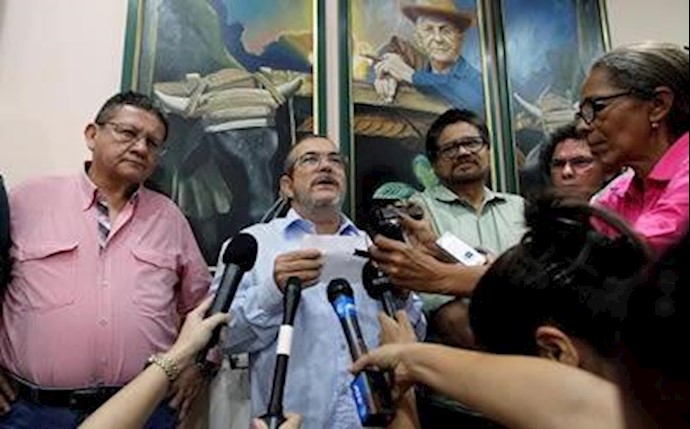
Rodrigo Londoño, the FARC leader, who was preparing to return to Colombia after four years of negotiations in Havana, said he, too, was not interested in more war.
President Juan Manuel Santos of Colombia and Timoleon Jimenez, commander in chief of the FARC, vowed to continue to seek peace after Colombians rejected a peace deal in a referendum.
On Sunday, the government said it had sent negotiators to Havana to begin discussing the next steps with the rebels.
On Sunday night, politicians who had strongly opposed the deal were already signaling that it was time to negotiate more stringent terms with the rebels.
The war left brutal scars in Colombia. About 220,000 people were killed in the fighting, and six million were displaced.
Source: New York Times, 03 Oct. 2016